

How to Start an IT Services Business (Field & Hardware)
Commercial customers call an on-site IT business back every time they add a location, and the work itself sits on the one part of IT software cannot take: the person in the building pulling the cable. Here is what an on-site IT services business costs, what it pays after you replace yourself, and where the line between automated and automation-proof actually falls.
Chris Scott — former CDFI director and SBA management
As the director of a Community Development Financial Institution (CDFI), and as management at the U.S. Small Business Administration (SBA), I saw thousands of business plans and loan applications cross my desk. That work is where I learned what a durable business looks like on paper, and what a business that only looks durable looks like on paper.
It is not, however, where the list of fifty came from. That came from years of research, running category after category through the same four questions: Is it profitable? Does it have recurring revenue? Is it recession resistant? Is it AI resistant? Those four questions are the framework behind the book, The Microbusiness Millionaire, and they are what separated the categories that built real wealth from the ones that quietly built a job with a P&L attached. Fifty survived the screen. Far more never made it through.
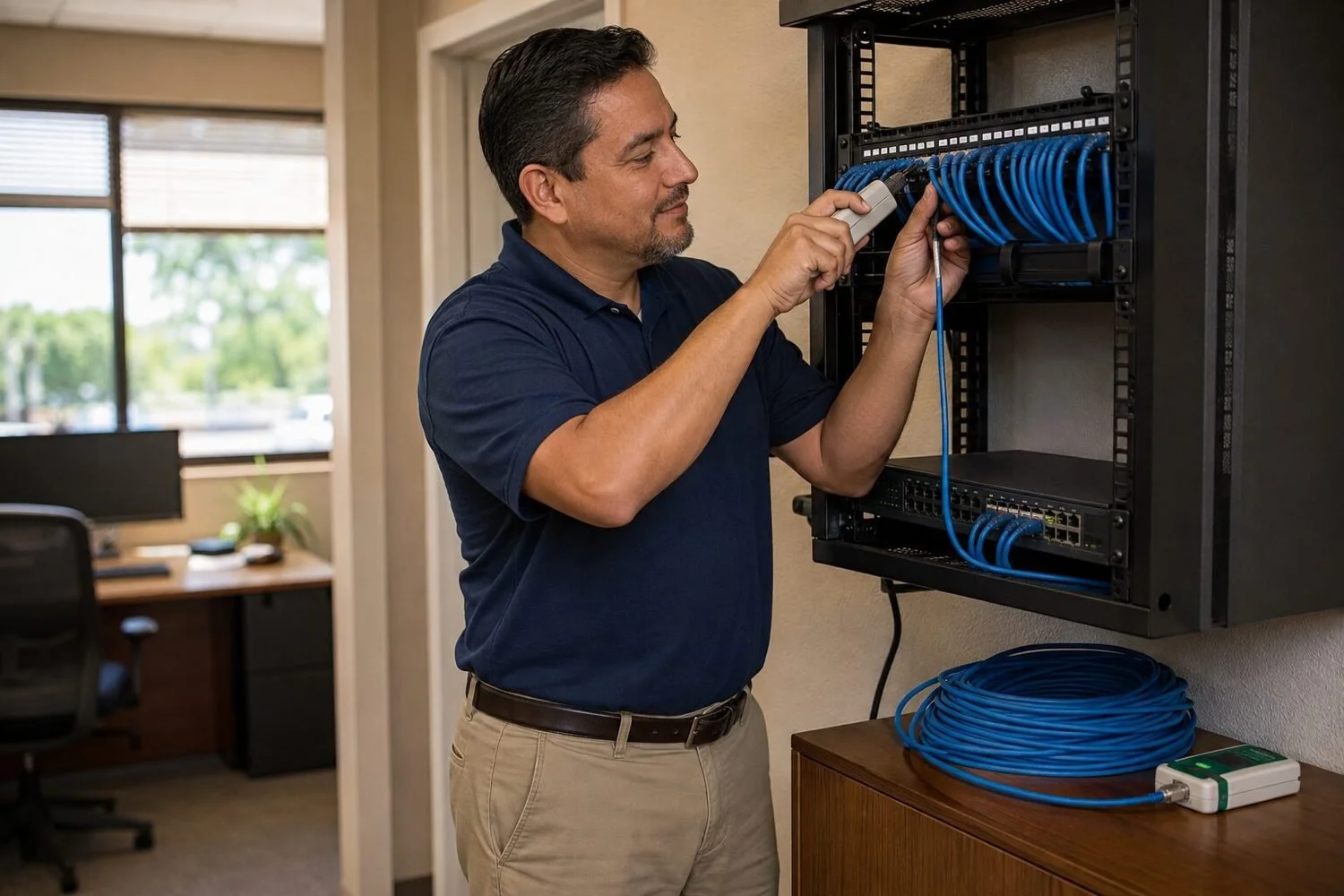
IT field and hardware services is one of the fifty, and it comes with a sharper boundary than any other category among them. Remote helpdesk and routine software support are being automated quickly. The on-site, physical work is not.
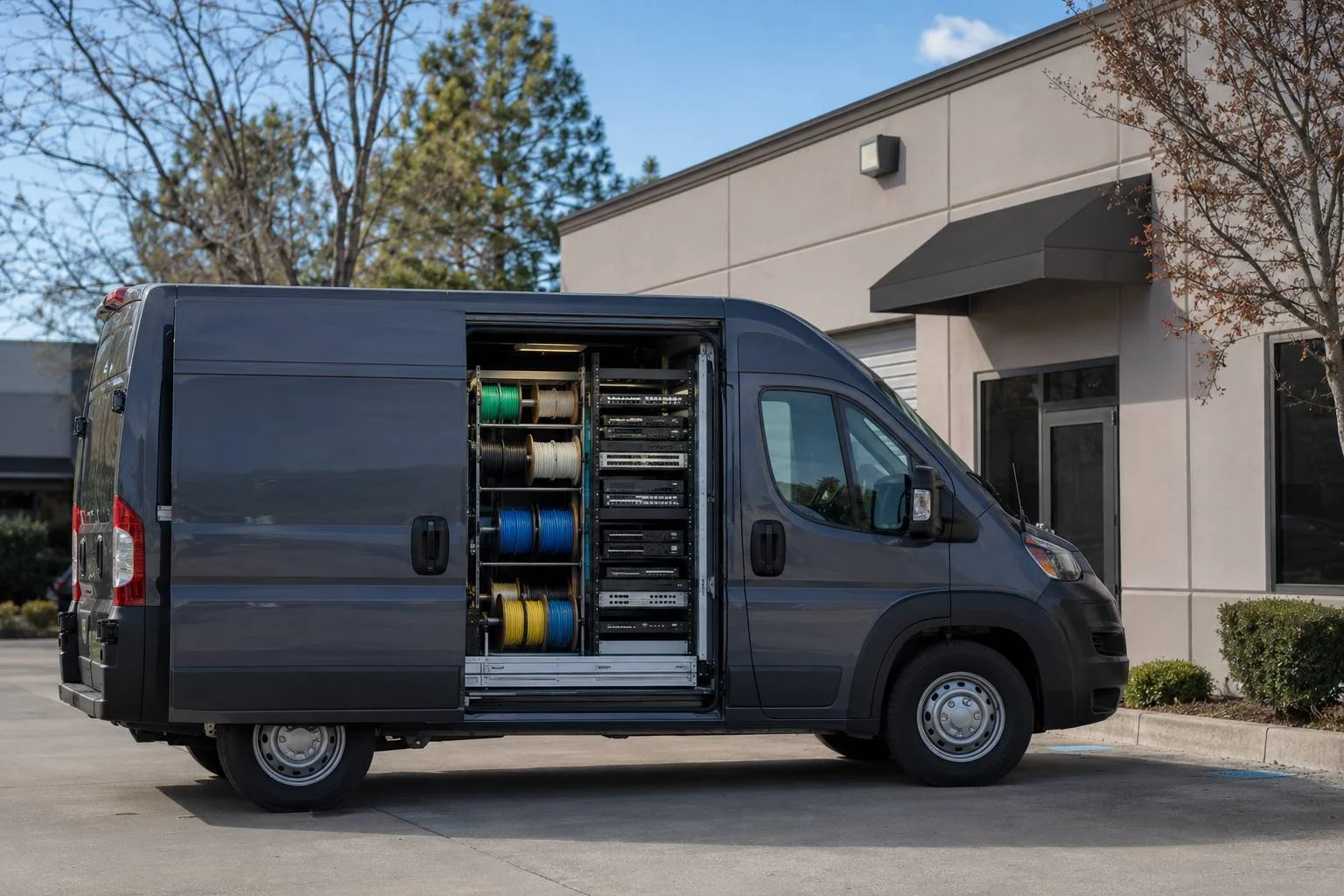
Network cabling, hardware installation, point-of-sale systems, security cameras, structured cabling — someone has to be in the building for all of it. Positioned there, this is a durable business-to-business operation. The whole game is staying physical, and the rest of this article is about how.
The industry: on-site work in a giant, growing sector
On-site IT sits inside one of the largest and fastest-moving sectors in the economy, and the labor benchmark tells the story. Computer network support specialists — the people who install and maintain the physical network — are in steady demand. Across computer support roles the Bureau of Labor Statistics projects about 50,500 openings a year through 2034. [S1] What one of them costs is a local number. It is the price of replacing yourself: what a supervisor would have to be paid to do the work you would otherwise be doing. Look up the rate for your own market; the Resource Directory in the free tools shows where. Every profit number later in this article has to survive it, and the real cost runs higher once payroll taxes and insurance go on top.
The broader computer-and-IT occupational group runs a median far above the all-occupation median — not by a margin you have to squint at, and not in one region only. [S2] That gap is a fair signal of how much value sits in this work, and it is what lets a well-run install business pay a skilled technician and still leave something for the owner.
The important nuance is which IT work. Demand for the physical, in-the-building tasks — cabling, hardware, cameras, point-of-sale — is durable precisely because it cannot be done remotely or by software, and it grows every time a business opens or expands a location.
Why IT field and hardware made the list
Every category in the research had to clear four tests. Clear three and you usually have a self-employed job in disguise.
Does it pay after you replace yourself? It does, on skilled billable labor, project work, and commercial service contracts that recur. Businesses pay professional rates for reliable on-site work, which leaves room to pay a technician and still hold real cash flow as the owner.
Does the revenue recur? Through commercial relationships, and unusually reliably. A business you cable and equip calls you back for the next office, the next camera system, the next point-of-sale rollout, and often keeps you on a service agreement between projects. Every location a client opens is repeat work you did not have to win.
Does it survive a recession? The infrastructure work holds up because businesses still need functioning networks, security, and payment systems in any economy, and much of it is non-deferrable when something breaks or a location opens.
Will it still need humans in ten years? This is the whole point of the category. Someone has to pull the cable, mount the camera and wire the rack. Software can monitor the network. It cannot run the conduit. Very low AI exposure, provided you stay on the physical side.
Four for four — with the automation boundary drawn deliberately on the right side.
The research on this category split more cleanly than almost any other, and the split was always in the same place. Operators selling "IT support" broadly — remote helpdesk, routine monitoring, the work being automated and commoditized underneath them — were competing on price against software. Operators who had planted themselves in the physical work were not: structured cabling, hardware installs, camera systems, point-of-sale for retail and restaurants, sold to businesses rather than households. Those customers called them back every time they opened a location. Same technical skill, same certifications, same city. One had chosen the part of IT that needs a body in the building. From the lending side of the desk, that single choice showed up in everything downstream — pricing power, repeat revenue, and whether the business had a floor under it.
What it takes to make this one work
A note on the tags. Every category in the fifty cleared the same four tests; far more never made it through. The tags do not grade a business — they tell you what has to line up for it to work in your hands. IT field and hardware carries one: Rewards a specialty. That is the instruction manual.
The condition: remote helpdesk and routine managed-service support are being automated quickly. That is the part of IT under pressure, and competing there means competing against software that gets cheaper every year.
The move that meets it: work strictly on-site and with your hands — network cabling, hardware installation, point-of-sale, security cameras, structured cabling. The boundary is unusually clear in this category, which is an advantage: you always know which side of it you are standing on. Specialize in the physical and position yourself as the partner businesses call for infrastructure.
The upside: positioned on the physical side, this is a business whose commercial customers call you back every time they add a location, which is about as reliable as repeat work gets. Skilled billable labor, project revenue, recurring service agreements, and a core that software cannot reach. In this category the specialty is the moat.
What it costs to get in — the three paths
| Path | Typical cost range | Best for |
|---|---|---|
| Startup | $15,000 – $40,000 | Tools + certifications + insurance |
| Acquisition | $120,000 – $250,000 | Contracts + customer list |
| Franchise | $105,000 – $190,000 | Brand + tech-support backbone. Examples: CMIT Solutions, TeamLogic IT. |
Franchise brands are named as examples, not endorsements. Franchise investment figures reflect a franchisor's most recent Franchise Disclosure Document (FDD) and change annually — verify each brand's current FDD (Item 7 for the initial-investment range; Item 19 for any financial-performance representation) before pursuing one. [S3]
Both brands in that row sit closer together than in most categories, and both start higher than people expect. CMIT Solutions is reported at roughly $106,000 to $165,000 on a fee near $50,000, and TeamLogic IT at roughly $107,000 to $190,000 on a fee near $49,500. [S6] Neither has a cheap way in.
Which is worth setting against the first row, because the gap is the decision. Fifteen thousand dollars buys you tools, certifications and insurance, and you find the clients yourself. Something over a hundred thousand buys a brand, a help-desk backbone and a national vendor relationship — and in a category where the customer is choosing who to trust with their systems, that backbone is what lets a one-van operator credibly bid against a firm with thirty staff. That is a real thing to be buying. It is simply not a cheap one.
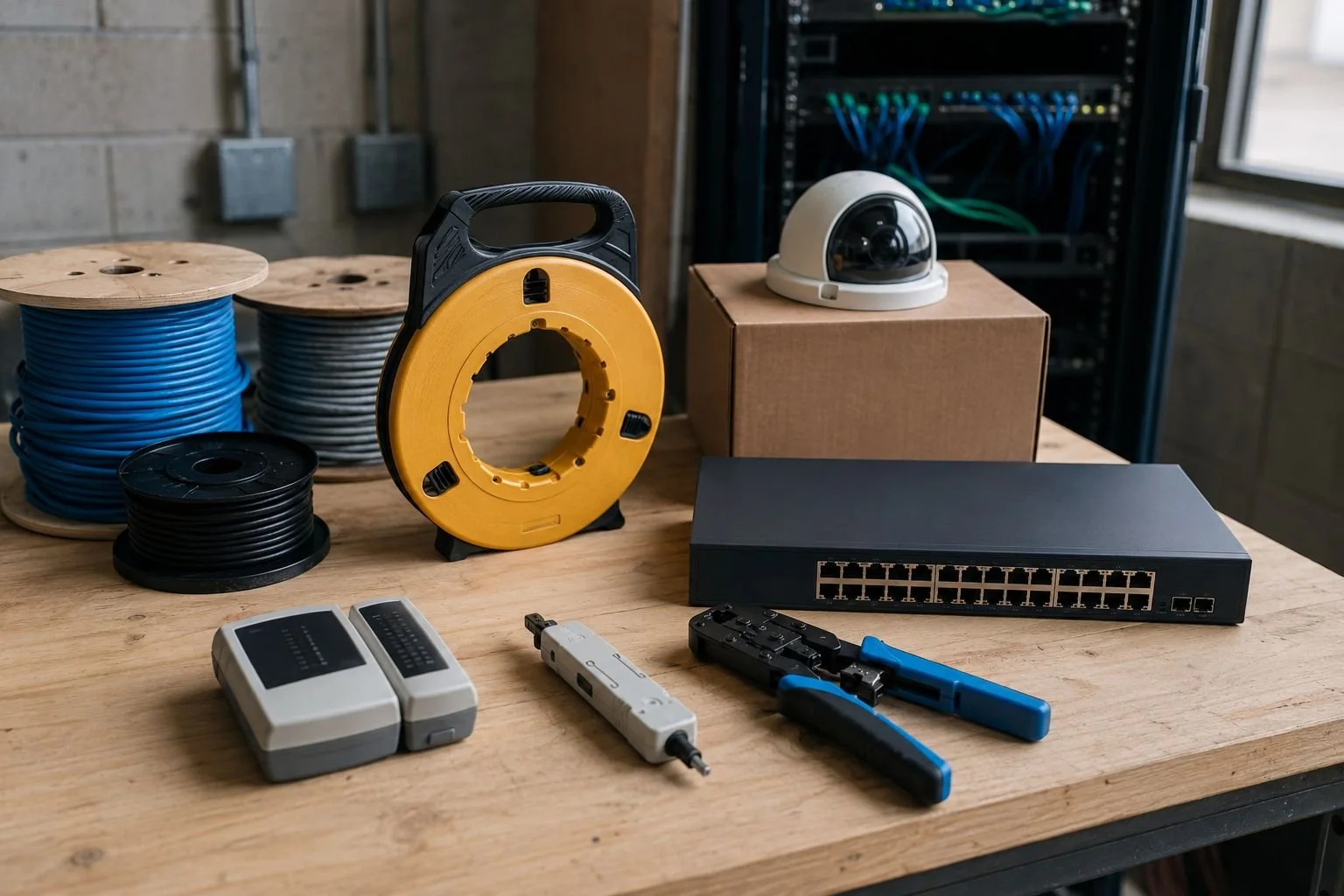
The startup path is modest for a business-to-business operation — tools, certifications and insurance — and it can begin on the side while you keep a paycheck, because a great deal of commercial install work happens on evenings and weekends when the building is empty.
The acquisition path carries a real premium for a specific reason: it buys contracts and a commercial customer list. Those recurring relationships are the asset, and they are worth considerably more than the tools in the van.
How people actually fund it
A $15,000–$40,000 startup sits right in the SBA Microloan range, and this is a category you can genuinely begin on the side — the same tier the book's side-hustle path starts in, keeping a W-2 in place while the business builds. A larger acquisition of an established contract list moves up to CDFI direct lending and, at the upper end, SBA Community Advantage.
One pattern I watched from the lending chair, across every industry that came through: a qualified buyer walks into a national bank, gets declined, and concludes he cannot be funded. He never learns that a CDFI across town, or a Community Advantage lender, exists precisely for deals this size. Two free national directories will show you the ones near you — the Opportunity Finance Network CDFI locator and SBA Lender Match. [S4]
Finding the lender is the easy half. An IT services business also has a specific tell an underwriter looks for: recurring commercial service agreements and repeat-client project revenue, weighted toward the physical work rather than a run of one-off residential calls. A customer list of commercial contracts is far more bankable than a scatter of break-fix jobs, because one of them renews and the other has to be found again every month. Start recording that split before anyone asks for it.
The profit reality: owner-replacement cash flow

Here is the calculation that decides more of these deals than anything else in them. An IT services business looks profitable because the owner is running the installs, managing the accounts, quoting the projects, and keeping the books — none of it priced. The honest test: after you pay your technicians, and after you pay a lead technician a market wage to run the jobs the way you run them, is there enough left for you to own the thing?
The numbers give this category room. Skilled network technicians command professional rates — network support sits well above the all-occupation median wherever you look it up [S1] — and commercial clients pay accordingly, so a well-run install-and-contract business supports a lead technician and still leaves real cash flow for the owner.
What separates the businesses that pass this test from the ones that struggle is the specialty. A customer list anchored in physical, recurring commercial work holds its pricing. A commoditized remote-support list gets squeezed from underneath. The specialty is not only a defense against automation — it is what makes the owner-replacement math work at all.
The category-level math is easy — you just did it. Running it on a specific company, where the seller's "profit" hides his own unpriced install and account-management hours, and the real question is how much of the customer list is physical and recurring, is where people freeze. That is the job of the course, Microbusiness Millionaire: Operating System — the four tests turned into a repeatable screen you run on a real deal.
The benefits of owning an IT field and hardware business
An automation-proof core. The physical work — cabling, hardware, cameras — needs a body in the building.
Commercial repeat revenue. Business clients call you back every time they open or expand a location.
Professional billable rates. Skilled network work commands well over the all-occupation median.
A low, side-hustle-friendly entry. Tools and certifications, with much install work on evenings and weekends.
Recurring service agreements. Contracts turn one-off projects into a durable, sellable customer list.
What separates the strong operators from the struggling ones
Physical work before remote. The defining decision in this category. Cabling, hardware, cameras and point-of-sale are the side of IT that needs a person in the building, and that is where the pricing power sits.
Commercial before residential. A business that opens a second location calls you again. A household that needed a router set up does not. Weight the customer list accordingly.
Certifications earned early. Vendor and low-voltage credentials are what justify commercial pricing and win the first contract. They belong in the price rather than the overhead.
Projects priced for the expertise. Structured cabling and camera installs are skilled work with real consequences if done badly. Quote the outcome rather than the hours.
Licenses, permits, and regulations
On-site IT work carries more licensing than people expect, and it's worth confirming rather than assuming: many states require a low-voltage or limited-energy electrical license for structured cabling and security-camera installation, and some localities require permits for camera and access-control work. Vendor and industry certifications (CompTIA, BICSI, and manufacturer credentials) are the practical trust standard for commercial clients, and handling payment systems may bring PCI-related responsibilities. Beyond that: a registered entity, general liability, and workers' comp once you hire. Start with your state licensing board and the free SBA "Apply for licenses and permits" tool. [S5] (General information, not legal advice — confirm your state's low-voltage licensing and local permit rules before you take paid work.)
Build a portfolio, not a job
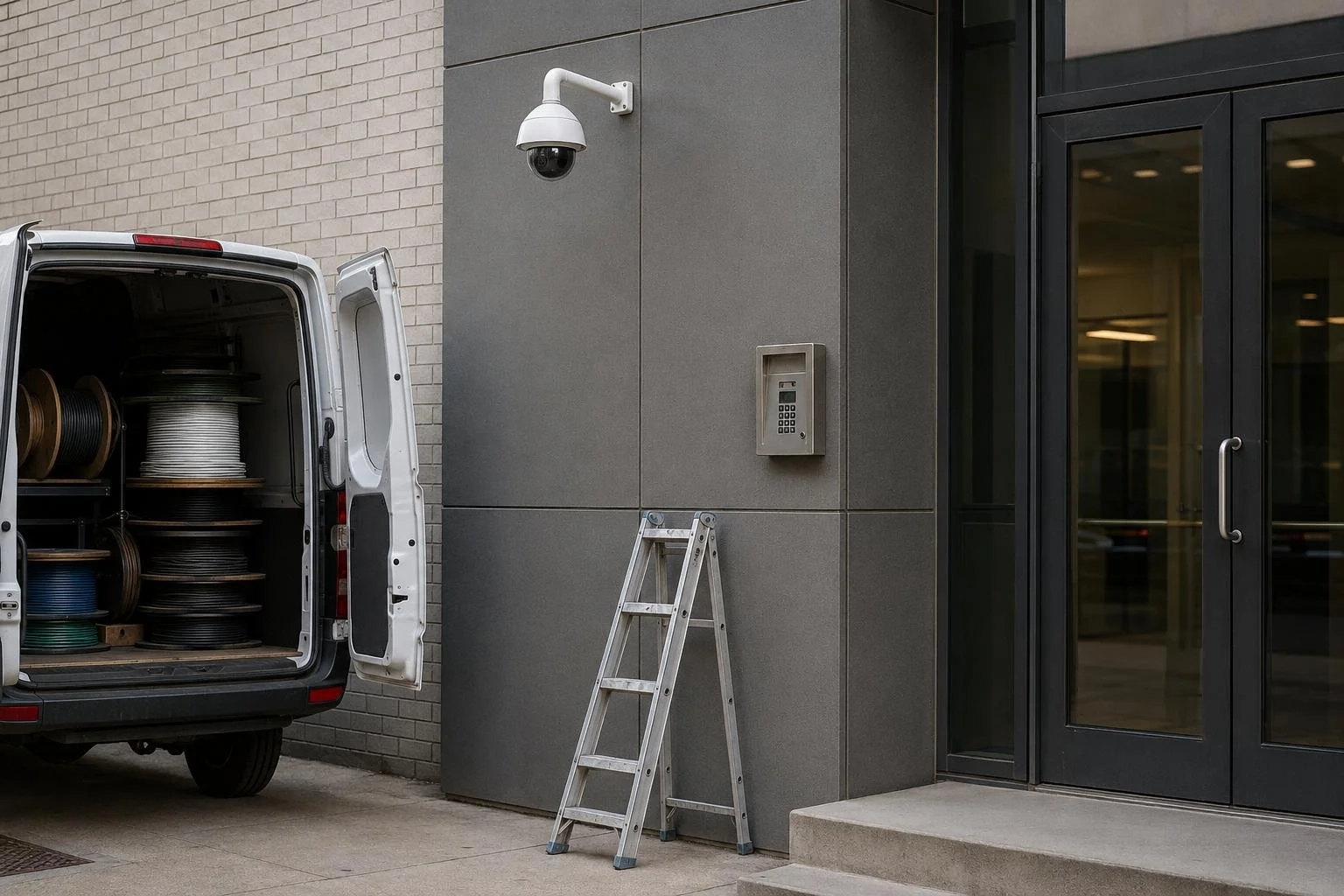
IT field and hardware anchors a commercial-technology cluster, and it stacks the way route businesses do — along a territory of commercial buildings you are already visiting, rather than at a single location.
It pairs most directly with security systems, where the camera and access-control work overlaps with the low-voltage side of a locksmith operation. It sits comfortably alongside the other recurring commercial trades a business already buys, including fire protection inspection and general handyman and facilities work. Every one of those is sold to a facilities manager who already has your number.
That is the difference between owning a job and owning a portfolio. You are not building a one-van install shop. You are building the commercial-technology relationship a set of businesses depend on — the vendor they call every time they open a location — anchored by physical, recurring work software cannot take. A portfolio like that, weighted toward commercial contracts, sells to a buyer as one asset, which is how it ends up worth over a million dollars at sale, instead of a van full of cable.
Frequently asked questions
Is an IT services business profitable? On the physical, commercial side, yes — skilled network work commands professional rates and business clients pay for reliability, which leaves room after paying a lead technician. The honest test is whether the customer list is anchored in recurring, physical work rather than commoditized remote support.
How much does it cost to start an IT services business? Roughly $15,000–$40,000 to start with tools, certifications and insurance, and it is genuinely side-hustle friendly. About $120,000–$250,000 to acquire an established contract list, or $60,000–$120,000 for a franchise with a support backbone.
Do I need a license for IT and cabling work? Often yes — many states require a low-voltage or limited-energy electrical license for structured cabling and camera installation, and vendor certifications (CompTIA, BICSI, manufacturer credentials) are the commercial trust standard. Confirm your state and local rules first. [S5]
Won't AI replace IT work? It is taking the remote and routine parts — helpdesk, monitoring, basic support. The physical, on-site work of pulling cable, mounting cameras, wiring racks and installing point-of-sale needs a person in the building, which is exactly where this business is positioned.
Where to go from here
Download the free guide.50 Boring Businesses That Make Millionaires is the full result of the research: fifty categories run against the four tests, what each one costs to enter by all three paths, what has to line up for it to work, and how they pair into a portfolio. Free at microbusinessmillionaire.com.
Read the book.The Microbusiness Millionaire: How Ordinary People Build Extraordinary Wealth One Microbusiness at a Time follows four people who each reached a portfolio worth more than a million dollars by a different path. One keeps a hospital job and uses CDFI financing to acquire one stable service business, then another, then a third. One saves on a single income for three years, leaves a master plumber's wage, and stacks trade service lines starting with an SBA microloan. One uses an SBA Community Advantage loan to open a franchise, then opens three more. One starts with about $5,000 on the side and keeps a W-2 for years, building the slowest and most patient version of the same result. Four starting points, four amounts of money, four portfolios worth over a million dollars at sale. The book is coming soon — join the email list at microbusinessmillionaire.com to hear when it lands.
Join the next cohort — Microbusiness Millionaire: Operating System. The book gives you clear examples of how it's done. The course is the step-by-step system for doing it yourself: screening a real company against the four tests, running the owner-replacement cash-flow math on a seller's actual numbers, knowing when to walk, knowing which lenders fund deals this size, and installing the operator who runs the business without you. Eight weeks online, five seats a cohort, waitlist first — at microbusinessmillionaire.com.
About the author
Chris Scott has spent more than twenty-five years in the small-business arena. As the director of a Community Development Financial Institution (CDFI) and as management at the U.S. Small Business Administration (SBA), he saw thousands of business plans and loan applications cross his desk. His research into which microbusinesses build wealth — and which quietly build a job — became The Microbusiness Millionaire and the free companion guide, 50 Boring Businesses That Make Millionaires.
Sources & references
[S1] U.S. Bureau of Labor Statistics, Occupational Outlook Handbook: Computer Support Specialists — ~50,500 annual openings for computer support specialists (2024–34). bls.gov/ooh
[S2] U.S. Bureau of Labor Statistics, Computer and Information Technology Occupations (May 2024). bls.gov/ooh
[S3] U.S. Federal Trade Commission, Franchise Rule / FDD Items 7 and 19. ftc.gov
[S4] Opportunity Finance Network CDFI Locator (ofn.org); SBA Lender Match (sba.gov).
[S5] U.S. Small Business Administration, Apply for licenses and permits (sba.gov); state low-voltage/limited-energy electrical licensing; industry certifications (CompTIA, BICSI, manufacturer credentials); PCI and local permit requirements.
[S6] IT services franchise disclosure data as reported by franchise-filing aggregators and franchisor materials reading recent FDDs: CMIT Solutions approximately $106,450–$165,450 on an initial franchise fee of $49,950–$54,950; TeamLogic IT approximately $107,000–$189,850 on an initial franchise fee near $49,500, with narrower readings of $109,490–$144,742. Reported figures vary between aggregators and filing years; verify the current FDD directly for any brand.
[Internal]50 Boring Businesses That Make Millionaires — IT Field & Hardware Services entry (tag, three-path entry-cost table, portfolio pairings, framework note, "what it takes to make this one work"), drawn from the author's research and filtered through the underwriting criteria he applied as a CDFI lender.
This article is for general information only and is not legal, financial, tax, or investment advice. Category-level figures are reference points, not a specific-deal projection; individual businesses vary. Consult a CPA, attorney, business broker, franchise consultant, or CDFI loan officer before acting.
Last updated: 8/21/2026.