

How to Start a Water Treatment Business
About forty million American homes already have a system that needs salt, filters and service on a schedule. Here is what a water treatment business costs, what it pays after you replace yourself, and why one decision made before you install anything sets your cash flow for the next decade.
Chris Scott — former CDFI director, SBA manager
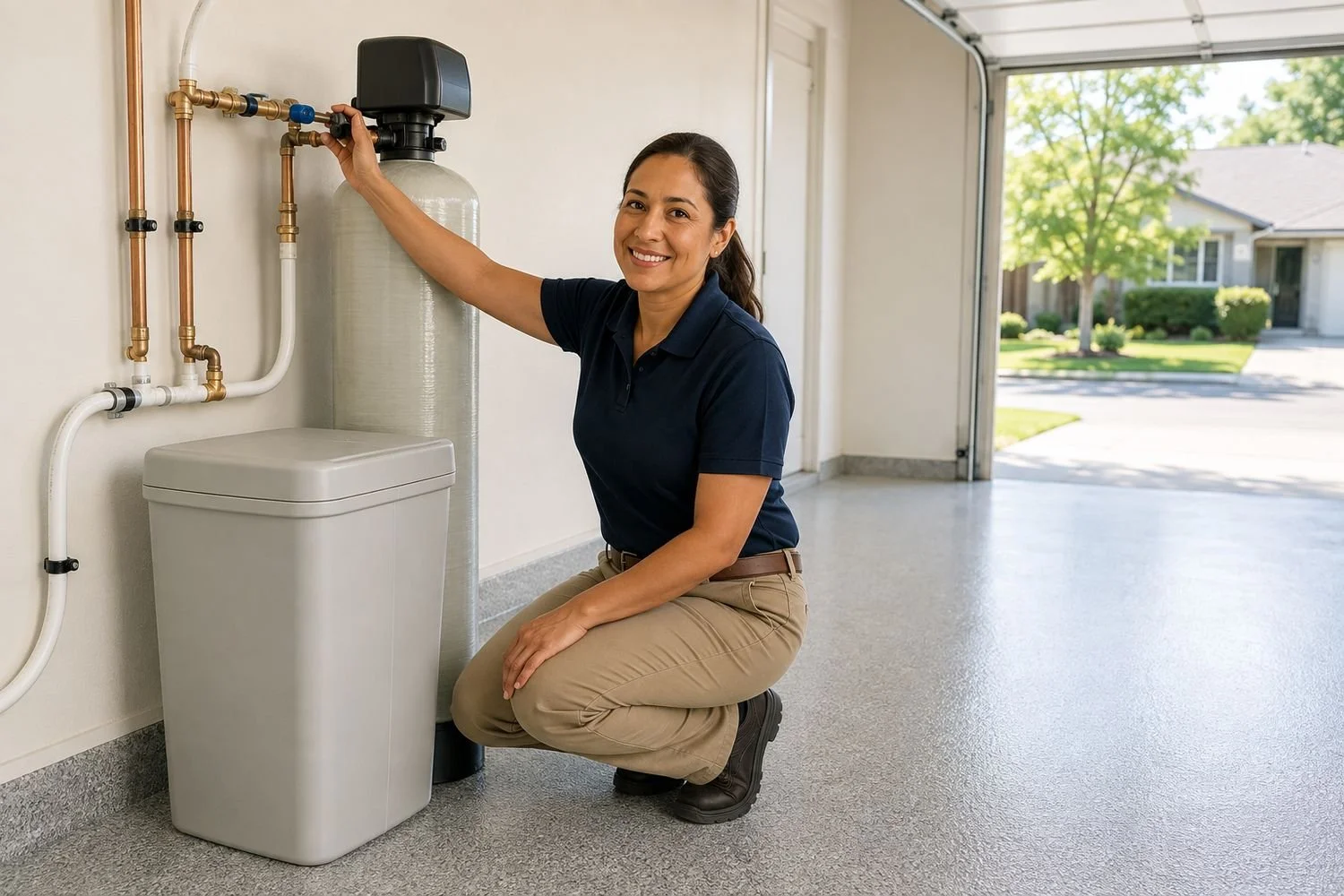
As the director of a Community Development Financial Institution (CDFI), I reviewed loan applications and made the approve-or-decline decisions. Later, at the U.S. Small Business Administration (SBA), I monitored lending programs and saw which loans were approved and which were denied. Across those two roles, thousands of business plans and loan applications crossed my desk. I still work at the SBA, now in its venture capital division. That work is where I learned what a durable business looks like on paper, and what a business that only looks durable looks like on paper.
It is not, however, where the list of fifty came from. That came from years of research, running category after category through the same four questions: Is it profitable? Does it have recurring revenue? Is it recession resistant? Is it AI resistant? Those four questions are the framework behind the book, The Microbusiness Millionaire, and they are what separated the categories that built real wealth from the ones that quietly built a job with a P&L attached. Fifty survived the screen. Far more never made it through.
Water treatment is one of the fifty, and the money keeps arriving long after the sale, in the form of salt and filters.
It carries a single condition, and the condition is unusual: a decision you make once, before you install a single system, that then sets your cost of goods for as long as you own the business.
A word on the neighbor.Plumbing is also one of the fifty, and the two overlap enough that people reasonably ask whether water treatment is simply plumbing with a different name. The pipes are the same; the business is not. Plumbing is dispatch work — the phone rings because something failed, and the revenue ends when the repair does. Water treatment is installed-base work — the revenue begins when the install ends. Plumbing is paid to fix what broke. Water treatment is paid to maintain what works. They belong together, and the last section explains why, but they are bought, priced and valued differently, and a plumber who adds treatment without noticing that ends up running two businesses on one set of assumptions.
The industry: installed, recurring, and hard-water-driven
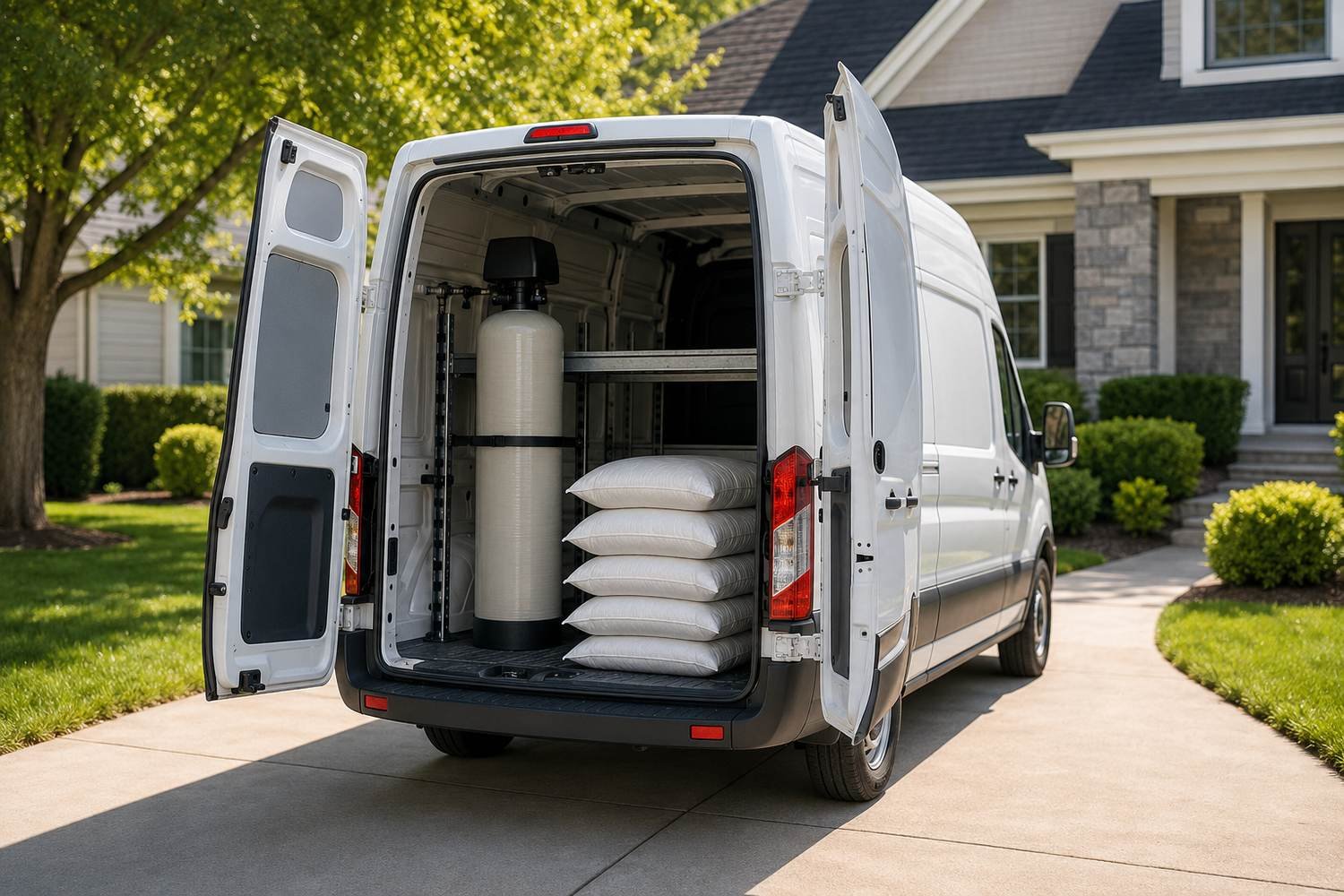
Water treatment runs on a large and growing installed base. Roughly 30% of U.S. households — about 40 million homes — have a water softener or conditioner, according to the Water Quality Association's 2025 survey, and ownership concentrates sharply by geography: about 55% of homes in the Midwest and Southwest have one, against far fewer in naturally soft-water areas. [S1]
Every one of those systems needs salt, filters and periodic service, which is the recurring revenue this category is built on. In most service work the installed base is something you have to create, one customer at a time. Here it already exists, in tens of millions of garages, and much of it is being serviced by nobody in particular.
The labor benchmark comes from the installation, maintenance and repair group, which is projected to grow faster than average and to turn over about 608,100 openings a year. [S2] The group pays above the all-occupations median, though how far above depends entirely on where you are standing. Take the figure for your own market. That wage is the price of replacing yourself — the number that shows up the day you take yourself off the truck. Every profit number later in this article has to survive it, and the real cost runs higher once payroll taxes and insurance go on top.
That is a real wage, and it is the number every other figure in this article has to clear. The install-and-service skill is trainable. What decides whether the wage is affordable sits upstream of the labor entirely.
Why water treatment made the list
Every category in the research had to clear four tests. Clear three and you usually have a self-employed job in disguise.
Does it pay after you replace yourself? It does, because the recurring salt-and-filter revenue keeps arriving whether or not the owner is the one making the sale. That decoupling of revenue from the owner's daily effort is what owner replacement requires, and here it is how the business already works.
Does the revenue recur? Powerfully, and without a sales call. Once a system is installed it needs salt on a schedule and filters on a schedule — revenue that requires a delivery and a service visit rather than a sales call. Nobody has to be persuaded twice.
Does it survive a recession? Reasonably well, and structurally rather than hopefully. An installed softener is maintained to protect more expensive things behind it — the plumbing, the water heater, the appliances. New-system sales soften in a downturn. The salt and service revenue does not, because stopping it costs the homeowner more than continuing it.
Will it still need humans in ten years? Someone has to install the system, service it and carry the salt into the garage. Software can schedule the route and flag the reorder. It cannot make the plumbing connection or test the water.
Four for four, on a model that keeps paying after the selling stops.
The most consequential document in a water treatment business is one that never appears on the financial statements: the supply agreement. The research kept finding the same split. A dealer who chose the distributor carefully years earlier, and locked in pricing and territory terms he could live with, has everything downstream flowing from that one decision — the cash flow, the recurring salt revenue, the ability to price against the company across town. A dealer who signed the first agreement in front of him is running the same trucks, servicing the same systems, and keeping a good deal less of the money, because his cost of goods was set by somebody else and it is not up for renegotiation. Two water treatment businesses can show identical revenue, identical customer counts and identical equipment, and be worth materially different amounts — and the difference is not visible anywhere on the profit and loss until you read the contract behind it. Anyone underwriting this category, or buying into it, should ask for the supply agreement before the tax returns.
What it takes to make this one work
A note on the tags. The tags do not grade a business — they tell you what has to line up for it to work in your hands. Water treatment carries one: Best paired. On this category the tag is less a condition than an instruction manual.
Best paired: choose the supply partner, then choose the route
The condition: competitive equipment comes through a distributor or a franchisor. You do not manufacture softeners, you source them — so entering this category is choosing a supply partner as much as choosing a business. That partner sets your equipment cost, often your territory, and the terms that shape your cash flow for years after you have forgotten signing them.
The move that meets it: treat the supply-partner choice as the acquisition itself, and give it the scrutiny you would give to buying a business. Compare two or three rather than signing the first agreement offered, read the terms on pricing, territory and exclusivity, and choose the economics you can live with for ten years — because that is roughly how long you will.
The upside: get that decision right and the business runs quietly. Salt deliveries and filter changes recur without a sales call, because the revenue arrives from an installed base that needs servicing rather than from anyone hunting for it.
And it bolts cleanly onto a trade already inside the house. A plumbing business is at the water line, already trusted with the system, already the company the household phones about water. It converts a one-off service call into a recurring salt-and-filter relationship with a customer who was already yours.
What it costs to get in — the three paths
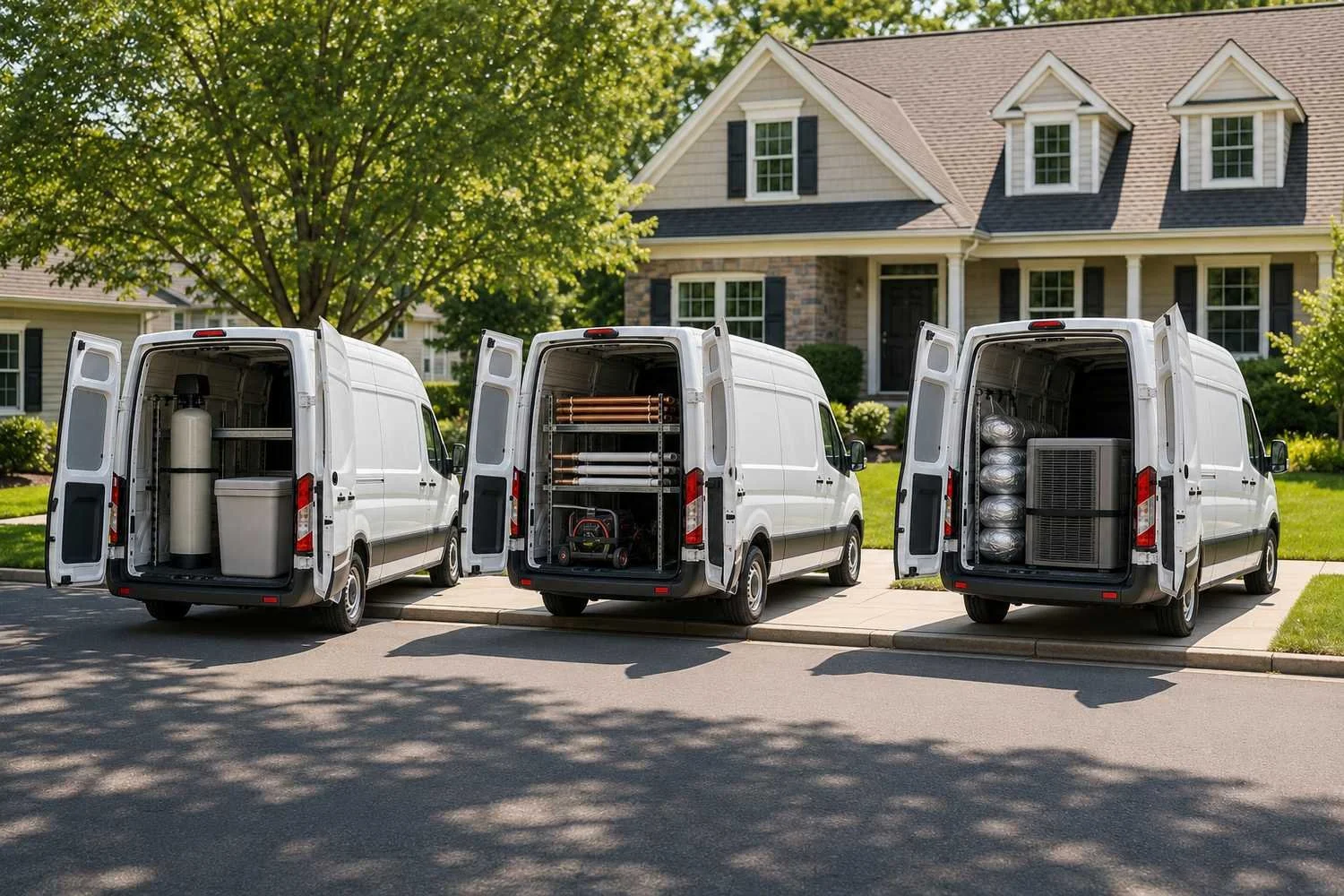
| Path | Typical cost range | Best for |
|---|---|---|
| Startup | $20,000 – $60,000 | Distributor relationship + truck |
| Acquisition (estimate) | $150,000 – $300,000 | Service contracts + customer list |
| Franchise | $130,000 – $800,000+ | Brand + equipment + territory. Example: Culligan. |
Brands are named as real examples so you can check them yourself, not as endorsements, and their actual investment ranges may differ from the range above. Each franchisor's Franchise Disclosure Document (FDD) is the authoritative source and refiles annually: check Item 7 for the initial-investment range and Item 19 for any financial-performance representation before pursuing one. [S3]
The range is enormous rather than wide. Culligan's own filings put the estimated initial investment for a new dealership at $130,000 to $813,515, because a dealership can be a modest residential operation or a full commercial one and one document covers both. [S6] A category number is close to meaningless here; read Item 7 for the specific dealership being offered to you.
More important: not every branded opportunity in this category is a franchise. Much of the water treatment world runs on dealer and distributor agreements — no franchise fee, and also no FDD, no Item 7 and no Item 19 to check anything against. Often cheaper, frequently fine, but a different transaction with different protections. Establish which one you are being offered before anything else.
Notice that the startup row leads with the distributor relationship rather than the equipment. In this category the relationship is the entry.
The acquisition row reads the same way. What changes hands at $150,000 to $300,000 is service contracts and a customer list — salt-and-filter revenue already flowing, on systems already installed. That recurring revenue is the asset, worth considerably more than the trucks and tanks it arrives in.
How people actually fund it

A $20,000 to $60,000 startup sits in the SBA Microloan to CDFI direct lending range — the rung that gets a first truck on the road. A $150,000 to $300,000 acquisition of service contracts moves into CDFI direct lending and SBA Community Advantage territory, comfortably inside the $350,000 ceiling.
One pattern I watched from the lending chair: a qualified borrower walks into a national bank, gets declined, and concludes they cannot be funded. They never learn that a CDFI across town, or a Community Advantage lender, exists precisely for deals this size. Two free national directories will show you the ones near you — the Opportunity Finance Network CDFI locator and SBA Lender Match. [S4]
Finding the lender is the easy half. Water treatment has two tells an underwriter looks for, and this category is unusual in that the second one is a document rather than a number: the share of revenue that is recurring service rather than one-time installs, and the terms of your supply agreement. Recurring service behaves like an annuity and gets priced like one; sane supply terms tell the underwriter the cash flow will still be there in year five. Bring both before either is asked for, and bring the agreement itself rather than a description of it.
The profit reality: owner-replacement cash flow

Here is the calculation that decides more of these deals than anything else in them. A water treatment business looks profitable because the owner is selling, installing, servicing, delivering salt and doing the books — none of it priced. The honest test: after you pay the technicians, and after you pay someone a market wage to run the installs and the service the way you do, is there enough left over for you to own the thing?
Real numbers, and they have to include what an employee actually costs. Water treatment technicians are not published as a separate occupation, so the closest benchmark is the installation, maintenance and repair group, at the rate in your own market. [S2] Add payroll taxes, insurance and workers' compensation at roughly twenty percent on top and you have the real cost of one install-and-service technician. That is the number the business has to clear before you have been paid anything, and it is where the recurring model helps and the supply agreement decides.
The recurring revenue carries a technician’s wage more comfortably than any one-time-sale business could, because it arrives without being re-earned. But what you keep from it is set by your cost of goods, and your cost of goods is set by your supply agreement. Same revenue, same wage, same trucks — a dealer with good terms clears real cash flow after paying the crew, and a dealer with poor terms watches the difference stay upstream. That is why the tag on this category points at the partner rather than the market.
The category-level math is easy — you just did it. Running it on a specific business, where the seller's "profit" quietly contains his own unpriced service hours and the supply terms sit in a contract nobody has shown you yet, is where people freeze. That is the job of the course, Microbusiness Millionaire: Operating System — the four tests turned into a repeatable screen you run on a real deal.
The benefits of owning a water treatment business
Recurring revenue that needs no selling. Salt and filters go out on a schedule, not on a pitch.
A large, growing installed base. ~40 million U.S. homes already have a system needing service. [S1]
Sticky maintenance revenue. An installed system gets serviced to protect the home's plumbing and appliances, even in a downturn.
Bolts onto a trade already in the house. A plumbing or HVAC business you may already own is the cheapest customer acquisition this category will find.
In-home install, service and water chemistry are not things software does.
What separates the strong owners from the struggling ones
Two or three supply agreements compared before one is signed. The defining decision in this category, and the one that cannot be undone later. Cost of goods, territory and a decade of cash flow are all set here, so the strong owners read every term and negotiate the ones that matter.
The service relationship built, not just the install sold. The one-time sale funds the month; the recurring revenue is the business and the thing a buyer pays for. Owners who optimize for the installed base rather than the install rate own an annuity instead of a sales job.
Attached to the trade already in the house. An owner who already runs plumbing or HVAC has in-home trust this category is otherwise expensive to buy. The strong version attaches treatment to that relationship rather than running it alongside as a separate operation.
The installed base serviced properly between sales. The service visit is the relationship here — it is the only time anyone sees you — so the owners who keep the schedule get the renewals and the referrals, and the ones who treat service as an interruption spend the same money finding replacements.
Local water rules known before the first install. Knowing your local position on salt-based systems early lets you sell the right system confidently rather than discovering the constraint on somebody's driveway.
Licenses, permits, and regulations
Water treatment licensing varies by state and by locality, and two items are worth confirming before anything else. Installation generally requires a plumbing connection, which may fall under licensed-trade rules depending on where you are, and several states require a water-treatment or water-conditioning contractor registration in its own right.
The second is more particular to this category. A few jurisdictions — notably parts of California — restrict salt-based softeners for wastewater reasons, which is why salt-free conditioners exist at all. That shapes what you can sell before it shapes anything else. Chemical and salt storage may also be regulated.
Beyond that: a registered entity, general liability, commercial auto, and workers' compensation once you hire. Start with your state and municipal offices and the free SBA "Apply for licenses and permits" tool. [S5] (General information, not legal advice — confirm your local requirements, including any salt-based-system restrictions.)
Build a portfolio, not a job
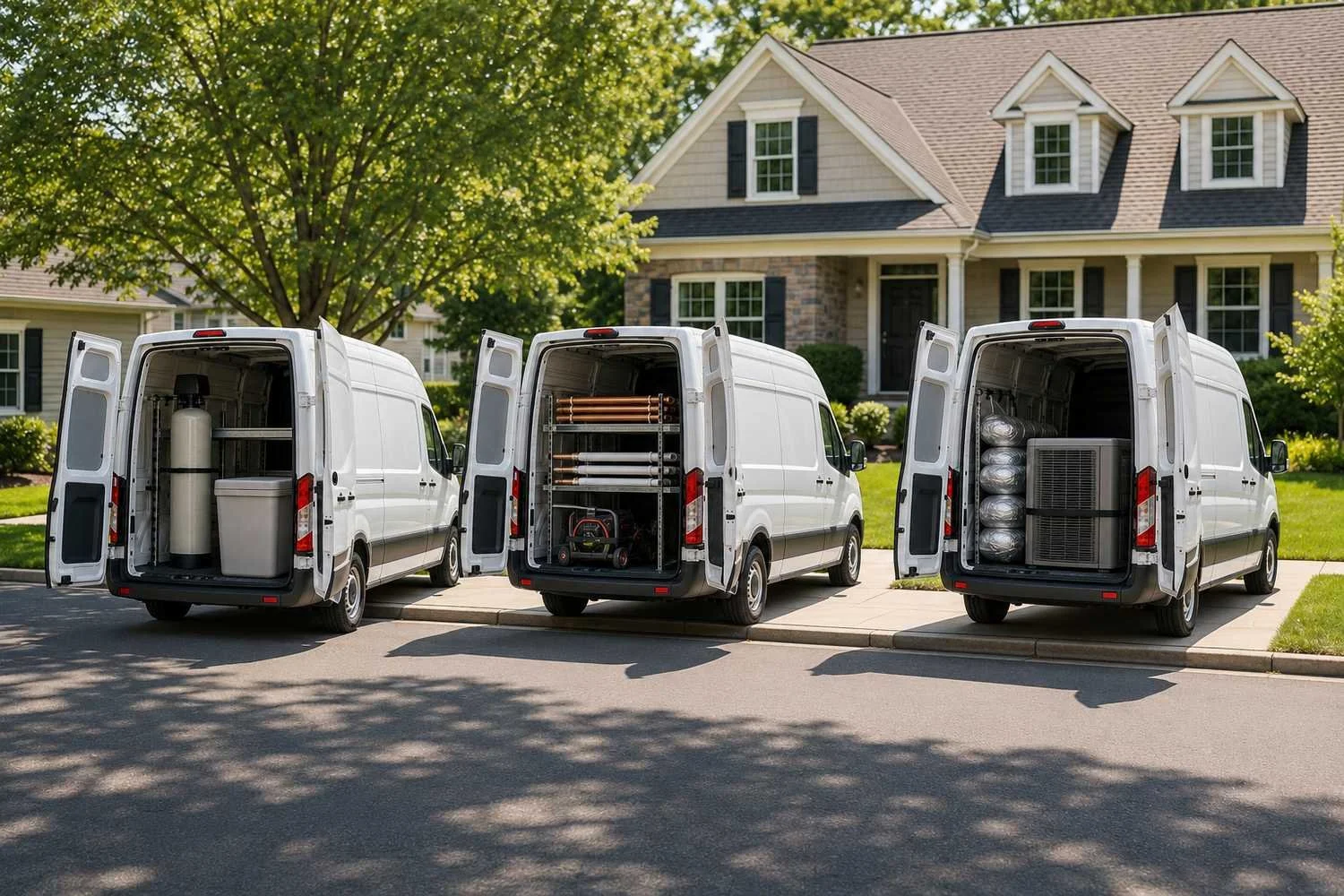
Water treatment is an installed-base business: it grows by accumulating systems that need servicing, not by stacking a route or filling a facility. Its natural home is a portfolio anchored by the trades already inside the customer's house — and the direction of that relationship runs the opposite way from how people usually describe it.
Plumbing is dispatch work, and it is the access rather than the pairing. The plumbing call finds the customer; the water treatment install converts that visit into revenue that recurs for a decade. HVAC works identically, another whole-home mechanical relationship with a technician already in the basement.
Well services pairs differently — a specialty within the same water system rather than an access route, and it matters because well water is where treatment stops being optional.
That is the difference between owning a truck and owning a portfolio. The strong version is never a water-treatment operation standing on its own — it is a recurring-revenue layer added to a home-services relationship you already have. With documented service contracts and a supply agreement a buyer can read without wincing, it sells as one asset rather than a van full of tanks.
Frequently asked questions
Is a water treatment business profitable? It can be, because the salt-and-filter revenue recurs without being re-sold. The honest test is what remains after paying technicians and a manager, and the answer depends heavily on your supply agreement, because that is what sets your cost of goods. Good supply terms plus revenue weighted toward recurring service is what makes the owner-replacement math work.
How much does it cost to start a water treatment business? Roughly $20,000 to $60,000 for a distributor relationship and a truck. About $150,000 to $300,000 to buy an established set of service contracts. Franchising runs far higher and far wider — Culligan's 2025 Item 7 puts a new dealership between $130,000 and $813,515 depending on whether it is residential or full commercial. [S6] Check first whether what you are being offered is a franchise with an FDD or a dealer agreement without one.
What is the most important decision when starting? The supply relationship. Competitive equipment comes through a distributor or a franchisor, so that partner sets your equipment cost, often your territory, and your cash flow for years. Compare two or three and read every term — treat it like buying a business, because in economic terms that is what it is.
Can I add water treatment to my plumbing business? Yes, and it is one of the cleanest add-ons a trade can make. You are already in the home and already trusted with the water system, so selling and servicing treatment converts a one-time service call into recurring revenue from a customer you already have. Price and staff it as a separate line, though — plumbing is paid to fix what broke, and treatment is paid to maintain what works.
Where to go from here
Download the free guide.50 Boring Businesses That Make Millionaires is the full result of the research: fifty categories run against the four tests, what each one costs to enter by all three paths, what has to line up for it to work, and how they pair into a portfolio. Free at microbusinessmillionaire.com.
Read the book.The Microbusiness Millionaire: How Ordinary People Build Extraordinary Wealth One Microbusiness at a Time follows four people who each reached a portfolio worth more than a million dollars by a different path. One keeps a hospital job and uses CDFI financing to acquire one stable service business, then another, then a third. One saves on a single income for three years, leaves a master plumber's wage, and stacks trade service lines starting with an SBA microloan. One uses an SBA Community Advantage loan to open a franchise, then opens three more. One starts with about $5,000 on the side and keeps a W-2 for years, building the slowest and most patient version of the same result. Four starting points, four amounts of money, four portfolios worth over a million dollars at sale. The book is coming soon — join the email list at microbusinessmillionaire.com to hear when it lands.
Join the next cohort — Microbusiness Millionaire: Operating System. The book gives you clear examples of how it's done. The course is the step-by-step system for doing it yourself: screening a real company against the four tests, running the owner-replacement cash-flow math on a seller's actual numbers, knowing when to walk, knowing which lenders fund deals this size, and installing the manager who runs the business without you. Eight weeks online, five seats a cohort, waitlist first — at microbusinessmillionaire.com.
About the author
Chris Scott has spent more than twenty-five years in the small-business arena. As the director of a Community Development Financial Institution (CDFI), he reviewed loan applications and made the approve-or-decline decisions. Later, at the U.S. Small Business Administration (SBA), he monitored lending programs. Across those two roles, thousands of business plans and loan applications crossed his desk. He still works at the SBA, now in its venture capital division. His research into which microbusinesses build wealth — and which quietly build a job — became The Microbusiness Millionaire and the free companion guide, 50 Boring Businesses That Make Millionaires.
Sources & references
[S1] Water Quality Association, 2025 Consumer Attitude Survey (≈30% of U.S. households, ~40 million homes, own a water softener or conditioner; ~55% ownership in Midwest/Southwest hard-water regions). wqa.org
[S2] U.S. Bureau of Labor Statistics, Occupational Outlook Handbook: Installation, Maintenance, and Repair Occupations (~608,100 annual openings across the group). This is a group benchmark, not a single occupation — water treatment technicians are not separately published. bls.gov/ooh
[S3] U.S. Federal Trade Commission, Franchise Rule / FDD Items 7 and 19. ftc.gov
[S4] Opportunity Finance Network CDFI Locator (ofn.org); SBA Lender Match (sba.gov).
[S5] U.S. Small Business Administration, Apply for licenses and permits (sba.gov); state water-treatment/plumbing licensing and local salt-based-system restrictions.
[S6] Culligan International Company, 2025 Franchise Disclosure Document, Item 7: total estimated initial investment for a new start-up dealership of $130,000 to $813,515, of which $53,513 to $113,513 is payable to the franchisor or an affiliate; initial franchise fee up to $38,515. Deionization-capable dealerships may add $35,000 to $150,000 of production equipment. Verify the current FDD directly with the franchisor. Note that many branded water-treatment opportunities are dealer or distributor agreements rather than franchises, and carry no FDD.
[Internal]50 Boring Businesses That Make Millionaires — Water Treatment entry (tag, three-path entry-cost table, portfolio pairings, framework note, "what it takes to make this one work") and Plumbing entry (pairings). Drawn from the author's research and filtered through the underwriting criteria he applied as a CDFI lender.
This article is for general information only and is not legal, financial, tax, or investment advice. Category-level figures are reference points, not a specific-deal projection; individual businesses vary. Consult a CPA, attorney, business broker, franchise consultant, or CDFI loan officer before acting.
Last updated: 8/25/2026