

How to Start a Tree Care Business
The barrier that scares most people out of this business is the same thing that protects the ones who stay. Here is what a tree care business costs, what it pays after you replace yourself, and why the credential and the workers' compensation rate decide more here than any piece of equipment you will buy.
Chris Scott — former CDFI director, SBA manager
As the director of a Community Development Financial Institution (CDFI), I reviewed loan applications and made the approve-or-decline decisions. Later, at the U.S. Small Business Administration (SBA), I monitored lending programs and saw which loans were approved and which were denied. Across those two roles, thousands of business plans and loan applications crossed my desk. I still work at the SBA, now in its venture capital division. That work is where I learned what a durable business looks like on paper, and what a business that only looks durable looks like on paper.
It is not, however, where the list of fifty came from. That came from years of research, running category after category through the same four questions: Is it profitable? Does it have recurring revenue? Is it recession resistant? Is it AI resistant? Those four questions are the framework behind the book, The Microbusiness Millionaire, and they are what separated the categories that built real wealth from the ones that quietly built a job with a P&L attached. Fifty survived the screen. Far more never made it through.
Tree care is one of the fifty, and here the thing that looks like a wall turns out to be the gate.
Most people look at the insurance cost and the danger and walk away, which is reasonable and also the reason the category pays. The owners who understand what those barriers do are the ones who build something worth owning here.
A word on the neighbor.Lawn care and landscaping is also one of the fifty, and the two look adjacent enough that people assume tree work is simply the next service a lawn crew adds. It is not the same business. Lawn care is route work you can staff with general labor. Tree care is hazard work at height that needs a certified climber and carries a workers’ compensation load a lawn crew never sees. Lawn care scales by adding stops. Tree care scales by adding credentials. They belong in the same portfolio and the last section explains how — but bolting one onto the other without understanding that difference is how a profitable lawn route acquires an unprofitable tree division.
The industry: growing fast, and nobody owns it
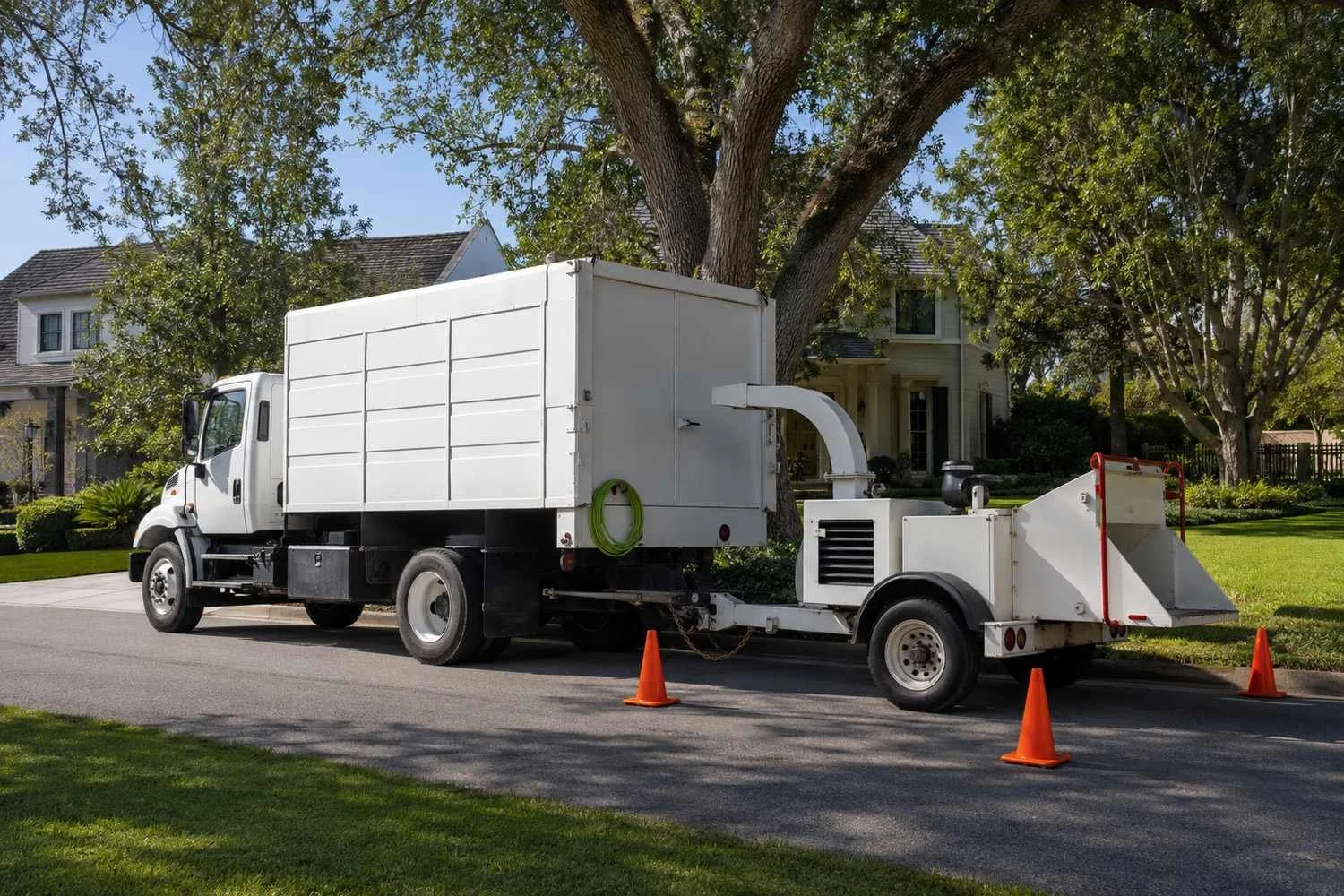
U.S. tree trimming services are about $39.5 billion in 2026 across roughly 175,000 businesses, grown at a 6.1% compound rate over five years, roughly double the pace of the economy as a whole. [S1]
Do the arithmetic and the average business turns over around $226,000 a year. This is a market of local crews, not national chains — even Asplundh, the largest company in the country, does not dominate it. [S1] What the growth rate is telling you is that demand is outrunning the supply of qualified crews, and the word doing the work there is qualified.
The labor benchmark: tree trimmers and pruners sit inside the grounds maintenance group. Skilled climbers and certified arborists command well above the group's base wage, precisely because the work is dangerous and the credential is scarce. [S2] What either one costs is a local question — the spread between markets is wider than the spread between categories. The Resource Directory in the free tools shows where to pull your own. That wage is the price of replacing yourself — what a manager would have to be paid to do the work you would otherwise be doing. Every profit number later in this article has to survive it, and the real cost runs higher once payroll taxes and insurance go on top.
That gap between general labor and certified labor is the whole opportunity here: the wage you pay is higher than the neighboring trades, and so is the price you charge — and the second gap is larger than the first.
Why tree care made the list
Every category in the research had to clear four tests. Clear three and you usually have a self-employed job in disguise.
Does it pay after you replace yourself? It does, because the ISA-certified arborist credential supports pricing that carries a skilled crew and a manager at the same time. The specialty is exactly what makes replacing yourself affordable here.
Does the revenue recur? Partly through maintenance, since mature trees need trimming on a predictable cycle, and powerfully through weather. Every storm produces a wave of removals, and the owners positioned to answer it capture demand with nowhere else to go and no time to shop around.
Does it survive a recession? The hazard work does. A dead limb over a driveway is a liability problem rather than a cosmetic one, and it gets handled regardless of the economy. Aesthetic pruning softens in a downturn; hazard removal does not, because the homeowner's insurer and the homeowner's nerves are both asking about it.
Will it still need humans in ten years? Someone has to climb the tree, read the lean, judge the cut and run the chipper. Software can schedule the crew and price the job; it cannot stand in the canopy and decide which way eight hundred pounds of limb is going to fall.
Four for four, in a trade where demand is outrunning the supply of qualified crews.
Picture two tree owners asking for the same money for the same chipper and the same second truck. On revenue and equipment they are indistinguishable. One is an ISA-certified arborist with a written safety program and a workers’ compensation experience rating below the industry benchmark. The other runs a truck-and-chainsaw operation with a comp rate that says plainly how the last few years have gone. Those two businesses are not fundable on the same terms, and the reason has nothing to do with who cuts wood better. Here is the part worth carrying out of the lending chair: the comp experience rating is not an expense line. It is a single number summarizing how the business is run, produced by an outside party with no reason to flatter anyone, covering years the owner cannot go back and re-do.
What it takes to make this one work
A note on the tags. Every category in the fifty cleared the same four tests; far more never made it through. The tags do not grade a business — they tell you what has to line up for it to work in your hands. Tree care carries one: Rewards a specialty. On this category the tag is less a condition than an instruction manual.
Rewards a specialty: the credential is the competitive position
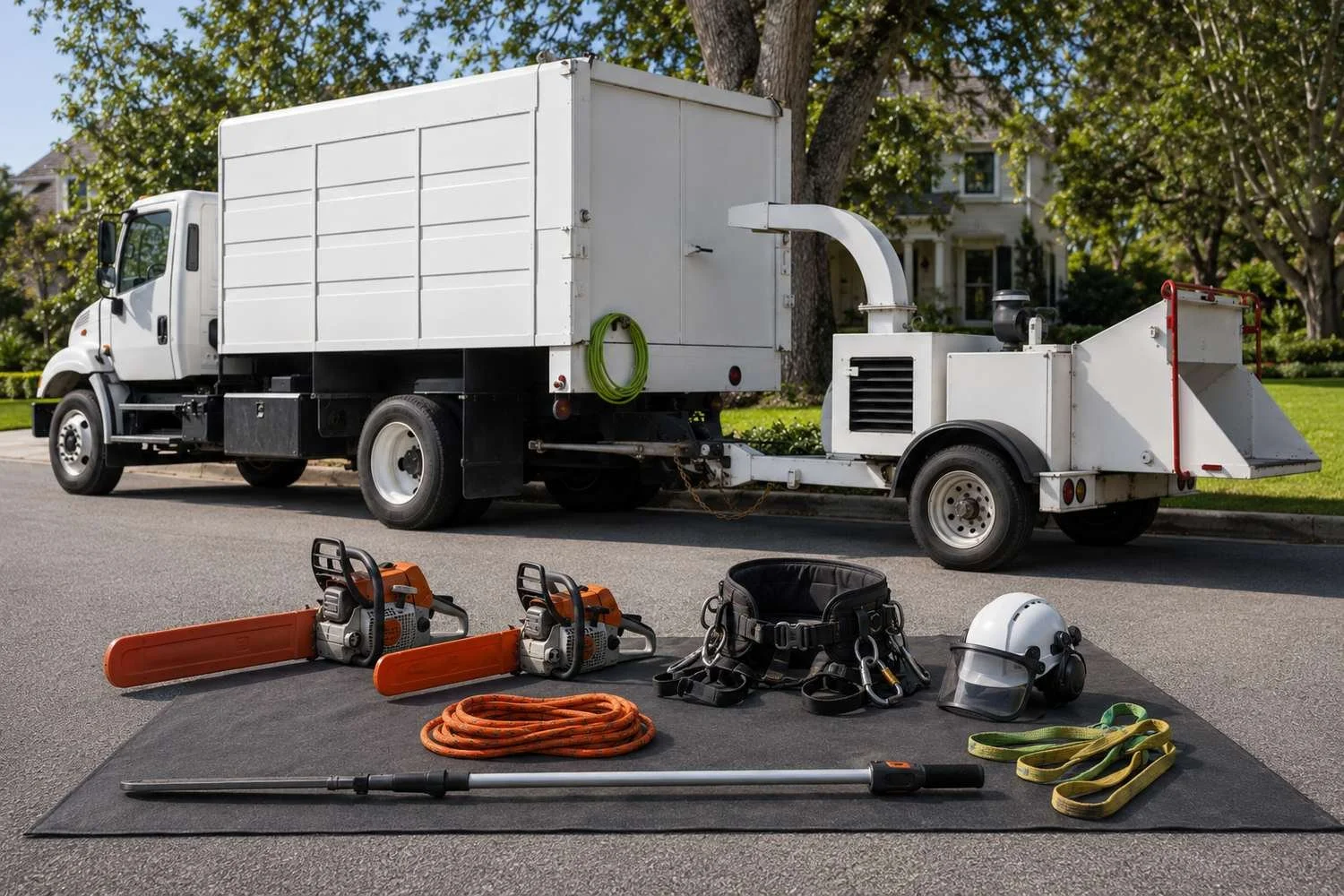
The condition: workers’ compensation and liability take a real bite out of cash flow here, because this is physical work at height with heavy equipment and the insurance market prices that honestly. Here insurance is one of the largest lines on the page. Plan around it and the numbers work; leave it out of the model and they never close.
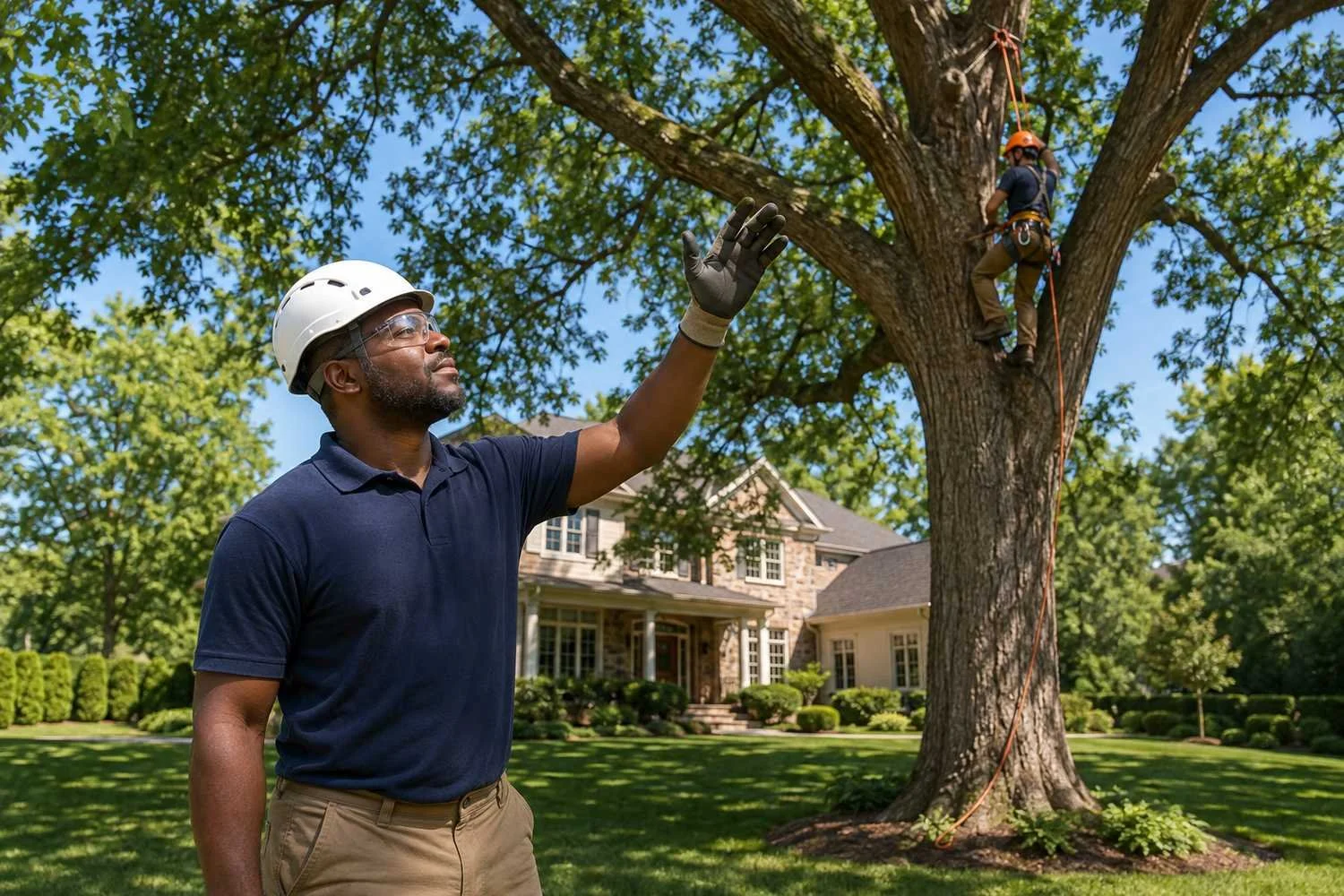
The move that meets it: earn the ISA Certified Arborist credential and run a real safety program behind it. The credential does two jobs: it supports pricing that separates you from the truck-and-chainsaw competition, and paired with a documented safety program it holds down your workers’ compensation experience rating.
That second job is the one most owners miss. The comp rate looks like a fixed cost handed to you by an insurer; it is not. It is a number you manage down through training, written protocol and a clean incident record, and over a few years the difference between a well-run crew and an average one on that single line is worth more than any piece of equipment you will buy.
The upside: those same barriers are why this category does not commoditize. A certified arborist set against someone with a rented chainsaw is not a price comparison — it is a risk comparison, and the certified owner wins those. Then the storm comes through and the emergency work goes to whoever is certified, insured and ready that morning. The credential is not overhead here; it is the competitive position.
What it costs to get in — the three paths
| Path | Typical cost range | Best for |
|---|---|---|
| Startup | $25,000 – $80,000 | Chainsaw, chipper, truck, insurance |
| Acquisition | $241,750 – $320,000 | Equipment + insurance + crew + booked schedule |
| Franchise | $335,000 – $490,000 | Brand + equipment package + lead flow. Example: Monster Tree Service. |
Brands are named as real examples so you can check them yourself, not as endorsements. Each franchisor's Franchise Disclosure Document (FDD) is the authoritative source and refiles annually: check Item 7 for the initial-investment range and Item 19 for any financial-performance representation before pursuing one. [S3]
The franchise column deserves a warning, because it is the only path in this table sitting outside the book’s lending lane. Tree care franchising runs far higher than the exterior-services franchises beside it, since the equipment package — chip truck, chipper, often a bucket truck — is inside the investment rather than bolted on afterwards. [S6] At the top of that range the project exceeds the $350,000 Community Advantage ceiling, which makes the franchise route a conventional-finance decision while the other two columns are not.
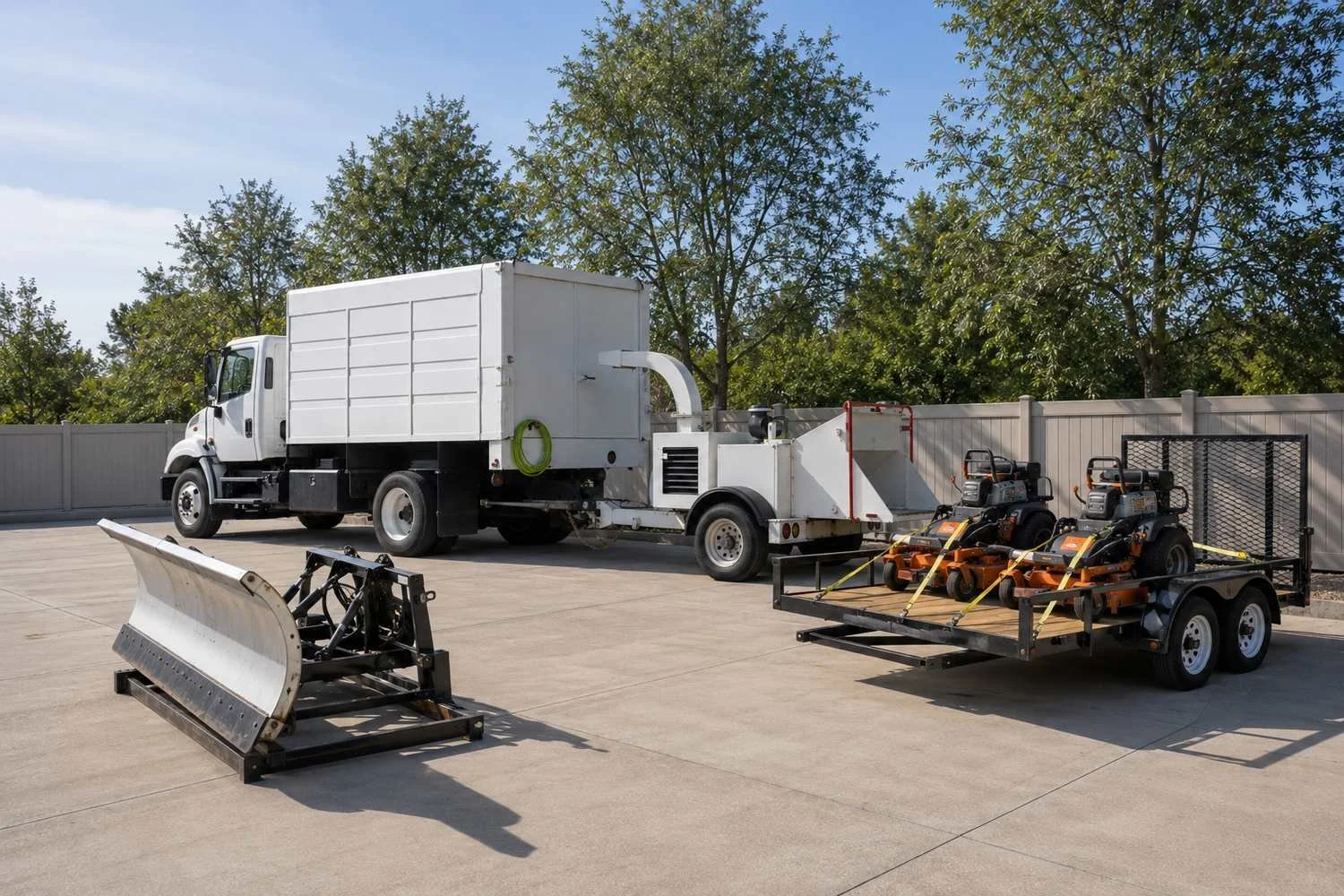
Tree care carries a high startup number, and the reason is honest: the chipper and the chip truck are real equipment, and the insurance is real money spent before you cut a limb.
That is the barrier — and the barrier is the point. A category anyone could enter for $2,000 would be commoditized by the people who did. The $25,000 floor here does a job for you every day you stay in business.
How people actually fund it

A $25,000 to $80,000 startup sits in the SBA Microloan to CDFI direct lending range. A $241,750 to $320,000 acquisition of an equipped and crewed operation moves into CDFI direct lending and SBA Community Advantage territory, comfortably inside the $350,000 ceiling.
One pattern I watched from the lending chair: a qualified borrower walks into a national bank, gets declined, and concludes they cannot be funded. They never learn that a CDFI across town, or a Community Advantage lender, exists precisely for deals this size. Two free national directories will show you the ones near you — the Opportunity Finance Network CDFI locator and SBA Lender Match. [S4]
Finding the lender is the easy half. Tree care has two specific tells an underwriter looks for, both unusually concrete: your ISA certification and your workers’ compensation experience rating, in writing and up front. Those two documents say more about the business than the revenue line, because they price the risk rather than describe the activity. A clean comp rate is collateral that cannot be bought, only accumulated.
The profit reality: owner-replacement cash flow

Here is the calculation that decides more of these deals than anything else in them. A tree care company looks profitable because the owner is climbing, running the crew, quoting the jobs and doing the books — none of it priced. The honest test: after the crew, and after a certified crew lead paid a market wage to run the jobs the way you run them, is there enough left for you to own the thing?
Real numbers, with the wrinkle that defines this category. General grounds labor is the cheapest wage in the group — but you cannot staff tree work with general labor, and that benchmark is the wrong one for this test. [S2] The number that decides it is the certified crew lead. The closest published comparison is a first-line supervisor of landscaping and grounds services; look that role up for your own market before you model anything. [S7] Then load payroll taxes and a workers' compensation rate reflecting work at height, which runs high. The person who replaces you costs a good deal more than the survey line by itself suggests.
Which is why the specialty is the tag on this category rather than a nice-to-have. The pricing an arborist commands is what makes the arithmetic work after the comp and the skilled wages come out. Run the same trucks and crew without the credential and the pricing that goes with it, and the insurance quietly takes the whole difference.
And note which lever that is. Wages are set by the market, equipment by the dealer, fuel by the pump. The comp rate is set by your own record — the closest thing this category has to a cost line with your hand already on it.
The category-level math is easy — you just did it. Running it on a specific company, where the seller’s “profit” contains his own unpriced climbing hours and the comp experience rating is buried three years deep in policy renewals, is where people freeze. That is the job of the course, Microbusiness Millionaire: Operating System — the four tests turned into a repeatable screen you run on a real deal.
The benefits of owning a tree care business
Growth at roughly double the pace of the economy. 6.1% a year, with demand outrunning the supply of qualified crews. [S1]
A credential that commands premium pricing. ISA certification is a moat competitors have to earn, not buy.
Weather-driven demand that cannot be deferred. Every storm sends emergency removals to whoever is certified, insured and ready that morning.
A barrier that works for you. The insurance cost and the danger that turn casual entrants away keep your pricing intact.
Very low AI and automation exposure. Nobody is robot-climbing a storm-damaged oak.
What separates the strong owners from the struggling ones
The comp rate managed as a lever, not accepted as a bill. The defining decision in this category. The experience rating moves in response to training, protocol and a clean incident record, and owners who work it down keep cash flow their competitors hand to an insurer every year.
The credential earned before the volume is chased. ISA certification is what lets you stop competing on price with rented-chainsaw owners, and every month without it is pricing you cannot get back. Treat it as the first purchase, not the reward for a good year.
Coverage carried to the real exposure. A dropped limb through a roof is the claim that defines this category, and owners who insure properly can bid commercial and municipal work the underinsured cannot touch. The policy opens doors as well as closing risks.
Demand booked before the chipper is bought. Equipment does not create customers. A booked schedule justifies the second truck, in that order — and holding that line keeps the balance sheet clean enough to borrow when the right acquisition appears.
Hazard work priced as hazard work. The dead tree over the house is a risk job and carries risk pricing. Bidding it like a routine trim gives away both the money and the time needed to take it down safely.
Licenses, permits, and regulations
Tree care licensing varies by state and is worth confirming rather than assuming. Some states license or register tree care owners outright. Many municipalities regulate removal through permits, particularly for protected or heritage species, and pesticide application for plant health work requires a state applicator license of its own.
The credential that matters commercially rather than legally is ISA Certified Arborist standing, increasingly a bidding requirement on municipal and commercial work — which moves it from optional to mandatory the moment you go after the accounts worth having.
Beyond that: a registered entity, general liability at limits appropriate to the exposure, commercial auto, and workers’ compensation for every crew member without exception. Start with your state and municipal offices and the free SBA "Apply for licenses and permits" tool. [S5] (General information, not legal advice — confirm your local requirements.)
Build a portfolio, not a job
Tree care is project work: high-ticket jobs booked one at a time, dispatched to a different address every day. Its two pairings both come from other clusters, so the logic connecting them is worth stating rather than assuming.
Lawn care and landscaping is a route, and it is the lead source rather than the pairing. A lawn crew is on a few hundred properties every week, standing under the trees — the best early-warning system for hazard work that money can buy. The route finds the job; the certified crew prices and performs it. Run the other way, with a lawn owner adding tree work to look full-service, you inherit a comp rate and a liability profile the route was never priced for.
Snow removal pairs on asset utilization rather than customers. The trucks and crew that clear storm damage in October are otherwise idle in January, in northern markets — a real pairing, but bought for the equipment calendar rather than the customer list.
Put all three together and the certified arborist who also maintains the grounds and clears the winter storm damage becomes the property-care vendor an HOA never replaces.
That is the difference between owning a truck and owning a portfolio. The thing being built is not a tree-cutting operation — it is the property-care vendor a few hundred properties depend on, anchored by a credential the buyer inherits and a comp record the buyer can read. A portfolio like that sells as one asset. That is how it ends up worth over a million dollars at sale, rather than a chipper you happen to own.
Frequently asked questions
Is a tree care business profitable? At scale it is, but only with the credential and the pricing that comes with it. The honest test is what the business still throws off after paying skilled crew and carrying the comp load this work requires.
How much does it cost to start a tree care business? Roughly $25,000 to $80,000 for a chainsaw, chipper, truck and insurance, because the equipment and the coverage are real money before the first job. About $241,750 to $320,000 for an equipped and crewed acquisition. Franchising runs far higher, roughly $335,000 to $490,000, because the equipment package sits inside the investment. [S6]
Do I need to be a certified arborist? Not always as a matter of law, but commercially it is the whole game. ISA Certified Arborist standing supports premium pricing, wins municipal and commercial bids, and paired with a safety program helps hold down your comp rate. [S5]
Why is insurance such a big deal in tree care? Because the work is genuinely dangerous and the insurance market prices that honestly. Your experience rating is both a major cost and a lever you control through training and a clean incident record.
Where to go from here
Download the free guide.50 Boring Businesses That Make Millionaires is the full result of the research: fifty categories run against the four tests, what each one costs to enter by all three paths, what has to line up for it to work, and how they pair into a portfolio. Free at microbusinessmillionaire.com.
Read the book.The Microbusiness Millionaire: How Ordinary People Build Extraordinary Wealth One Microbusiness at a Time follows four people who each reached a portfolio worth more than a million dollars by a different path. One keeps a hospital job and uses CDFI financing to acquire one stable service business, then another, then a third. One saves on a single income for three years, leaves a master plumber's wage, and stacks trade service lines starting with an SBA microloan. One uses an SBA Community Advantage loan to open a franchise, then opens three more. One starts with about $5,000 on the side and keeps a W-2 for years, building the slowest and most patient version of the same result. Four starting points, four amounts of money, four portfolios worth over a million dollars at sale. The book is coming soon — join the email list at microbusinessmillionaire.com to hear when it lands.
Join the next cohort — Microbusiness Millionaire: Operating System. The book gives you clear examples of how it's done. The course is the step-by-step system for doing it yourself: screening a real company against the four tests, running the owner-replacement cash-flow math on a seller's actual numbers, knowing when to walk, knowing which lenders fund deals this size, and installing the manager who runs the business without you. Eight weeks online, five seats a cohort, waitlist first — at microbusinessmillionaire.com.
About the author
Chris Scott has spent more than twenty-five years in the small-business arena. As the director of a Community Development Financial Institution (CDFI), he reviewed loan applications and made the approve-or-decline decisions. Later, at the U.S. Small Business Administration (SBA), he monitored lending programs. Across those two roles, thousands of business plans and loan applications crossed his desk. He still works at the SBA, now in its venture capital division. His research into which microbusinesses build wealth — and which quietly build a job — became The Microbusiness Millionaire and the free companion guide, 50 Boring Businesses That Make Millionaires.
Sources & references
[S1] IBISWorld, Tree Trimming Services in the US (NAICS OD6064), 2026 — market size $39.5bn; ~175,000 businesses; 6.1% CAGR 2020–2025; low market share concentration, largest owner Asplundh Tree Expert. ibisworld.com
[S2] U.S. Bureau of Labor Statistics, Occupational Outlook Handbook: Grounds Maintenance Workers (tree trimmers and pruners are included in this group; skilled and certified workers command above-median wages). bls.gov/ooh
[S3] U.S. Federal Trade Commission, Franchise Rule / FDD Items 7 and 19. ftc.gov
[S4] Opportunity Finance Network CDFI Locator (ofn.org); SBA Lender Match (sba.gov).
[S5] U.S. Small Business Administration, Apply for licenses and permits (sba.gov); state tree-care/arborist licensing, municipal tree-removal permits, and International Society of Arboriculture (ISA) certification (isa-arbor.com).
[S7] U.S. Bureau of Labor Statistics, Occupational Employment and Wage Statistics, First-Line Supervisors of Landscaping, Lawn Service, and Groundskeeping Workers (SOC 37-1012) — used as the closest published comparison to a certified tree crew lead, consistent with the grounds-services proxy at [S2]. The loaded figure adds payroll taxes and a workers' compensation rate reflecting work at height, which runs materially above other outdoor trades. bls.gov/oes
[S6] Monster Tree Service franchise disclosure data, 2026 FDD Item 7 (estimated initial investment reported in the region of $335,040–$489,775; higher ranges reported by some aggregators), as published by franchise-filing aggregators. Verify the current FDD directly before relying on any figure.
[Internal]50 Boring Businesses That Make Millionaires — Tree Care entry (tag, three-path entry-cost table, portfolio pairings, framework note, "what it takes to make this one work") and Lawn Care & Landscaping entry (pairings). Drawn from the author's research and filtered through the underwriting criteria he applied as a CDFI lender.
This article is for general information only and is not legal, financial, tax, or investment advice. Category-level figures are reference points, not a specific-deal projection; individual businesses vary. Consult a CPA, attorney, business broker, franchise consultant, or CDFI loan officer before acting.
Last updated: 8/25/2026