
How to Start a Specialty Cleaning Business
The insurance company pays this bill, not the homeowner — which is why the work arrives on the same days that thin out everyone else. Here is what a specialty cleaning business costs, what it pays after you replace yourself, and why one credential and four phone numbers do more for it than any advertising budget.
Chris Scott — former CDFI director, SBA manager
As the director of a Community Development Financial Institution (CDFI), I reviewed loan applications and made the approve-or-decline decisions. Later, at the U.S. Small Business Administration (SBA), I monitored lending programs and saw which loans were approved and which were denied. Across those two roles, thousands of business plans and loan applications crossed my desk. I still work at the SBA, now in its venture capital division. That work is where I learned what a durable business looks like on paper, and what a business that only looks durable looks like on paper.
It is not, however, where the list of fifty came from. That came from years of research, running category after category through the same four questions: Is it profitable? Does it have recurring revenue? Is it recession resistant? Is it AI resistant? Those four questions are the framework behind the book, The Microbusiness Millionaire, and they are what separated the categories that built real wealth from the ones that quietly built a job with a P&L attached. Fifty survived the screen. Far more never made it through.
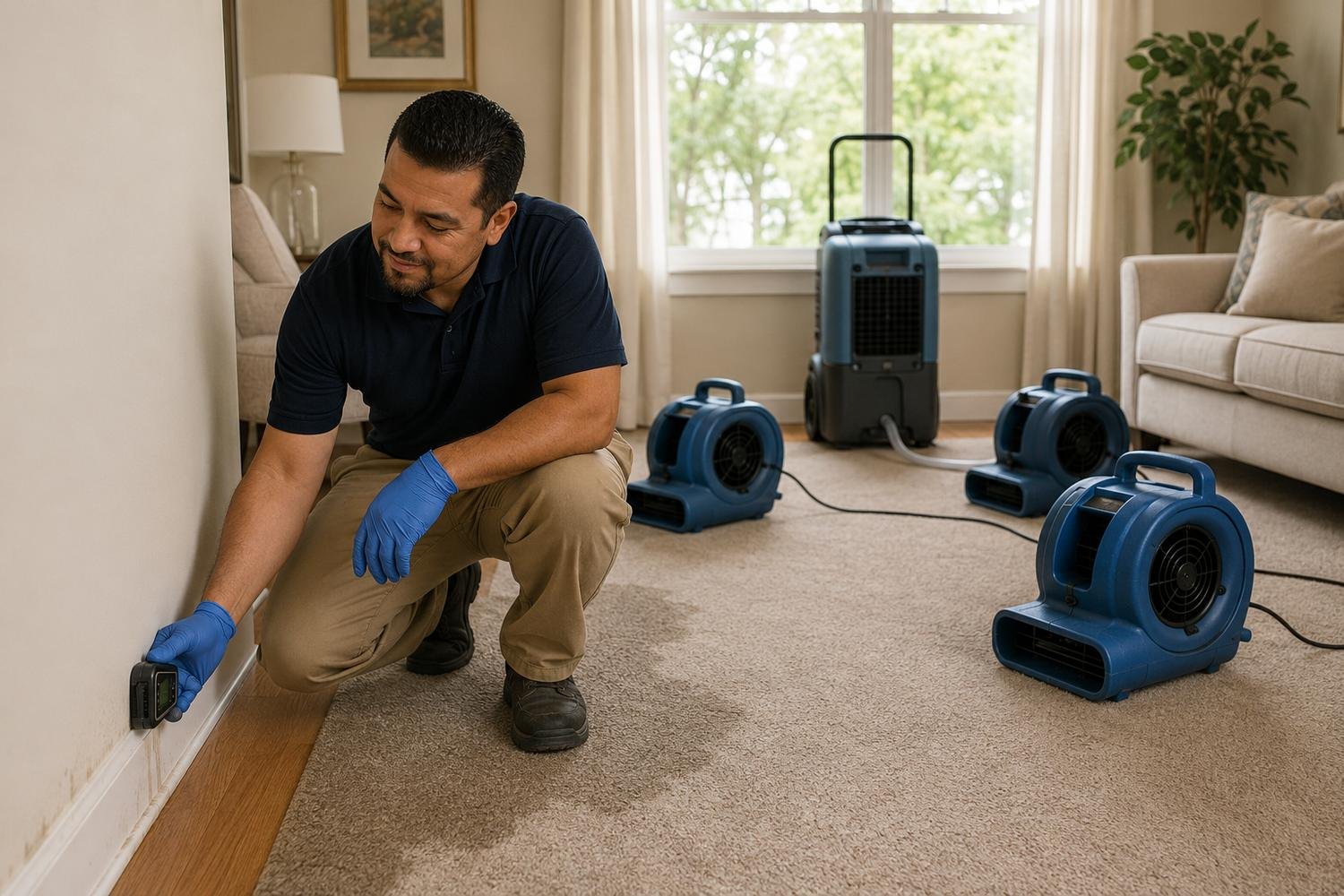
Specialty cleaning is one of the fifty, and the version of cleaning most people never picture. Not the recurring house or office route — the technical, higher-barrier work: water-damage restoration, mold remediation, biohazard and post-construction cleanup.
What sets it apart from ordinary cleaning is who signs the check. Get that right and you own something rare: revenue that can rise in exactly the conditions that thin out everyone else.
A word on the neighbor.Cleaning & janitorial is also one of the fifty, and the two share a word on the business card and almost nothing else. Cleaning and janitorial is a route: the same building, on a schedule, paid by the customer out of an operating budget. Specialty cleaning is dispatch work: a different damaged building every time, paid by an insurance claim. Ordinary cleaning is sold to a customer on a schedule. Specialty cleaning is sold to a referral source on call.
The industry: technical, insurance-funded, and fragmented
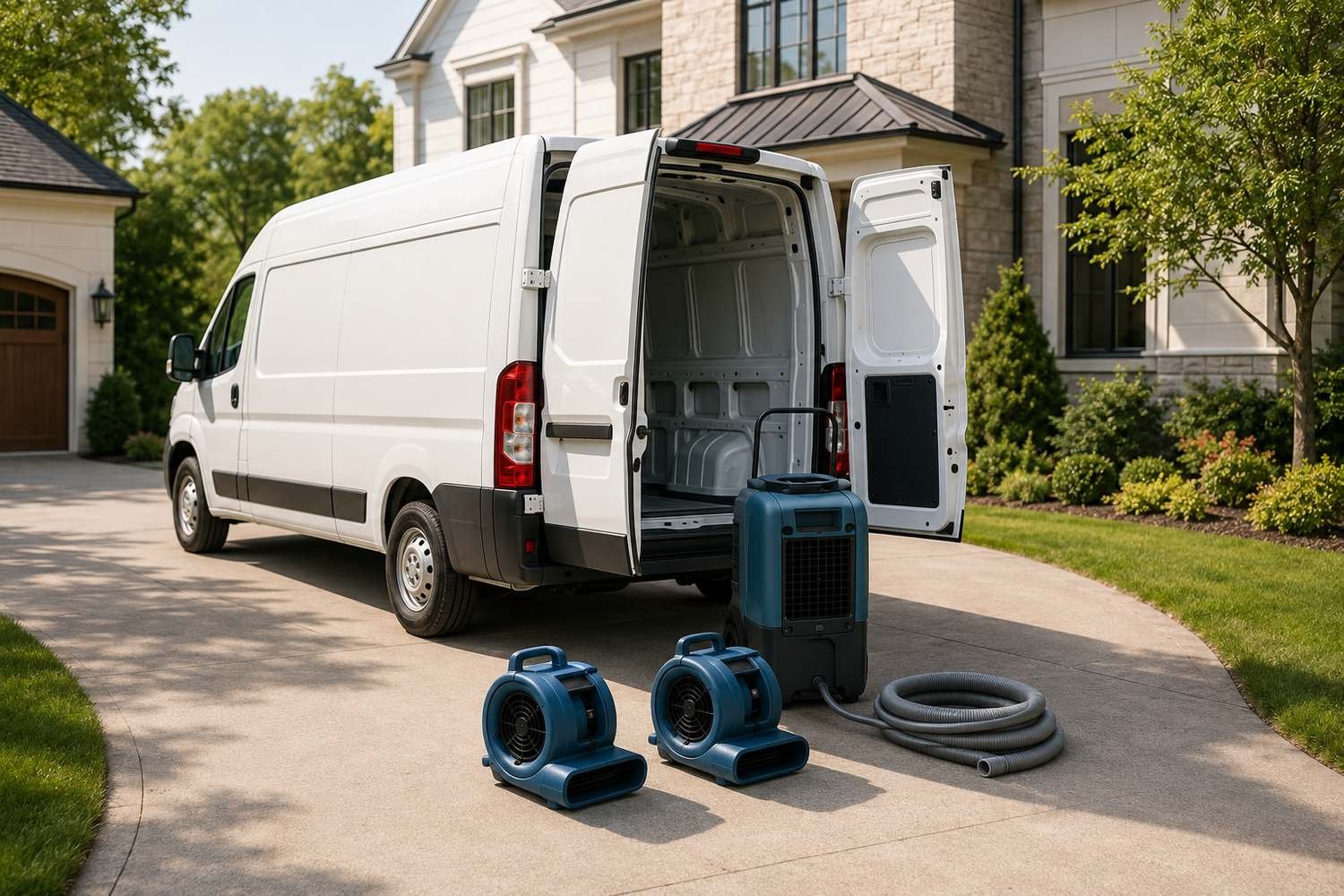
U.S. damage-restoration services run about $7.2 billion in 2025 across roughly 62,600 businesses, grown at a 4.0% compound rate over five years. [S1] Do the arithmetic: the average owner runs a little over $100,000 a year. This is a market of one- and two-van local companies.
No national player owns it, and the franchise systems that come closest still compete claim by claim against certified independents — a structure that rewards a well-run small business rather than punishing it.
The labor benchmark sits in the hazardous-materials and remediation trades, work that covers 51,300 jobs. [S2] Restoration technicians span this and the broader building-cleaning classifications. What the work pays swings hard from one metro to the next. The only wage worth planning on is the one posted for your own market. That wage is the price of replacing yourself — what a manager costs once the manager is no longer you. Every profit number later in this article has to survive it, and the real cost runs higher once payroll taxes and insurance go on top.
The pay gap is the whole story of this category in one number. A janitorial crew and a restoration crew both clean buildings; one is paid roughly twice as much, because the barrier to doing the work correctly is higher and the payer is an insurer with a documented scope rather than a household with a budget.
Why specialty cleaning made the list
Every category in the research had to clear four tests. Clear three and you usually have a self-employed job in disguise.
Does it pay after you replace yourself? It does, because the work is credentialed and priced accordingly. A restoration job carries a technical scope and insurance documentation an ordinary clean never does, and that supports the ticket size you need to pay technicians, pay a lead, and still own real cash flow.
Does the revenue recur? Differently from a route, and the difference matters: it recurs through the referral source rather than the customer. You are not cleaning the same house every two weeks; you are the name called every time something goes wrong anywhere in a territory. The individual customer is new each time. The relationship producing them is not.
Does it survive a recession? This is the category's strongest answer of the four. Restoration is paid through insurance claims rather than a discretionary household budget, so when a downturn slows every business that depends on consumers choosing to spend, this one keeps collecting. A flooded basement is not a purchase anyone chose to make.
Will it still need humans in ten years? Water extraction, structural drying and mold remediation are physical, judgment-heavy, code-bound work in a different damaged building every time. Software can write the estimate and file the claim; it cannot find the water behind the wall.
Four for four — and with a payer almost no other service business gets.
The research kept running two cleaning businesses side by side and finding they had almost nothing in common. One is a solid residential route — real customers, and every dollar of it dependent on households continuing to choose to pay. The other is run by someone who earned the IICRC certification and then spent a year building relationships with a handful of adjusters and plumbers, so that when a pipe lets go at two in the morning, hers is the number that gets called. Tighten the economy and the first watches cancellations climb while the second barely registers it. From the lending side of the desk that distinction matters more than anything on either profit and loss: revenue a customer can cancel and revenue an insurer is obligated to pay are two different kinds of asset, and they should never be underwritten as though the word on the business card made them the same.
What it takes to make this one work
A note on the tags. Every category in the fifty cleared the same four tests; far more never made it through. The tags do not grade a business — they tell you what has to line up for it to work in your hands. Specialty cleaning carries one: Rewards a specialty. On this category the tag is an instruction manual.
Rewards a specialty: credential first, then four phone numbers
The condition: this business runs on credential and referral rather than marketing. IICRC certification is the entry ticket, and the revenue arrives through the adjusters and plumbers who decide who gets the two-in-the-morning call. Neither can be bought with an advertising budget, which makes the first year slower here than where a van wrap and a phone number are enough to start.
The move that meets it: certify first, then spend the first year building three or four adjuster and plumber relationships rather than chasing consumer leads. Sequence it that way and the slow start becomes the asset.
Both the certification and the relationships are earned rather than purchased. Once you are the name on an adjuster's list — the one who answers, documents the scope properly and does not create paperwork problems — that position is hard for a newcomer to take, because the adjuster has no reason to experiment with a stranger on a live claim. You are not buying a fast start; you are building the thing a fast start cannot buy.
The upside: put the claim-funded revenue together with a referral position competitors cannot buy their way into and you have both halves at once — revenue that holds through the cycle, and a moat that gets deeper every year you keep the relationships warm. The same conditions that thin out the field are the ones that keep your phone ringing.
What it costs to get in — the three paths
| Path | Typical cost range | Best for |
|---|---|---|
| Startup | $25,000 – $80,000 | IICRC certification + truck + equipment |
| Acquisition | $100,000 – $147,000 | Insurance contracts + adjuster relationships + equipment |
| Franchise | $112,000 – $386,000 | Brand + insurance-referral system. Examples: ServiceMaster Restore, ServPro. |
That franchise range is wide for a reason worth understanding. The two best-known systems sit at opposite ends of it, and what separates them is precisely the asset this article says the category runs on: the insurance referral position. The higher-cost system has the deepest carrier relationships, and much of what the fee buys is a place on preferred-vendor lists an independent spends years earning; the cheaper entry buys the brand and leaves more of that work to you. It is the same trade the rest of this article describes, just priced. Note too that the top of the range sits above the $350,000 Community Advantage ceiling, so the largest franchise projects fall outside the lane the other two paths sit comfortably inside.
Brands are named as real examples so you can check them yourself, not as endorsements. Each franchisor's Franchise Disclosure Document (FDD) is the authoritative source and refiles annually: check Item 7 for the initial-investment range and Item 19 for any financial-performance representation before pursuing one. [S3]
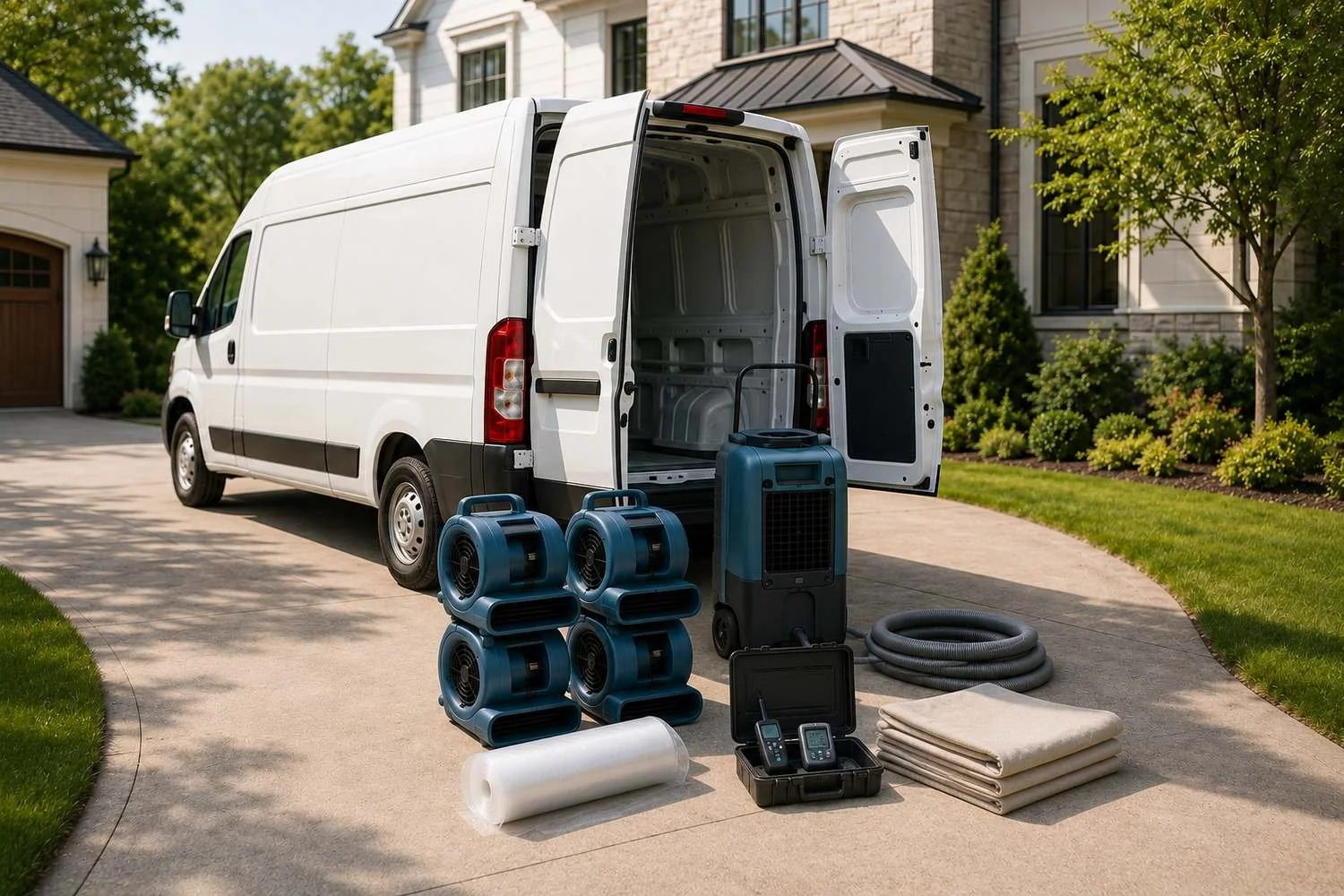
The startup range is modest for a category this defensible. It buys the certification and enough equipment to do the work correctly the first time — which, in a trade where the adjuster is watching, is the marketing.
Which is why the acquisition number deserves a closer look. What you are paying $100,000 to $147,000 for is not the air movers. It is the insurance contracts and the adjuster relationships behind them — the one asset here that cannot be assembled quickly at any price, and the reason a buyer pays a premium over the equipment on the floor.
How people actually fund it

A $25,000 to $80,000 startup sits in the SBA Microloan to CDFI direct lending range. A $100,000 to $147,000 acquisition of an operation with insurance contracts moves up into CDFI direct lending and SBA Community Advantage territory, and both numbers sit comfortably below the $350,000 Community Advantage ceiling.
One pattern I watched from the lending chair: a qualified borrower walks into a national bank, gets declined, and concludes they cannot be funded. They never learn that a CDFI across town, or a Community Advantage lender, exists precisely for deals this size. Two free national directories will show you the ones near you — the Opportunity Finance Network CDFI locator and SBA Lender Match. [S4]
Finding the lender is the easy half. Specialty cleaning has a specific tell an underwriter looks for: the share of revenue arriving through insurance claims rather than consumer work, broken out by referral source. Claim-funded revenue from three or four named adjusters reads very differently from the same total assembled out of one-off consumer jobs — and differently again if it all traces to a single relationship. Bring that breakdown before anyone asks.
The profit reality: owner-replacement cash flow

Here is the calculation that decides more of these deals than anything else in them. A specialty cleaning business looks profitable because the owner is running the equipment, documenting the claim, managing the adjuster relationship and doing the books — none of it priced. The honest test: after you pay your technicians, and after you pay a manager a market wage to run the jobs the way you run them, is there enough left over for you to own the thing?
Real numbers. Look up what a restoration technician earns in the hazmat-and-remediation trades in your own market before you model anything. Remember that the equipment and the certification carry their own ongoing cost on top of the wage. [S2] But the technician wage is not the one this test turns on, because a technician replaces your hands and not your judgment on a claim.
The number that decides it is the lead. A first-line supervisor of construction and extraction trades is the closest published comparison to a certified lead running restoration jobs. That manager wage is the one to pull for your own city. Payroll taxes and the insurance this work demands push the real cost well above whatever the survey prints. [S6] That is who scopes the loss, holds the certification, documents to the adjuster's standard and takes the two-in-the-morning call. Whatever the business reports as profit has to survive paying the technicians and that.
Where specialty cleaning earns its keep is the revenue side, and it earns it twice. Claim-funded jobs are priced to a documented scope, out of reach of the consumer discounting that grinds down an ordinary route; and the referral flow means the business is not buying every job through marketing, so the cost of the next dollar stays low as volume climbs. Pricing that holds and acquisition that costs almost nothing is what leaves genuine cash flow after the lead is paid — and what makes the business sellable.
The category-level math is easy — you just did it. Running it on a specific company, where the seller's "profit" contains his own unpriced adjuster time and the claim-versus-consumer mix is buried in three years of job files, is where people freeze. That is the job of the course, Microbusiness Millionaire: Operating System — the four tests turned into a repeatable screen you run on a real deal.
The benefits of owning a specialty cleaning business
Insurance-funded revenue. The claim pays the bill, which is why this category collects when consumer-facing businesses slow.
A referral position competitors cannot buy. Once you are on an adjuster's list, that spot is hard to take from you.
Roughly twice the labor rate of ordinary cleaning. The technical barrier and documented scope support pricing a residential route cannot reach. [S2]
Demand created by events, not marketing. Pipes, storms, fires and construction schedules generate the work.
Structural drying and remediation in a different damaged building every time is not a software problem.
What separates the strong owners from the struggling ones
The referral year served before the marketing spend. The defining decision in this category. Strong owners put the first year into three or four adjuster and plumber relationships, because that is where the durable work comes from — the consumer marketing can wait, and in most territories never becomes necessary.
Certification treated as the foundation. IICRC standing is both the entry ticket and the pricing justification, and owners who invest early charge for it for the next twenty years. It is the cheapest asset here relative to what it supports.
Claims documented to the insurer's standard. Adjusters require scope and moisture documentation, so the paperwork is not overhead — it is the invoice. Document to their standard and you get paid in full and on time, which is also what puts you back on the list.
Coverage carried to the exposure. Mold, biohazard and water work carry real liability, and owners who insure to it can bid work the underinsured cannot touch. The policy opens jobs; it is not a cost line.
Referral concentration watched. A portfolio where one adjuster sends most of the work is a different business from one where four do. Strong owners add the fourth and fifth source before they need them, which is also what a lender wants to see.
Licenses, permits, and regulations
Requirements vary by state and, unusually, by which work you choose to take on — so the compliance picture is partly a decision rather than a given.
Licensing follows the service. Mold remediation is licensed in some states and not others; biohazard and lead work carry their own federal and state rules. Deciding which you will do is therefore deciding what you must be licensed for — worth settling before you buy equipment for work you cannot legally sell.
Documentation is a licensing requirement in all but name. Restoration billed through insurance has scope and moisture-documentation standards you must meet to be paid at all. Fail them and the work was done for free.
Alongside both: a registered entity, general liability at limits appropriate to the exposure, commercial auto and workers' compensation for every technician. IICRC certification is the practical standard adjusters — and later buyers — look for. Start with your state licensing board and the free SBA "Apply for licenses and permits" tool. [S5] (General information, not legal advice — confirm your local requirements, including mold and biohazard rules, before you take paid work.)
Build a portfolio, not a job
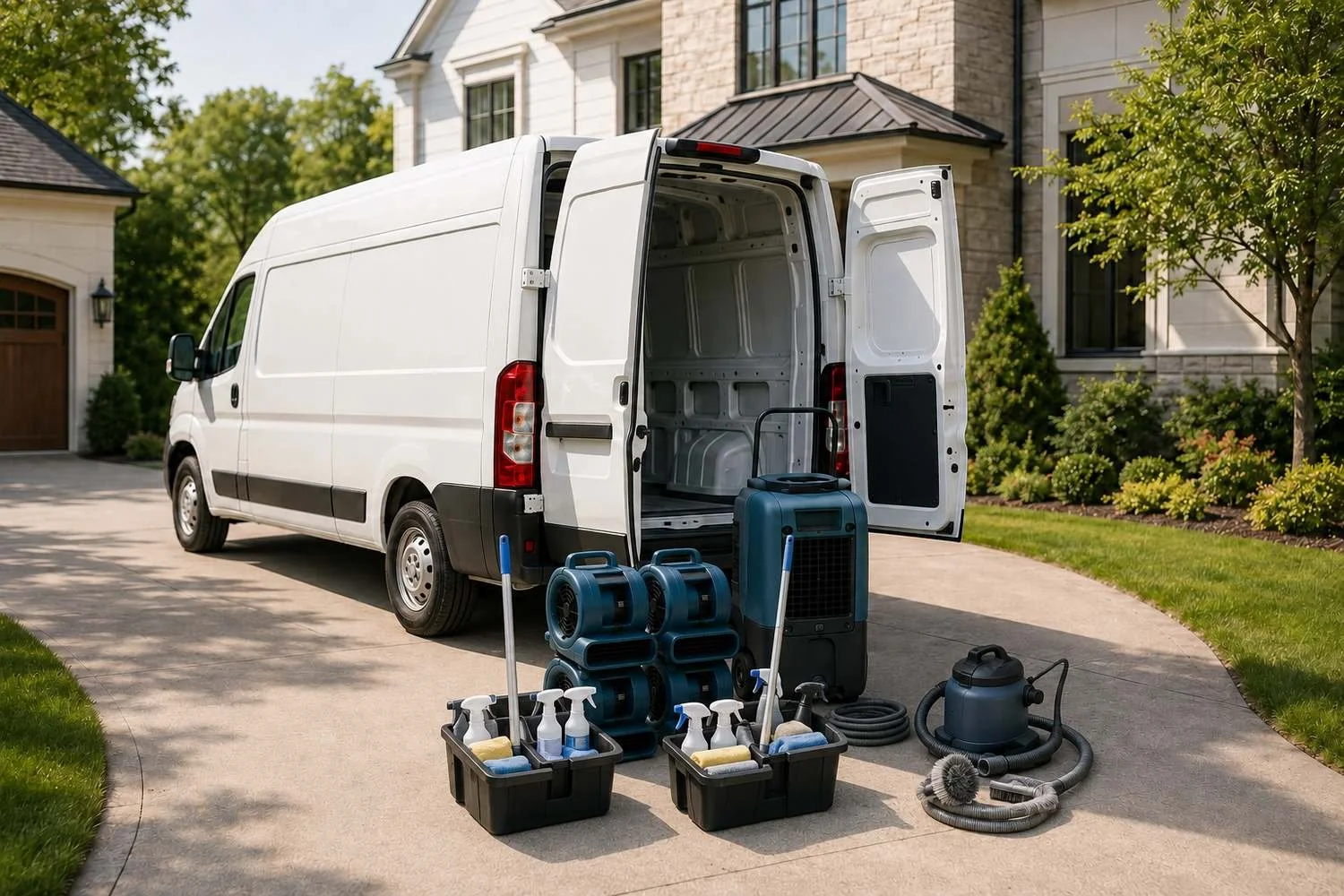
Specialty cleaning is referral-anchored work: it does not stack along a route or fill a building, it stacks on the sources that send the calls. That makes its relationship to the rest of the cleaning portfolio worth naming precisely, because the pairing only works if you understand which direction it runs.
Cleaning & janitorial is a route business, and it is the referral source rather than the pairing. The routes keep a crew busy between restoration jobs and put your own people inside a few hundred buildings a month — the earliest possible warning of a water or mold problem. The route feeds the restoration work, and the restoration work is what the route customer remembers you for. Dryer vent cleaning attaches the same way: another in-home service the same customer already needs, and a second reason to be in the building.
That is the difference between owning a crew and owning a portfolio. The thing being built is not a cleaning operation — it is the cleaning-and-restoration vendor a few hundred properties depend on. A portfolio like that, with a documented customer list on the route side and named referral sources on the restoration side, sells to a buyer as one asset. That is how it ends up worth over a million dollars at sale, rather than a van and a set of air movers.
Frequently asked questions
Is a specialty cleaning business profitable? At scale it is, and unusually durable with it. The honest test is what the business still throws off after paying your technicians and a lead to replace your hours. Pricing set to a documented scope, and a referral flow you did not have to buy, are what make that number work.
How much does it cost to start a specialty cleaning business? Roughly $25,000 to $80,000 to start with IICRC certification, a truck and restoration equipment. About $100,000 to $147,000 to buy an established operation with insurance contracts and adjuster relationships, or roughly $112,000 to $386,000 for a franchise with an insurance-referral system behind it — a wide band, because the cheaper systems leave more of the carrier relationship-building to you.
Do I need certification to start a specialty cleaning business? IICRC certification is the practical standard, and some states separately license mold, lead or biohazard work. Confirm your state requirements first. [S5]
Why is specialty cleaning recession-resistant? Because the work is paid through insurance claims rather than out of a household budget — and the deferred maintenance a downturn produces tends to generate more of the work, not less.
Where to go from here
Download the free guide.50 Boring Businesses That Make Millionaires is the full result of the research: fifty categories run against the four tests, what each one costs to enter by all three paths, what has to line up for it to work, and how they pair into a portfolio. Free at microbusinessmillionaire.com.
Read the book.The Microbusiness Millionaire: How Ordinary People Build Extraordinary Wealth One Microbusiness at a Time follows four people who each reached a portfolio worth more than a million dollars by a different path. One keeps a hospital job and uses CDFI financing to acquire one stable service business, then another, then a third. One saves on a single income for three years, leaves a master plumber's wage, and stacks trade service lines starting with an SBA microloan. One uses an SBA Community Advantage loan to open a franchise, then opens three more. One starts with about $5,000 on the side and keeps a W-2 for years, building the slowest and most patient version of the same result. Four starting points, four amounts of money, four portfolios worth over a million dollars at sale. The book is coming soon — join the email list at microbusinessmillionaire.com to hear when it lands.
Join the next cohort — Microbusiness Millionaire: Operating System. The book gives you clear examples of how it's done. The course is the step-by-step system for doing it yourself: screening a real company against the four tests, running the owner-replacement cash-flow math on a seller's actual numbers, knowing when to walk, knowing which lenders fund deals this size, and installing the manager who runs the business without you. Eight weeks online, five seats a cohort, waitlist first — at microbusinessmillionaire.com.
About the author
Chris Scott has spent more than twenty-five years in the small-business arena. As the director of a Community Development Financial Institution (CDFI), he reviewed loan applications and made the approve-or-decline decisions. Later, at the U.S. Small Business Administration (SBA), he monitored lending programs. Across those two roles, thousands of business plans and loan applications crossed his desk. He still works at the SBA, now in its venture capital division. His research into which microbusinesses build wealth — and which quietly build a job — became The Microbusiness Millionaire and the free companion guide, 50 Boring Businesses That Make Millionaires.
Sources & references
[S1] IBISWorld, Damage Restoration Services in the US (NAICS OD6278), 2025 — market size $7.2bn; ~62,600 businesses; 4.0% CAGR 2020–2025. ibisworld.com
[S2] U.S. Bureau of Labor Statistics, Occupational Outlook Handbook: Hazardous Materials Removal Workers (51,300 jobs in 2024; ~500 annual openings; 1% projected growth 2024–34); restoration technicians also span building-cleaning classifications. bls.gov/ooh
[S3] U.S. Federal Trade Commission, Franchise Rule / FDD Items 7 and 19. ftc.gov. Franchise range shown spans published Item 7 estimated initial investment for ServiceMaster Restore (approximately $111,800–$187,500 per its 2026 FDD) through ServPro (approximately $263,305–$385,570 per its 2026 FDD). Reported figures vary between ServiceMaster entities and filings; verify each current FDD before relying on any figure.
[S4] Opportunity Finance Network CDFI Locator (ofn.org); SBA Lender Match (sba.gov).
[S5] U.S. Small Business Administration, Apply for licenses and permits (sba.gov); IICRC certification (iicrc.org); state mold, lead, and biohazard licensing.
[S6] U.S. Bureau of Labor Statistics, Occupational Employment and Wage Statistics, First-Line Supervisors of Construction Trades and Extraction Workers (SOC 47-1011) — used as a proxy, since BLS publishes no dedicated occupation for a certified restoration lead and the work is code-bound trade supervision. The loaded figure adds payroll taxes and the liability coverage this trade requires. bls.gov/oes
[Internal]50 Boring Businesses That Make Millionaires — Specialty Cleaning entry (tag, three-path entry-cost table, portfolio pairings, framework note, "what it takes to make this one work") and Cleaning & Janitorial entry (pairings). Drawn from the author's research and filtered through the underwriting criteria he applied as a CDFI lender.
This article is for general information only and is not legal, financial, tax, or investment advice. Category-level figures are reference points, not a specific-deal projection; individual businesses vary. Consult a CPA, attorney, business broker, franchise consultant, or CDFI loan officer before acting.
Last updated: 8/25/2026