

How to Start a Snow Removal Business
People see four months of work and stop reading, which is exactly why this category stays available. Here is what a snow removal business costs, what it pays after you replace yourself, and the pairing that turns four months into twelve.
Chris Scott — former CDFI director, SBA manager
As the director of a Community Development Financial Institution (CDFI), I reviewed loan applications and made the approve-or-decline decisions. Later, at the U.S. Small Business Administration (SBA), I monitored lending programs and saw which loans were approved and which were denied. Across those two roles, thousands of business plans and loan applications crossed my desk. I still work at the SBA, now in its venture capital division. That work is where I learned what a durable business looks like on paper, and what a business that only looks durable looks like on paper.
It is not, however, where the list of fifty came from. That came from years of research, running category after category through the same four questions: Is it profitable? Does it have recurring revenue? Is it recession resistant? Is it AI resistant? Those four questions are the framework behind the book, The Microbusiness Millionaire, and they are what separated the categories that built real wealth from the ones that quietly built a job with a P&L attached. Fifty survived the screen. Far more never made it through.
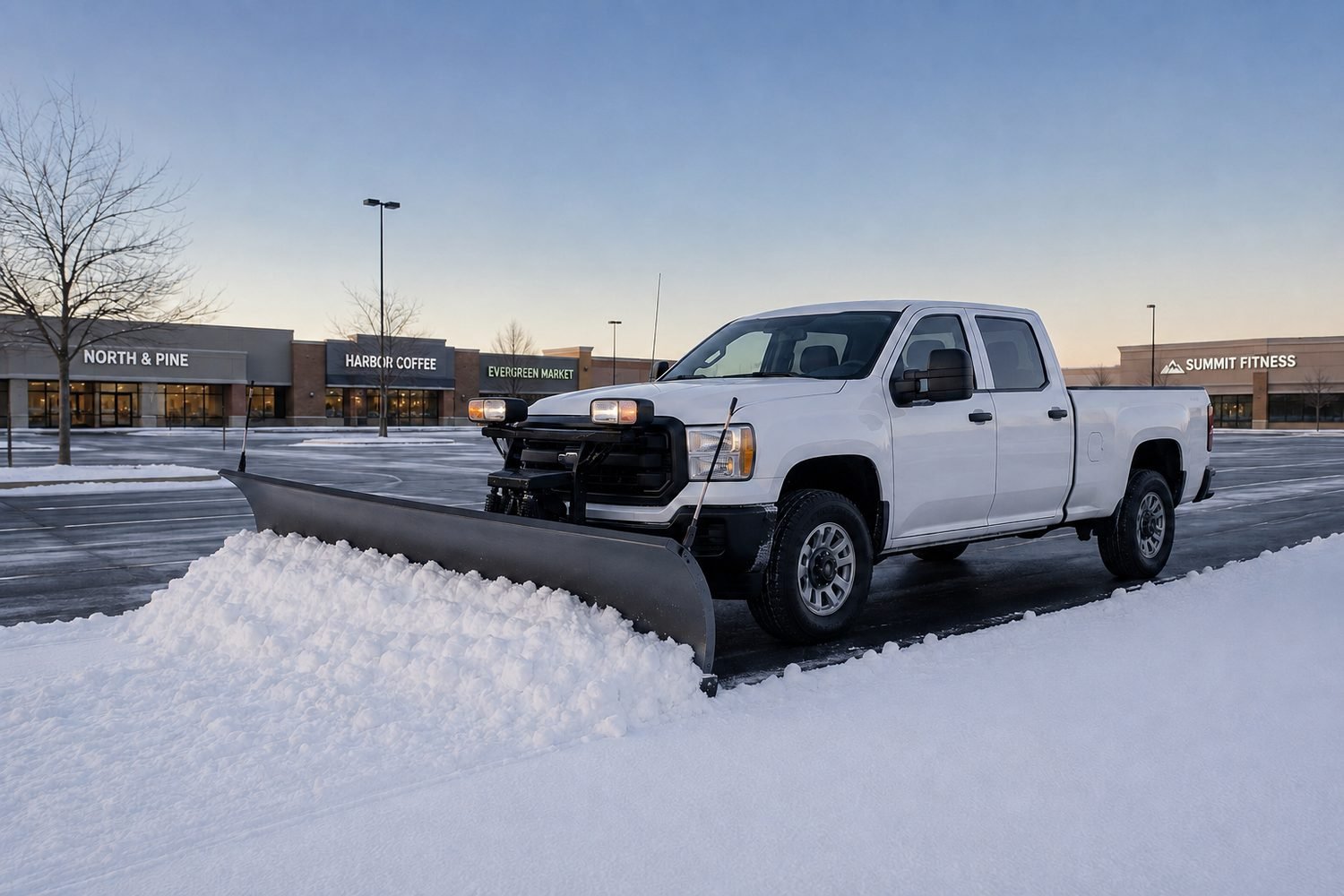
Snow removal is one of the fifty, and people misread it quickly. They see four months of work and stop reading.
What they miss is how much of each dollar survives — and that the owners who understand it are never running snow by itself.
The industry: bigger than it looks, and owned by nobody
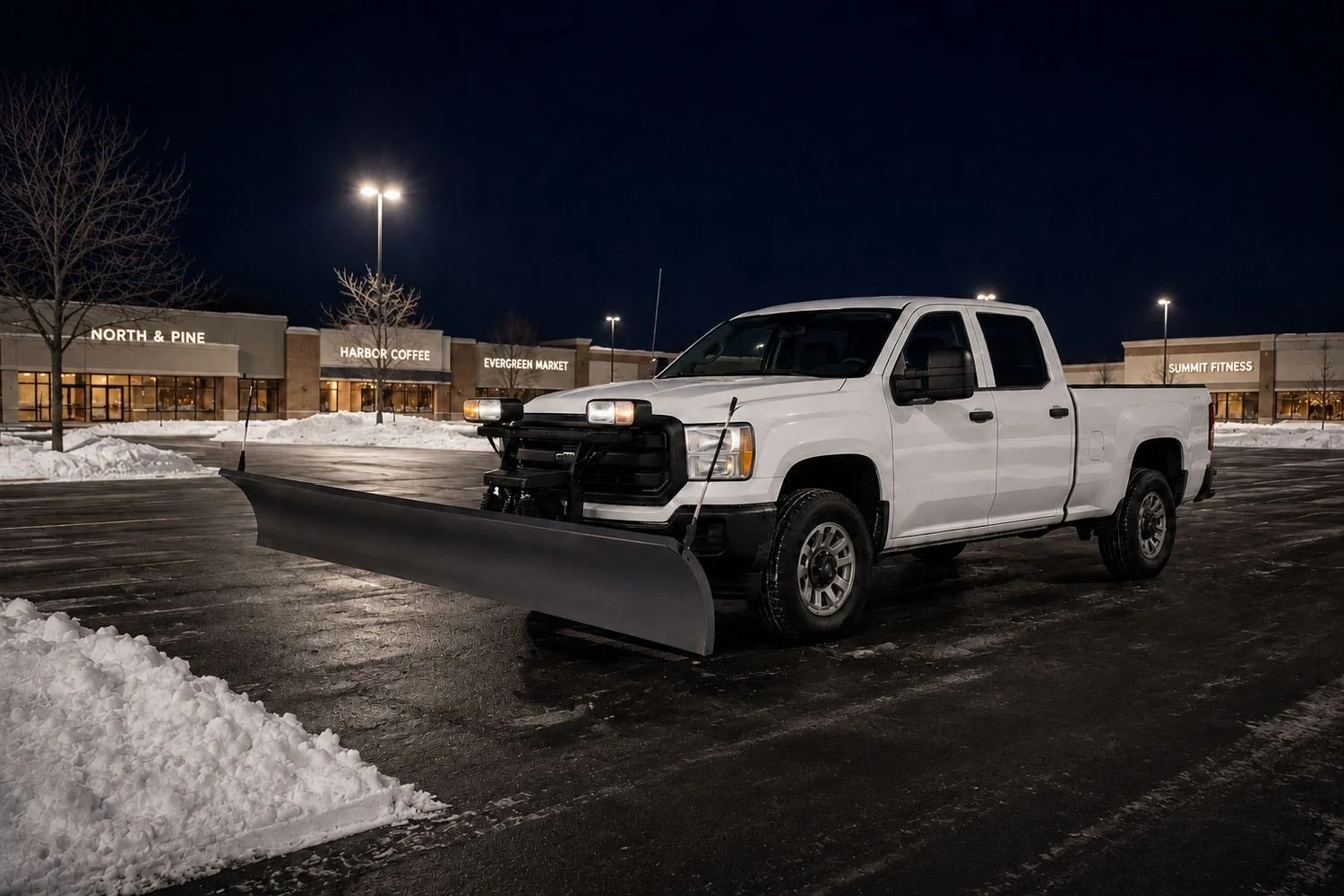
U.S. snowplowing services are about $23.0 billion in 2026, spread across roughly 114,000 businesses, growing at a 4.3% compound rate over the past five years. [S1] Do the arithmetic: the average owner runs around $200,000 a year. One-, two-, and three-truck companies — most of them owned by someone who also mows in July.
There is no dedicated federal occupation for snow work, so the labor benchmark comes from the closest neighbor: grounds maintenance workers, 1.3 million jobs, growing 4% from 2024 to 2034 with about 171,600 openings a year. [S2] What those crews are paid, and above them what a first-line supervisor is paid, is the price of replacing yourself. That number is set locally, and only your own market's version of it is worth planning on. Every profit number later in this article has to survive it, and the real cost runs higher once payroll taxes and insurance go on top.
That is the crew you will hire from — and it is the same crew that runs a mower, which is the whole reason the pairing below works as well as it does.
Why snow removal made the list
Every category in the research had to clear four tests. Clear three and you usually have a self-employed job in disguise.
Does it pay after you replace yourself? It does, and for a reason you can see in the cost structure: the equipment is bought once and the revenue arrives in a compressed season at emergency pricing. That is measured after paying the crew and a manager to do the job you have been doing for free.
Does the revenue recur? Through contracts, and better than most people assume. A retail plaza that signs you in September is on the books before the first flake. The property manager who has a vendor that shows up at 3 a.m. renews without shopping.
Does it survive a recession? A parking lot that cannot be entered is a store that cannot open, and a slip-and-fall claim costs more than a season of plowing. Nobody defers this one.
Will it still need humans in ten years? Someone has to be in the truck at three in the morning, reading a curb line under eight inches of snow. Software can route the truck. It cannot find the curb.
Four for four, on equipment you buy once and revenue that arrives at emergency pricing
The research on this category kept turning up the same overlooked reason for buying a plow, and it has nothing to do with snow. A landscaper with a steady summer business lays everybody off in November and hopes. Come spring he rehires strangers and retrains them from zero, and the good ones never come back, because by then they have found an employer who could keep them through the winter. That is the real cost of a four-month gap, and it does not appear anywhere in a profit and loss. From the lending side of the desk the interesting thing about a plow in that file is not the winter revenue at all. It is that the owner is buying the ability to keep a crew he has already trained — and a business that can hold its people is a materially different risk from one that rebuilds itself every April.
What it takes to make this one work
A note on the tags. Every category in the fifty cleared the same four tests; far more never made it through. The tags do not grade a business — they tell you what has to line up for it to work in your hands. Snow removal carries two: Right geography and Best paired. Read them against your own situation, because a category with two tags in the right hands beats a category with none in the wrong ones.
Right geography: it needs winter
The condition: this category concentrates. Snow removal is a real business in Buffalo and a hobby in Charlotte, and no amount of operating skill changes that. The market decides before anything else does.
The move that meets it: check the market before you check anything else, and check it with numbers rather than memory. NOAA's U.S. Climate Normals carry thirty-year snowfall averages station by station, free to anyone. [S8] What you are looking for is not a big number — it is a reliable one. A market that gets forty inches every winter supports contracts. A market that gets forty inches once every four years supports disappointment.
The upside: geography cuts both ways, and the second way is the good one. Nobody plows Minneapolis from Dallas. The same line on the map that rules you out of half the country walls off your market from anyone outside it — no national roll-up is coming to consolidate your parking lots, which is exactly why 114,000 businesses still split this $23 billion. [S1] If you are in a snow market, the moat came with the address.
Best paired: it runs four months
The condition: there is no snow revenue in July, and it is worth saying plainly.
The move that meets it: snow was never meant to stand alone. Pair it with lawn care — the first pairing in the guide, for good reason. One truck runs two businesses across twelve months, and the plow bolts onto the same vehicle that towed the mower trailer in August. Same customers, same routes, same crew, one policy, one dispatch. The plaza that hires you to mow the median hires you to plow the lot.
Notice what the franchise market already concluded, too. There is essentially no standalone snow brand of scale — go looking and you find U.S. Lawns and The Grounds Guys, grounds and property systems that carry snow as one line among several. The people who franchise this for a living reached the same answer the research did.
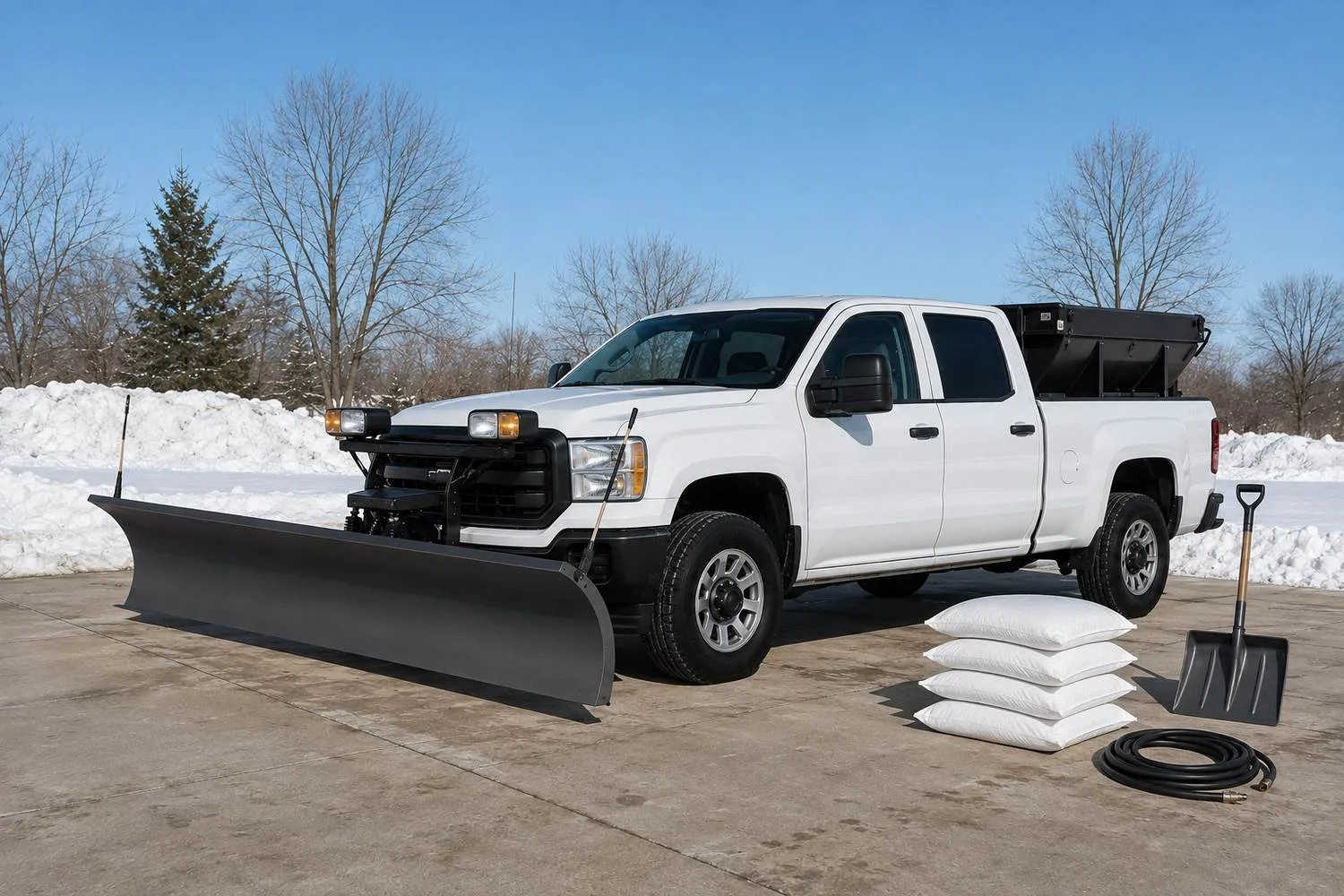
The upside: the seasonality is also where the money is. Lawn care's cash flow is steady and thin; snow's is concentrated and rich. Lawn care buys the twelve-month base, the crew and the customer relationship, and snow bolts onto infrastructure you have already paid for. The additional cost of adding winter to an existing lawn route is a blade and a spreader — about as close to free cash flow as this list offers.
What it costs to get in — the three paths
| Path | Typical cost range | Best for |
|---|---|---|
| Startup | $10,000 – $40,000 | Plow + truck + insurance |
| Acquisition (estimate) | $50,000 – $150,000 | Contracts + equipment |
| Franchise | $72,000 – $253,000 | Brand + dispatch. Examples: U.S. Lawns, The Grounds Guys — multi-service grounds systems that carry snow as one line. |
That franchise figure deserves a second look, because it is the row most likely to surprise you and the reason is structural. There is essentially no standalone snow franchise to buy. Snow is sold as one service line inside a grounds-maintenance system, so the price on that row is not the price of a plow business — it is the price of a full commercial grounds company that plows in winter.
Which means the franchise row and the startup row are not two ways of entering the same business at different prices. They are two different businesses. If what you want is the snow-and-lawn pairing this article recommends, the franchise route sells you exactly that, assembled, at roughly the cost of both. If what you want is a plow on a truck you already own, no franchisor is offering it.
Brands are named as real examples so you can check them yourself, not as endorsements. Each franchisor's Franchise Disclosure Document (FDD) is the authoritative source and refiles annually: check Item 7 for the initial-investment range and Item 19 for any financial-performance representation before pursuing one. [S5]
The startup number is the lowest on this page and it is honest: if you already own the truck, you are roughly a blade, a spreader and a commercial policy away from being in business.
Which is exactly why the acquisition number deserves more attention than it usually gets. What you are buying at $50,000 to $150,000 is not the equipment. It is the contracts.
How people actually fund it

A $10,000–$40,000 startup sits squarely in the SBA Microloan tier — the rung reached before any acquisition. A $50,000–$150,000 acquisition of an existing contract list moves you up into CDFI direct lending and SBA Community Advantage territory.
One pattern I watched from the lending chair: a qualified borrower walks into a national bank, gets declined, and concludes they cannot be funded. They never learn that a CDFI across town, or a Community Advantage lender, exists precisely for deals this size. Two free national directories will show you the ones near you — the Opportunity Finance Network CDFI locator and SBA Lender Match. [S6]
Finding the lender is the easy half. Snow has its own specific tell an underwriter looks for: revenue normalized against a multi-year snowfall look-back, because a business built on one great winter prices very differently from one built on signed contracts. Bring that analysis, and the seasonal-versus-per-push mix alongside it, before anyone asks.
The profit reality: owner-replacement cash flow

Here is the calculation that decides more of these deals than anything else in them. A snow company looks extraordinarily profitable because the owner is driving a truck at 3 a.m., dispatching, salting, invoicing, and answering the phone — none of it priced. The honest test: after you pay the crew, and after you pay a manager a market wage to run the season the way you run it, is there enough left for you to own the thing?
Real numbers. The wage this turns on is what a first-line supervisor of landscaping and grounds crews earns in your market. [S3] Whatever the company reports as profit has to survive paying that.
Say the books show $200,000 on $500,000 of winter revenue. That is real money, and rare at that revenue level — until you notice a manager's wage is not inside the number, because you were going to be the manager. If the profit only exists because you work unpaid, it was never profit. It was a job paying a manager's wage plus whatever is left, and you find that out the first winter you try to run two routes at once.
The category-level math is easy — you just did it. Running it on a specific company, where the seller's "profit" includes his own unpaid 3 a.m. labor and the contract mix is buried in three winters of wildly different snowfall, is where people freeze. That is the job of the course, Microbusiness Millionaire: Operating System — the four tests turned into a repeatable screen you run on a real deal.
The benefits of owning a snow removal business
Cash flow that survives the honest test. Measured after the crew and a manager are paid, not before.
A blade, a spreader and a policy. If the truck is already yours, that is the whole shopping list.
Contracts signed before the season starts. Sell certainty and you get paid whether it snows or not — and roughly three-quarters of this market still sells per push, per inch, or per event instead. [S4]
Liability-driven demand. Property managers are buying slip-and-fall protection, not tidiness. That is a need, and it is AI-resistant besides.
What separates the strong owners from the struggling ones
Standby priced, not just the push. The defining decision in this category. Being ready is the product — the round-the-clock monitoring, the pre-treat, the three-in-the-morning judgment call — and pricing all of it is what the customer is actually buying. Salt belongs in that list too: material costs move hard in a bad year, and contracts that pass them through hold up while contracts that swallow them do not.
Density bought before trucks. Accounts scattered across a metro spend the season in windshield time. Two adjacent plazas produce more than six good ones spread across forty minutes.
Insured to contract limits. Slip-and-fall is the claim in this trade. Carrying what the commercial contracts require is what makes those contracts available to bid.
Contracts normalized against real snowfall. When buying, price the seller's revenue against a multi-year look-back for that specific market, and you are paying for a business rather than for one good winter.
Licenses, permits, and regulations
Snow removal carries no federal occupational license, which makes every requirement here local — and local is where it gets interesting.
The insurance is the gate, not a formality. A registered entity, commercial general liability at the limits your contracts demand, commercial auto, and workers' compensation for crew. Slip-and-fall is the claim in this trade, and the limits a commercial property manager requires are what decide which contracts you are allowed to bid at all.
Then the rules about the snow itself, which catch people out because nobody expects them. Many jurisdictions regulate where plowed snow may be pushed and stockpiled, and set salt and chloride limits near waterways. Municipal and DOT subcontracting adds its own prequalification on top.
Start with your state and municipal offices and the free SBA "Apply for licenses and permits" tool. [S7] The Snow & Ice Management Association is the trade body, and its certifications increasingly show up as a bidding requirement on larger commercial work — worth having before you need it rather than after you lose a bid for want of it. [S4] (General information, not legal advice — confirm your local requirements.)
Build a portfolio, not a job
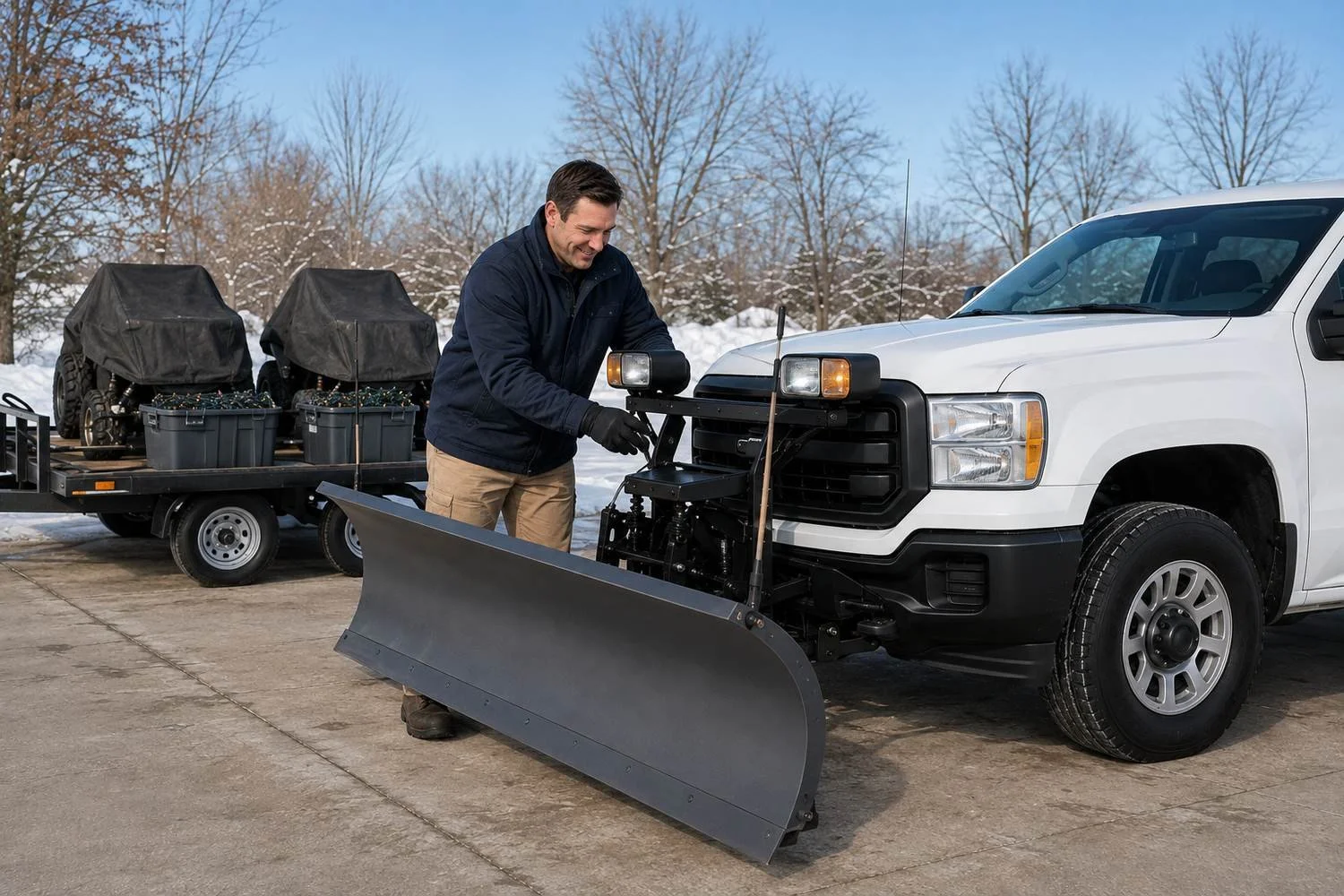
This is where the portfolio idea stops being theory. Snow removal is a route business: it stacks along a territory, on properties you are already servicing in another season.
It pairs with lawn care first — one truck, one crew, twelve months — then with holiday light installation, which slots into the November-to-January gap on the same ladder and the same customer list. Three businesses, one vehicle, one dispatch, and a calendar with no holes in it.
That is the whole argument in one truck. You are not building a snow company. You are building a property-services portfolio with three revenue seasons, anchored by contracts signed before the first flake falls. A portfolio like that, with a documented customer list and signed seasonal agreements, sells to a buyer as one asset — which is how it ends up worth over a million dollars at sale, instead of three jobs you happen to hold at once.
Frequently asked questions
Is a snow removal business profitable? It can be, and unusually so for a category this cheap to enter — measured honestly, after paying the crew and a manager to replace the owner's labor. The test is the dollars left after that, not the percentage on the way there.
How much does it cost to start a snow removal business? Roughly $10,000 to $40,000 to start with a truck, plow, spreader and insurance; $50,000 to $150,000 to buy an existing contract list with equipment.
How do you make money in snow removal in the summer? You pair it. Lawn care is the standard companion — same truck, same crew, same customers — and the guide lists it as snow's first pairing for exactly that reason.
Does snow removal only work in cold states? It works where snowfall is reliable, and that is a question you can settle in an afternoon: pull the thirty-year snowfall normals for your market from NOAA and look for consistency, not size. [S8] If the number holds up every winter, the geography that rules out half the country is also the wall that keeps outside competitors from ever touching your parking lots.
Are seasonal contracts better than per-push pricing? Seasonal contracts pay regardless of snowfall, which is what makes the revenue bankable and the business sellable. Per-push pays more in a heavy winter and less in a light one. Most owners run a mix, and the ones that build real enterprise value are weighted toward contracts. [S4]
Where to go from here
Download the free guide. 50 Boring Businesses That Make Millionaires is the full result of the research: fifty categories run against the four tests, what each one costs to enter by all three paths, what has to line up for it to work, and how they pair into a portfolio. Free at microbusinessmillionaire.com.
Read the book. The Microbusiness Millionaire: How Ordinary People Build Extraordinary Wealth One Microbusiness at a Time follows four people who each reached a portfolio worth more than a million dollars by a different path. One keeps a hospital job and uses CDFI financing to acquire one stable service business, then another, then a third. One saves on a single income for three years, leaves a master plumber's wage, and stacks trade service lines starting with an SBA microloan. One uses an SBA Community Advantage loan to open a franchise, then opens three more. One starts with about $5,000 on the side and keeps a W-2 for years, building the slowest and most patient version of the same result. Four starting points, four amounts of money, four portfolios worth over a million dollars at sale. The book is coming soon — join the email list at microbusinessmillionaire.com to hear when it lands.
Join the next cohort — Microbusiness Millionaire: Operating System. The book gives you clear examples of how it's done. The course is the step-by-step system for doing it yourself: screening a real company against the four tests, running the owner-replacement cash-flow math on a seller's actual numbers, knowing when to walk, knowing which lenders fund deals this size, and installing the manager who runs the business without you. Eight weeks online, five seats a cohort, waitlist first — at microbusinessmillionaire.com.
About the author
Chris Scott has spent more than twenty-five years in the small-business arena. As the director of a Community Development Financial Institution (CDFI), he reviewed loan applications and made the approve-or-decline decisions. Later, at the U.S. Small Business Administration (SBA), he monitored lending programs. Across those two roles, thousands of business plans and loan applications crossed his desk. He still works at the SBA, now in its venture capital division. His research into which microbusinesses build wealth — and which quietly build a job — became The Microbusiness Millionaire and the free companion guide, 50 Boring Businesses That Make Millionaires.
Sources & references
[S1] IBISWorld, Snowplowing Services in the US (2026 market size $23.0bn; ~114,000 businesses; 4.3% CAGR 2020–2025). ibisworld.com
[S2] U.S. Bureau of Labor Statistics, Occupational Outlook Handbook: Grounds Maintenance Workers (1,296,400 jobs in 2024; 4% projected growth 2024–34; ~171,600 annual openings). bls.gov/ooh
[S3] U.S. Bureau of Labor Statistics, OEWS, First-Line Supervisors of Landscaping, Lawn Service, and Groundskeeping Workers (SOC 37-1012), May 2025. bls.gov/oes
[S4] Snow & Ice Management Association (sima.org); SIMA Industry Impact Report contract-mix findings as reported by Turf magazine (2022): seasonal contracts used by approximately 25% of respondents, with per-push, per-inch, per-event, and time-and-materials making up the balance.
[S5] U.S. Federal Trade Commission, Franchise Rule / FDD Items 7 and 19. ftc.gov. Franchise range shown spans published Item 7 estimated initial investment for U.S. Lawns (approximately $71,500–$200,000 per the 2025 FDD, the low end reflecting conversions that already own trucks and equipment) and The Grounds Guys (approximately $107,650–$252,850). Both are multi-service grounds systems carrying snow as one line; verify each current FDD before relying on either.
[S6] Opportunity Finance Network CDFI Locator (ofn.org); SBA Lender Match (sba.gov).
[S7] U.S. Small Business Administration, Apply for licenses and permits (sba.gov); state and municipal requirements.
[S8] NOAA National Centers for Environmental Information, U.S. Climate Normals (1991–2020) — station-level snowfall and snow-depth normals, free access. ncei.noaa.gov
[Internal] 50 Boring Businesses That Make Millionaires — Snow Removal entry (tags, three-path entry-cost table, portfolio pairings, framework note, "what it takes to make this one work") and Lawn Care & Landscaping entry (pairings). Drawn from the author's research and filtered through the underwriting criteria he applied as a CDFI lender.
This article is for general information only and is not legal, financial, tax, or investment advice. Category-level figures are reference points, not a specific-deal projection; individual businesses vary. Consult a CPA, attorney, business broker, franchise consultant, or CDFI loan officer before acting.
Last updated: 8/25/2026