

How to Start a Senior Care Business
There are roughly 765,800 caregiver openings a year in this country, which tells you everything about where the difficulty in this business actually sits. Here is what a senior care business costs, what it pays after you replace yourself, and why staffing rather than demand is the whole game.
Chris Scott — former CDFI director, SBA manager

As the director of a Community Development Financial Institution (CDFI), I reviewed loan applications and made the approve-or-decline decisions. Later, at the U.S. Small Business Administration (SBA), I monitored lending programs and saw which loans were approved and which were denied. Across those two roles, thousands of business plans and loan applications crossed my desk. I still work at the SBA, now in its venture capital division. That work is where I learned what a durable business looks like on paper, and what a business that only looks durable looks like on paper.
It is not, however, where the list of fifty came from. That came from years of research, running category after category through the same four questions: Is it profitable? Does it have recurring revenue? Is it recession resistant? Is it AI resistant? Those four questions are the framework behind the book, The Microbusiness Millionaire, and they are what separated the categories that built real wealth from the ones that quietly built a job with a P&L attached. Fifty survived the screen. Far more never made it through.
Senior care is one of the fifty, and one of only nine carrying the Works anywhere tag — no structural condition at all. No season to cover, no partner category needed, no geography to check first. Every county in America is aging.
What it asks instead is something the other eight do not, and the rest of this article is largely about it.
The industry: enormous, growing, and starved for people
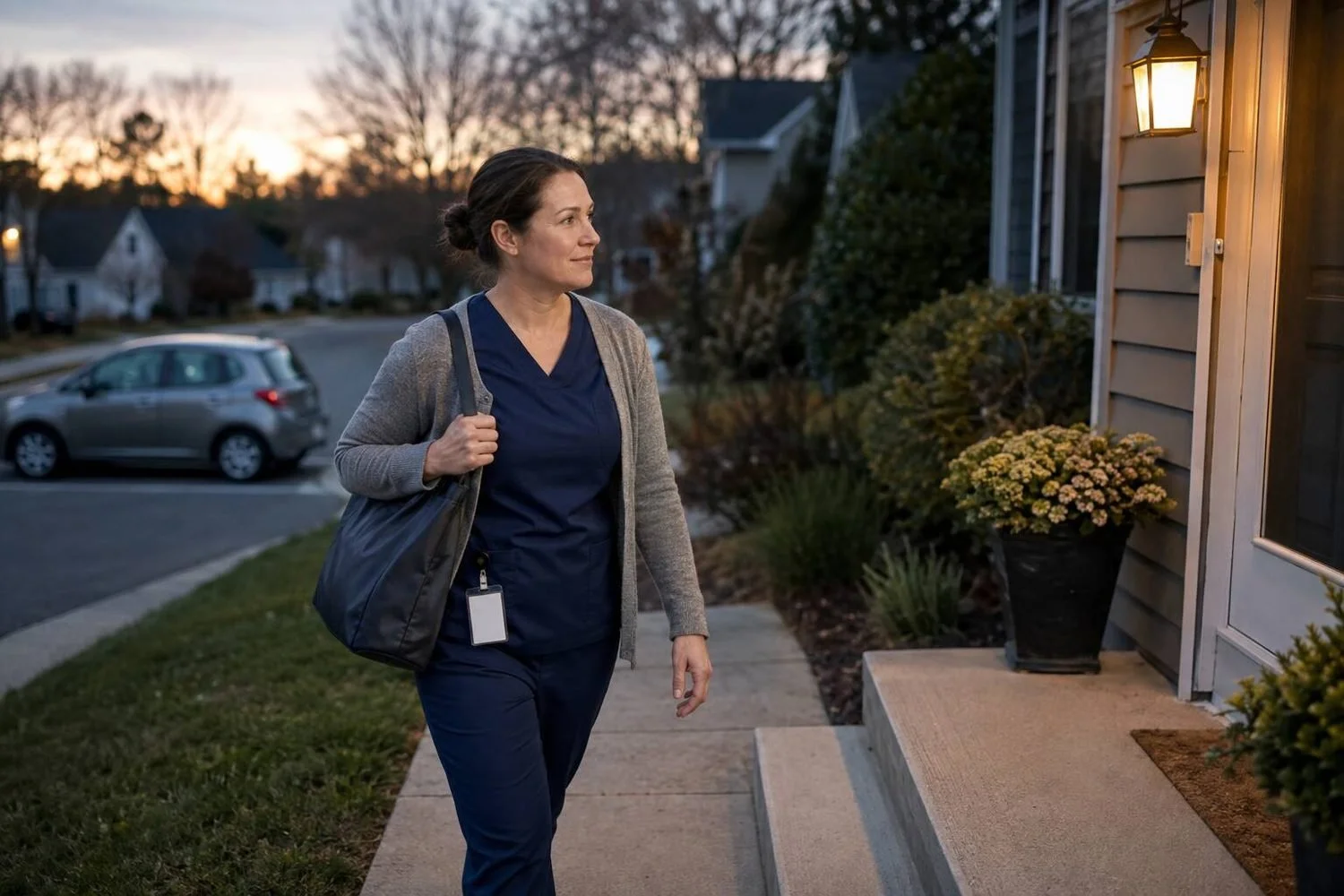
Non-medical senior care sits inside what the data calls older adult and disability care services — about $82.5 billion in 2026, spread across roughly 127,500 businesses, employing more than 1.6 million people. [S1] Do the arithmetic and the average owner runs a few hundred thousand a year. It is a market of small agencies, and the giants in it are franchise networks of small agencies.
Now the number that matters more than the market size. Home health and personal care aides hold 4.35 million jobs. Employment is projected to grow 17% from 2024 to 2034 — much faster than average — with roughly 765,800 openings every year. [S2] What an aide is paid is set locally, and it is the line this whole model rests on. Look it up for your own market; the Resource Directory in the free tools shows where.
Read that last figure again. That openings number is the whole business in one statistic. Demand for this service is not your constraint and never will be. Finding and keeping the people who deliver it is the entire game.
Why senior care made the list
Every category in the research had to clear four tests. Clear three and you usually have a self-employed job in disguise.
Does it pay after you replace yourself? It does, and it earns it differently from the trades. The cash left on each hour runs leaner here than in plumbing or pest control, because you are paying caregivers for nearly every hour you bill.
What senior care has instead is scale. Revenue per business runs very high, and a lean percentage of a large number is more dollars than a generous percentage of a small one. That is not a consolation. It is the actual mechanism, and it is why this category rewards getting properly big.
Does the revenue recur? About as firmly as recurring gets. A care plan is not a job, it is a schedule — the same client, the same hours, every week, often for years. Nobody re-sells that arrangement on Monday.
Does it survive a recession? Aging does not pause for a downturn. A family that needs help bathing a parent needs it whether the market is up or down. A household defends this purchase hard.
Will it still need humans in ten years? The work is a person physically present in another person's home, doing something intimate, for someone who would rather not need the help at all. Software is not going to bathe anyone. It is not going to notice that a client seems confused today.
Four for four, on a demographic curve that is already fixed: everyone who will need this care in 2040 has already been born.
The research on this category kept surfacing the same hidden line, and it never appeared in a profit and loss. Ask an agency owner how many caregiving hours they personally covered last month and the answer is rarely zero. A scheduler leaves, two caregivers call out, and the owner takes the shifts, because the alternative is telephoning a family to say nobody is coming. That is what makes this category different from every trade on the list. In plumbing, a missed call produces an annoyed customer. Here, a missed shift is somebody's mother sitting alone. The owner always covers. From the lending side of the desk, that instinct is exactly why the good ones are good at this work, and exactly why the hours never show up in their numbers — which is why the honest question about an agency is not what it earns, but how many hours the owner is quietly donating to it.
What it takes to make this one work
A note on the tags. Every category in the fifty cleared the same four tests; far more never made it through. The tags do not grade a business — they tell you what has to line up for it to work in your hands. Senior care carries the Works anywhere tag: no structural condition, no season, and no geography that decides it. Every county in the country is aging at once.
What does matter is inside your control, and it is the subject of the rest of this article: the state license, the working capital that covers the gap between weekly payroll and slower collections, and above all your ability to recruit and keep caregivers. Demand will never be your constraint here. Staffing always will be.
What it costs to get in — the three paths
| Path | Typical cost range | Best for |
|---|---|---|
| Startup | $50,000 – $100,000 | State licensing + insurance + initial caregiver recruitment |
| Acquisition | $137,500 – $295,000 | Established caregiver network + client list |
| Franchise (non-medical) | $80,000 – $164,000 | Compliance systems + recruiting apparatus. Example: Synergy HomeCare. |
One distinction in that franchise row decides which number applies to you, and it is the same distinction this whole article rests on. The figures above are for non-medical home care franchises — companion care, personal care, the work described in this article. The best-known names in home care also include medical brands offering skilled nursing, and those run materially higher, well past two hundred thousand dollars.
The gap is not brand premium. It is clinical infrastructure: a registered nurse serving as director of nursing, accreditation survey fees, and Medicare provider enrollment, none of which a non-medical agency carries. That is a different business with a different regulator and a different payor. If a franchise quote looks high for this category, check whether you are being priced for skilled nursing you were not planning to provide.
Franchise brands are named as examples, not endorsements. Franchise investment figures reflect a franchisor's most recent Franchise Disclosure Document (FDD) and change annually — verify each brand's current FDD (Item 7 for the initial-investment range; Item 19 for any financial-performance representation) before pursuing one. [S4]
The franchise premium here buys something more specific than a logo. Senior care is a licensed, regulated, insured business with real compliance exposure, and the systems for that are genuinely hard to build from nothing.
That is what the $130,000 to $170,000 is actually paying for. Whether it is worth it depends on whether you would rather buy the compliance apparatus or build it — a decision worth making deliberately rather than by default.
How people actually fund it

A $50,000–$100,000 startup sits in CDFI direct lending and SBA Community Advantage territory. That is the rung a franchise deal runs on, and senior services is the world it builds in — a Community Advantage loan covering most of a project cost, with the owner's own equity making up the balance.
One pattern I watched from the lending chair: a qualified borrower walks into a national bank, gets declined, and concludes they cannot be funded. They never learn that a CDFI across town, or a Community Advantage lender, exists precisely for deals this size. Two free national directories will show you the ones near you — the Opportunity Finance Network CDFI locator and SBA Lender Match. [S5]
Finding the lender is the easy half. Senior care also has a specific tell an underwriter looks for, and it is not the one most owners expect: the working-capital math. You pay caregivers weekly and get paid by families and payors considerably later, and that gap is real money. Alongside it, expect questions about caregiver turnover, because in this category the retention rate is the growth rate. Start recording both before anyone asks.
The profit reality: owner-replacement cash flow

Here is the calculation that decides more of these deals than anything else in them.
A home care agency looks profitable because the owner is scheduling, recruiting, doing intake visits, handling the 6 a.m. call-out, and covering the shift nobody else will — none of it priced. The honest test: after you pay the caregivers, and after you pay an administrator a market wage to run the agency the way you run it, is there enough left for you to own the thing?
Real numbers. Start from what a caregiver costs in your own market, and with 765,800 openings a year you will not be paying below it for anyone good. [S2] There is no dedicated federal occupation for a home care agency administrator. The closest is social and community service managers. [S3] That is the wage to pull for your own area, because it is the price of replacing yourself — not the aide wage. Load payroll taxes and insurance on top and you have what the person who replaces you actually costs.
Whatever the agency reports as profit has to survive paying both — and in a business where labor is nearly every dollar of cost, that subtraction bites harder than it does in the trades.
Which is exactly why scale matters here. This category does not win on percentage and never claimed to, and the arithmetic is worth seeing rather than taking on trust.
Say an agency holds eight percent after paying caregivers and overheads. At $900,000 of billings that is $72,000 — less than the administrator costs, so the owner is still working for free somewhere in there. At $2 million, the same eight percent is $160,000, and the administrator does not cost twice as much just because the agency doubled. The same person schedules both. That second million is where the owner's money actually lives.
That is the whole reason a lean percentage is not a problem in this category and would be fatal in a smaller one. Build to scale and the math closes comfortably.
The category-level math is easy — you just did it. Running it on a specific agency, where the seller's "profit" includes sixty hours a month of her own unpaid caregiving and the caregiver turnover rate is nowhere in the P&L, is where people freeze. That is the job of the course, Microbusiness Millionaire: Operating System — the four tests turned into a repeatable screen you run on a real deal.
The benefits of owning a senior care business
Demand you can read rather than forecast. The people who will need this care in fifteen years are already alive and already counted.
Work that cannot be automated. Physical presence in someone's home, doing something intimate, for someone who would rather not need it.
Revenue that recurs by the week, for years. A care plan is a schedule, not a sale.
Genuine scale. Revenue per business runs high, and the lean percentage becomes real money once the volume is there.
A real buyer pool. Franchise networks and regional owners buy agencies with clean compliance and stable caregivers.
What separates the strong owners from the struggling ones
Recruiting run as operations, not as HR. The defining insight in this category. Your capacity to take clients is your capacity to staff them, so recruiting is not a support function here — it is the business, and it never stops.
The scheduler hired first. The owner covering shifts is the most common way growth stalls in senior care, and it stays invisible until you try to expand. The scheduler is the first hire rather than the third.
Coverage priced into the rate. Your price has to carry the cost of covering a shift when someone does not show. Price for a realistic week rather than a perfect one and every real week works.
Working capital planned for. Payroll runs weekly and collections do not. Planning that gap up front is what keeps a profitable agency comfortable rather than cash-tight.
Compliance kept current. Background checks, training hours, care plans, documentation. The license is the business, so the paperwork that protects it is worth real attention.
Licenses, permits, and regulations
Senior care is licensed at the state level and the rules vary sharply from state to state. Three questions decide what you are actually signing up for.
Does your state license non-medical home care separately from home health? Some do and some do not, and the answer changes both your application and your scope of practice. This is the first thing to establish, before any other decision.
Does your state require a registered nurse on staff or on call, even for non-medical services? Several do. If yours is one of them, a salaried or contracted RN belongs in your startup budget from the beginning, not as a surprise in month three.
What does your state prescribe for caregiver training hours, background checks and care-plan documentation? These are regulated in detail in many states, and they are what a license inspection actually examines.
Beyond licensure: a registered entity, general liability, professional liability, workers' compensation, non-owned auto coverage for caregivers driving clients, and a bonding requirement in many states. Start with your state's health or aging services department and the free SBA "Apply for licenses and permits" tool. [S6] (General information, not legal advice — confirm your state's requirements before you commit capital.)
Build a portfolio, not a job

Senior care is the anchor of the lifecycle portfolio, and it stacks on a referral relationship rather than a route or a building — the businesses that belong with it are the ones the same family needs from the same trusted source, in sequence.
It pairs with senior moving services, estate sales, medical transportation and personal chef and meal-prep work for clients on medical or restricted diets — the same families, the same referral sources, the same trust, at different moments in one story. A family that trusts you with their mother's mornings will trust you with her meals, then her move, and later her house.
That is the difference between owning an agency and owning a portfolio. One company sells for a multiple of its cash flow. A set of businesses serving the same aging family across a decade sells to a buyer as one asset — which is how it ends up worth over a million dollars at sale, instead of a job you happen to be very good at.
Frequently asked questions
Is a senior care business profitable? At scale, yes, though the honest answer is not a percentage. It is whether the agency still produces cash after paying the caregivers and paying an administrator to replace the owner's labor. Senior care clears that test on volume rather than on rate, which is why building to scale matters as much as it does here.
How much does it cost to start a senior care business? Roughly $50,000–$100,000 to start with state licensing, insurance, and initial caregiver recruitment; about $137,500–$295,000 for an acquisition; or roughly $80,000–$164,000 for a non-medical franchise territory. Medical home health franchises cost considerably more, because they carry clinical staffing this model does not.
Do I need a nursing background to own a home care agency? Usually not for non-medical care — but some states require a registered nurse on staff or on call regardless, and the rules differ meaningfully state to state. This is the first question to answer, before anything else. [S6]
What is the hardest part of running a senior care business? Staffing, and it is not close. Demand has never been the constraint in this category. With roughly 765,800 caregiver openings a year nationally, your ability to recruit and keep people is your ability to grow. [S2]
Where to go from here
Download the free guide.50 Boring Businesses That Make Millionaires is the full result of the research: fifty categories run against the four tests, what each one costs to enter by all three paths, what has to line up for it to work, and how they pair into a portfolio. Free at microbusinessmillionaire.com.
Read the book.The Microbusiness Millionaire: How Ordinary People Build Extraordinary Wealth One Microbusiness at a Time follows four people who each reached a portfolio worth more than a million dollars by a different path. One keeps a hospital job and uses CDFI financing to acquire one stable service business, then another, then a third. One saves on a single income for three years, leaves a master plumber's wage, and stacks trade service lines starting with an SBA microloan. One uses an SBA Community Advantage loan to open a franchise, then opens three more. One starts with about $5,000 on the side and keeps a W-2 for years, building the slowest and most patient version of the same result. Four starting points, four amounts of money, four portfolios worth over a million dollars at sale. Available on Amazon.
Join the next cohort — Microbusiness Millionaire: Operating System. The book gives you clear examples of how it's done. The course is the step-by-step system for doing it yourself: screening a real company against the four tests, running the owner-replacement cash-flow math on a seller's actual numbers, knowing when to walk, knowing which lenders fund deals this size, and installing the manager who runs the business without you. Eight weeks, five seats a cohort, waitlist first — at microbusinessmillionaire.com.
About the author
Chris Scott has spent more than twenty-five years in the small-business arena. As the director of a Community Development Financial Institution (CDFI), he reviewed loan applications and made the approve-or-decline decisions. Later, at the U.S. Small Business Administration (SBA), he monitored lending programs. Across those two roles, thousands of business plans and loan applications crossed his desk. He still works at the SBA, now in its venture capital division. His research into which microbusinesses build wealth — and which quietly build a job — became The Microbusiness Millionaire and the free companion guide, 50 Boring Businesses That Make Millionaires.
Sources & references
[S1] IBISWorld, Older Adult & Disability Care Services in the US (NAICS 62412), 2026 — market size $82.5bn; ~127,500 businesses; ~1.63 million employed. ibisworld.com
[S2] U.S. Bureau of Labor Statistics, Occupational Outlook Handbook: Home Health and Personal Care Aides (4,347,700 jobs in 2024; 17% projected growth 2024–34; ~765,800 annual openings). bls.gov/ooh
[S3] U.S. Bureau of Labor Statistics, OEWS, Social and Community Service Managers (SOC 11-9151), May 2024 — used as the closest available proxy; BLS publishes no dedicated occupation for home care agency administrators. bls.gov/oes
[S4] U.S. Federal Trade Commission, Franchise Rule / FDD Items 7 and 19. ftc.gov. Franchise range shown reflects published Item 7 estimated initial investment for SYNERGY HomeCare, a non-medical brand (approximately $80,245–$164,091 for one full territory per the 2026 FDD; smaller territories start lower). Medical home health brands are priced materially higher because of clinical staffing, accreditation and Medicare enrollment requirements; verify each current FDD before relying on any figure.
[S5] Opportunity Finance Network CDFI Locator (ofn.org); SBA Lender Match (sba.gov).
[S6] U.S. Small Business Administration, Apply for licenses and permits (sba.gov); state health and aging services departments.
[Internal]50 Boring Businesses That Make Millionaires — Senior Care (Non-Medical Home Care) entry (tag, three-path entry-cost table, portfolio pairings, framework note), drawn from the author's research and filtered through the underwriting criteria he applied as a CDFI lender.
This article is for general information only and is not legal, financial, tax, or investment advice. Category-level figures are reference points, not a specific-deal projection; individual businesses vary. Consult a CPA, attorney, business broker, franchise consultant, or CDFI loan officer before acting.
Last updated: 9/9/2026