

How to Start a Roofing Business
Every roof in your territory is failing on a schedule nobody can stop, which means demand is guaranteed by physics rather than by marketing. Here is what a roofing business costs, what it pays after you replace yourself, and the two contract moves that protect the money once you have earned it.
Chris Scott — former CDFI director, SBA manager
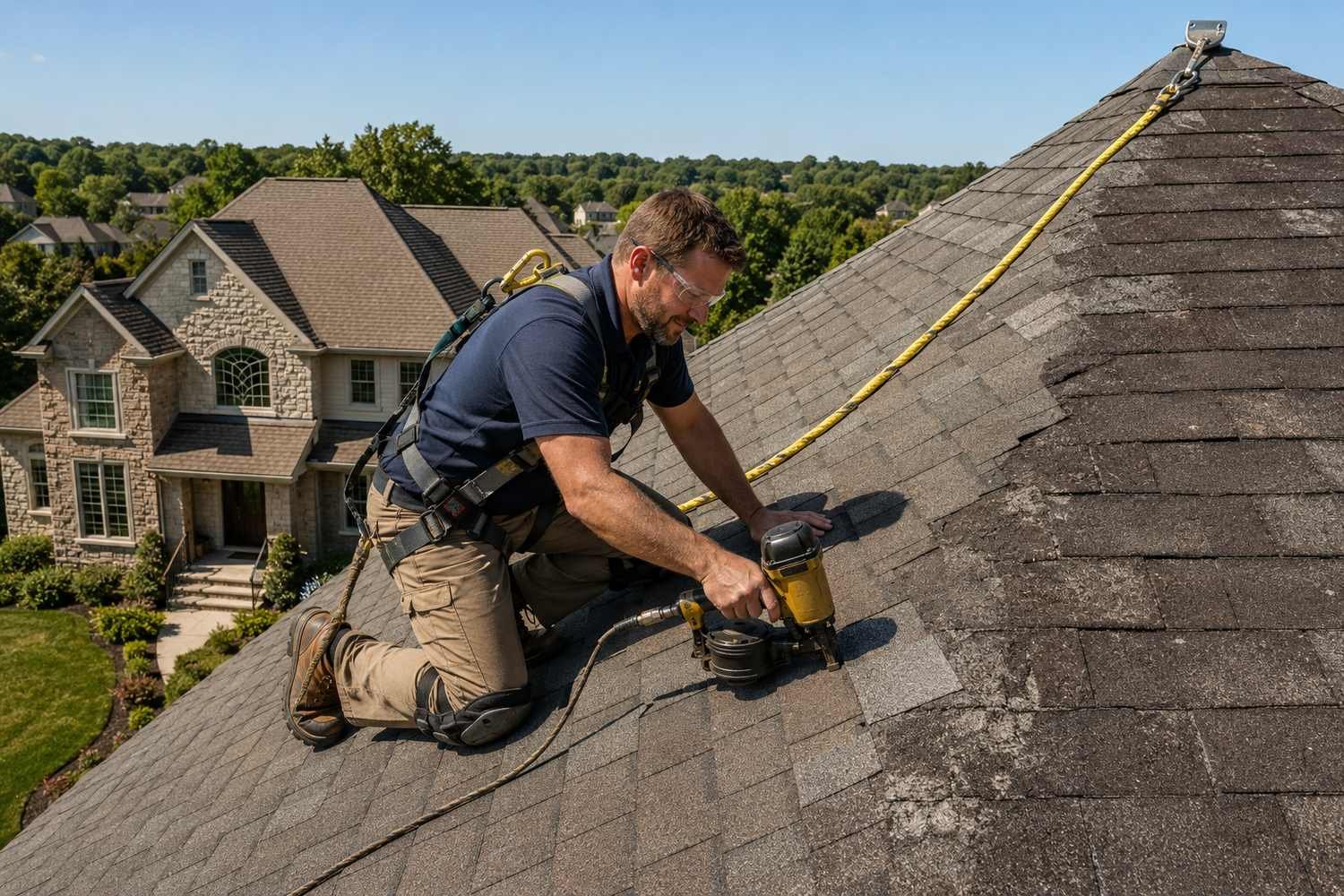
As the director of a Community Development Financial Institution (CDFI), I reviewed loan applications and made the approve-or-decline decisions. Later, at the U.S. Small Business Administration (SBA), I monitored lending programs and saw which loans were approved and which were denied. Across those two roles, thousands of business plans and loan applications crossed my desk. I still work at the SBA, now in its venture capital division. That work is where I learned what a durable business looks like on paper, and what a business that only looks durable looks like on paper.
It is not, however, where the list of fifty came from. That came from years of research, running category after category through the same four questions: Is it profitable? Does it have recurring revenue? Is it recession resistant? Is it AI resistant? Those four questions are the framework behind the book, The Microbusiness Millionaire, and they are what separated the categories that built real wealth from the ones that quietly built a job with a P&L attached. Fifty survived the screen. Far more never made it through.
Roofing is one of the fifty, and a heavyweight: big tickets, a market worth over ninety billion dollars, and demand guaranteed by physics rather than by anything you do. Every roof in your territory is failing on a schedule nobody can stop.
The whole question is whether you protect what you earn from the two forces that erode it, and there is a clear way to handle both.
The industry: enormous, essential, and nobody owns it
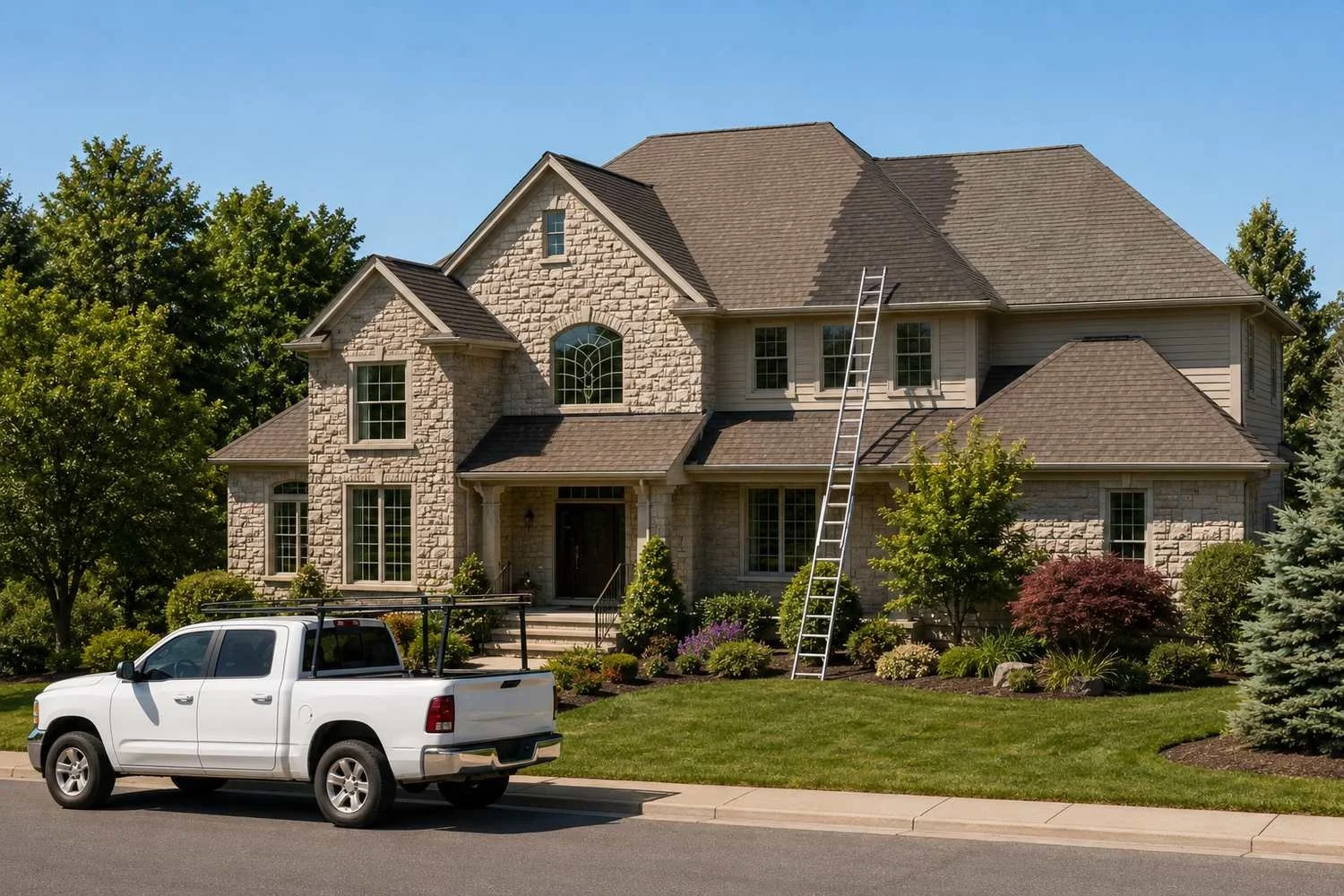
U.S. roofing contractors are about $92.5 billion in 2026, spread across roughly 108,600 businesses, having grown at a 3.4% compound rate over the past five years. [S1] Even the largest company in the country, CentiMark, does not dominate it — this is a fragmented market of local businesses, and the average business runs just over two employees. [S1] A market this large with no giant in it is exactly the kind of structure that rewards a well-run small owner.
The labor benchmark is what a roofer earns, across 166,700 jobs. Employment is projected to grow 6% from 2024 to 2034 — faster than average — with about 12,700 openings a year. [S2] The wage itself is local, and it moves further between metros than it does between trades. Plan on the figure for your own market; the Resource Directory in the free tools shows where to find it.
No formal credential is required to enter the trade, which shapes both the low startup cost and the competitive conditions you will be designing around.
Why roofing made the list
Every category in the research had to clear four tests. Clear three and you usually have a self-employed job in disguise.
Does it pay after you replace yourself? It does, with the pricing discipline and the specialty this category's one tag is about. Ticket size is the reason: a single roof is worth months of route-service revenue, which gives you room to pay a crew and a manager and still hold real cash flow as the owner.
Does the revenue recur? Not weekly, but with real certainty over time. Every roof has a lifespan and every roof in your market is somewhere along it. You are not hoping for demand — you are waiting for a clock to run out, on tens of thousands of roofs at once.
Does it survive a recession? The repair and storm-restoration side holds. A leaking or storm-damaged roof is not deferrable — water in the house forces the decision regardless of the economy. Retail replacements soften in a downturn; leaks and storm damage do not.
Will it still need humans in ten years? Someone has to tear off, dry in and lay the new roof, on a different pitch and structure every time. Software can schedule the job and order the shingles. It cannot get on the roof.
Four for four, in a ninety-billion-dollar market with no dominant player in it.
The research on this category kept setting the same two owners side by side. One does retail replacements and lives or dies on his material quotes; when shingle prices jump, he absorbs the difference on every job he has already bid, and a good year drains away in one volatile quarter. The other writes material escalators into his contracts and has built a storm-restoration practice working with insurance adjusters. When prices move, his pricing moves with them, and the insurance work pays at rates the retail side never sees. Same trade, same city, same weather. From the lending side of the desk the difference is entirely in two pieces of contract language and one relationship, not in how the work is done.
What it takes to make this one work
A note on the tags. Every category in the fifty cleared the same four tests; far more never made it through. The tags do not grade a business — they tell you what has to line up for it to work in your hands. Roofing carries one: Rewards a specialty. That is the instruction manual.
The condition: two forces work against what roofing earns, and both are real. Material costs move — asphalt, metal and OSB all swing with commodity and supply cycles — and storm-restoration demand arrives on the weather's schedule rather than yours. Left unmanaged, you absorb price swings on jobs already bid and you sit quiet between storms.
The move that meets it: two specific protections, and both are decided before a shingle goes down.
First, quote with material escalators built into your contracts, so a price jump between bid and installation moves your price with it rather than coming out of what you keep. It is a contract-language decision, and it is the single most important one in retail roofing.
Second, build the insurance-restoration side — storm-damage work run with insurance adjusters, where the rates run meaningfully better than retail and demand is created by weather rather than by your marketing. Together those two turn roofing from a business exposed to every commodity swing into a protected one.
The upside: ticket size is what makes everything else work. A single roof is worth months of what a route-service business collects, which is why roofing can carry a crew, a manager and real owner cash flow where low-ticket categories struggle.
And the demand does not leave, because it cannot. Every roof in your market is aging on a clock nobody can stop, and when the storm comes through, the restoration work goes to whoever is set up, insured and ready to work with the adjusters. Put the two protections in place and roofing's scale stops being a risk you carry and starts being the engine.
What it costs to get in — the three paths
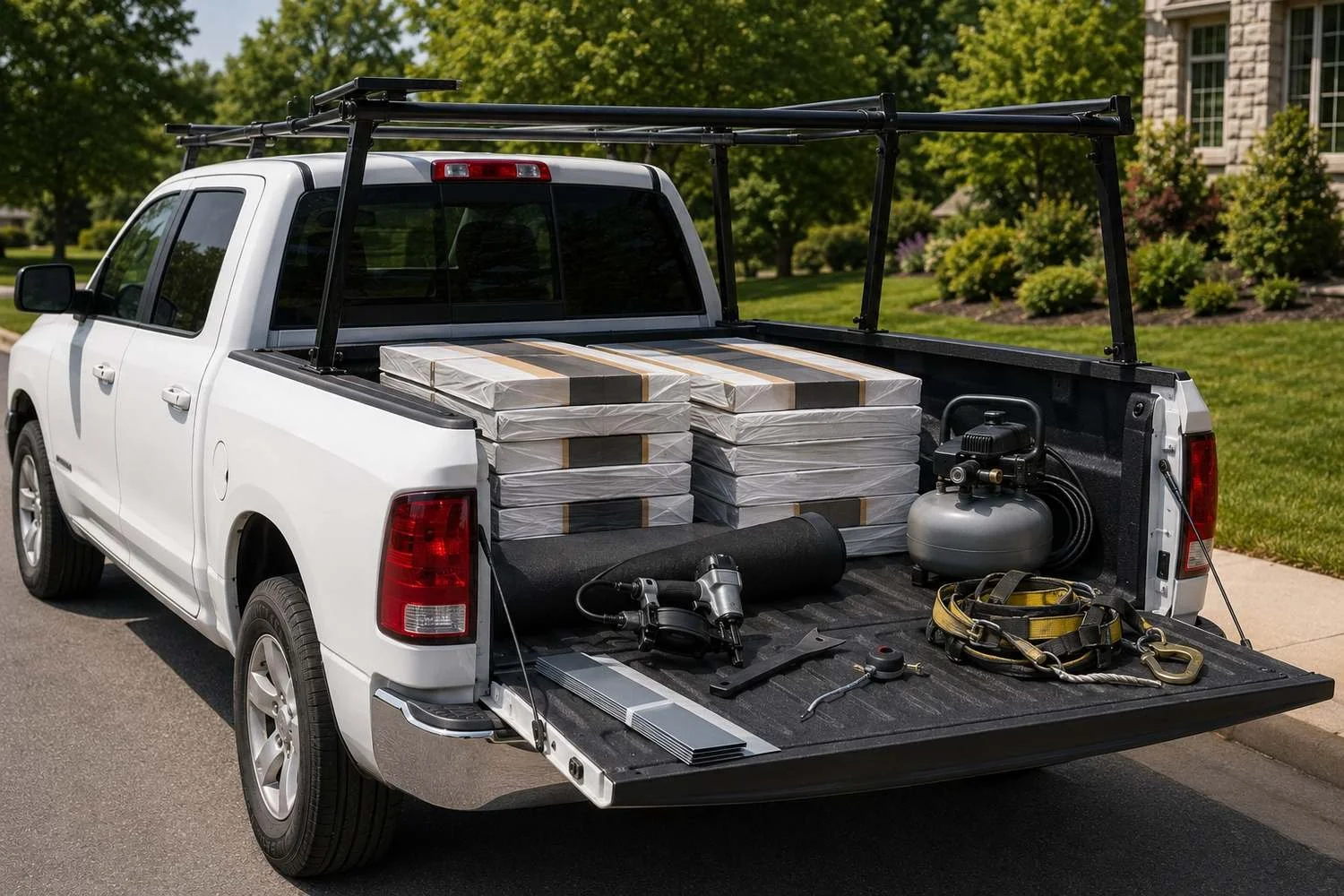
| Path | Typical cost range | Best for |
|---|---|---|
| Startup | $10,000 – $40,000 | Insurance + workers' comp + truck |
| Acquisition | $208,500 – $277,000 | Existing crew + insurance relationships |
| Franchise | $200,000 – $248,000 | Specialty restoration brand (example: Storm Guard Roofing and Construction) |
Two things about that franchise row are worth saying plainly. The first is that a storm-restoration franchise costs roughly what buying an established crew costs — the two middle paths are priced almost identically, and they buy opposite things. The franchise buys a brand, a system and adjuster training, but no crew and no claims history. The acquisition buys the crew and the relationships, but no system.
The second is a warning about the cheaper end. You will find roofing-adjacent opportunities marketed in the fifty to hundred thousand range, and most of them are roof rejuvenation dealerships — a treatment applied to an aging shingle roof to extend its life. That is a real business and some people do well at it. It is not the business this article describes. Rejuvenation sells a maintenance product; roofing sells tear-off and replacement. Check which one you are being offered before you compare its price to anything on this page.
Franchise brands are named as examples, not endorsements. Franchise investment figures reflect a franchisor's most recent Franchise Disclosure Document (FDD) and change annually — verify each brand's current FDD (Item 7 for the initial-investment range; Item 19 for any financial-performance representation) before pursuing one. [S3]
Notice how high the acquisition range runs — $208,500 to $277,000, which is what businesses in this category with under $1 million in revenue typically sold for.
What you are buying is not just trucks. It is an existing crew and, above all, established insurance relationships — the adjuster contacts and restoration track record that take years to build. That intangible is often the most valuable thing the company owns, and it is why buying an established storm-restoration operation can be worth every dollar of it.
How people actually fund it

A $10,000–$40,000 startup sits in the SBA Microloan and CDFI direct lending range — the rung reached after aboutthree years of saving on a single income.
A $208,500–$277,000 acquisition of a crewed operation with insurance relationships moves up into CDFI direct lending and SBA Community Advantage territory. Community Advantage carries up to $350,000, so the typical acquisition in this category fits inside the ceiling, and the usual route is to grow into larger acquisitions later, using retained earnings and the lender relationship you have built.
One pattern I watched from the lending chair: a qualified buyer walks into a national bank, gets declined, and concludes they cannot be funded. They never learn that a CDFI across town, or a Community Advantage lender, exists precisely for deals this size. Two free national directories will show you the ones near you — the Opportunity Finance Network CDFI locator and SBA Lender Match. [S4]
Finding the lender is the easy half. A roofing company also has two specific tells an underwriter looks for: the split between retail replacement and insurance-restoration revenue, and whether the contracts carry material escalators. A customer list weighted toward insurance work with price protection written in is far more bankable than a stack of fixed-price retail bids exposed to the next commodity swing. Start recording both before anyone asks.
The profit reality: owner-replacement cash flow

Here is the calculation that decides more of these deals than anything else in them. A roofing business looks profitable because the owner is running the crew, climbing, quoting the jobs, working the adjusters, and doing the books — none of it priced. The honest test: after you pay the crew, and after you pay a manager a market wage to run the jobs the way you run them, is there enough left for you to own the thing?
Real numbers. Start from what a roofer costs where you work, and carry a workers' compensation load on every one of them that reflects the height and the risk. [S2]
But the crew wage is not the number that decides this test. The crew replaces your hands; the crew lead replaces your judgment, and that is the wage the business has to clear. A first-line supervisor of construction trades is the role you are actually replacing, so pull that wage for your own market. Then load payroll taxes and a roofing workers' compensation rate on top. Roofing’s height exposure pushes that rate up, and the loaded cost lands well above the survey line. [S6] That is the person who runs the jobs, reads the deck when the tear-off exposes rot, and stands in front of the adjuster. Whatever the business reports as profit has to survive paying the crew and that.
This is where the specialty tag becomes arithmetic. A retail roofer working from fixed-price bids can watch a single commodity swing erase what a quarter earned. An owner with escalators in the contracts and an insurance-restoration customer list has cash flow the swings cannot reach, at rates the retail side cannot match. Same trade, same crew cost, completely different ability to pay for the owner's replacement. The two moves are not refinements. They decide whether anything is left at all.
The category-level math is easy — you just did it. Running it on a specific company, where the seller's "profit" hides his own unpriced adjuster time and the retail-versus-insurance mix is buried in three years of job files, is where people freeze. That is the job of the course, Microbusiness Millionaire: Operating System — the four tests turned into a repeatable screen you run on a real deal.
The benefits of owning a roofing business
Big tickets on every job. A $92.5 billion market with no dominant player in it. [S1]
Demand guaranteed by physics. Every roof is aging on a clock; the work cannot be permanently deferred.
Insurance-restoration rates. Storm work run with adjusters pays better than retail and is created by weather rather than by marketing.
Ticket size carries the crew. One roof is worth months of route revenue, which makes owner replacement genuinely affordable.
Tear-off and installation on a different structure every time needs a person on the roof.
What separates the strong owners from the struggling ones
Material escalators written into every contract. The defining decision in retail roofing. With the escalator in place, a commodity swing moves your price instead of coming out of your pocket on bids already signed.
The insurance-restoration side built deliberately. Storm work pays better than retail and its demand is created by weather rather than by your advertising. Building the adjuster relationships early is what makes you the one they call.
Height risk insured properly. Falls define the workers' compensation exposure in this trade. Carry what the work demands and manage the experience rating as the cost lever it genuinely is.
Storm work bid as storm work. Restoration is a different business with a different customer — the adjuster. Pricing and presenting it on its own terms is what earns both the rate and the repeat relationship.
Licenses, permits, and regulations
Roofing licensing varies significantly by state and is worth confirming rather than assuming, and there are three separate layers to it.
The license and the permits. Many states require a roofing or general contractor's license above a project-value threshold, and most jurisdictions require permits for reroofs and structural work. Confirm both thresholds before you quote, because the value at which the requirement bites varies widely.
The insurance-claims rules, which are specific to the specialty this article recommends. Several states regulate how contractors may interact with insurance claims and prohibit certain practices around deductibles. If you are building the storm-restoration side, this is the body of rules that governs the work you are building toward, so learn it before the first claim rather than during it.
The coverage. A registered entity, general liability at high limits, commercial auto, and — non-negotiably — workers' compensation for every crew member. Falls are the defining exposure in this trade, and the comp rate is a cost lever rather than a fixed expense: the experience rating you build is money.
Start with your state contractor board and municipal building department, and the free SBA "Apply for licenses and permits" tool. [S5] (General information, not legal advice — confirm your local requirements, including insurance-claims rules, before you take paid work.)
Build a portfolio, not a job
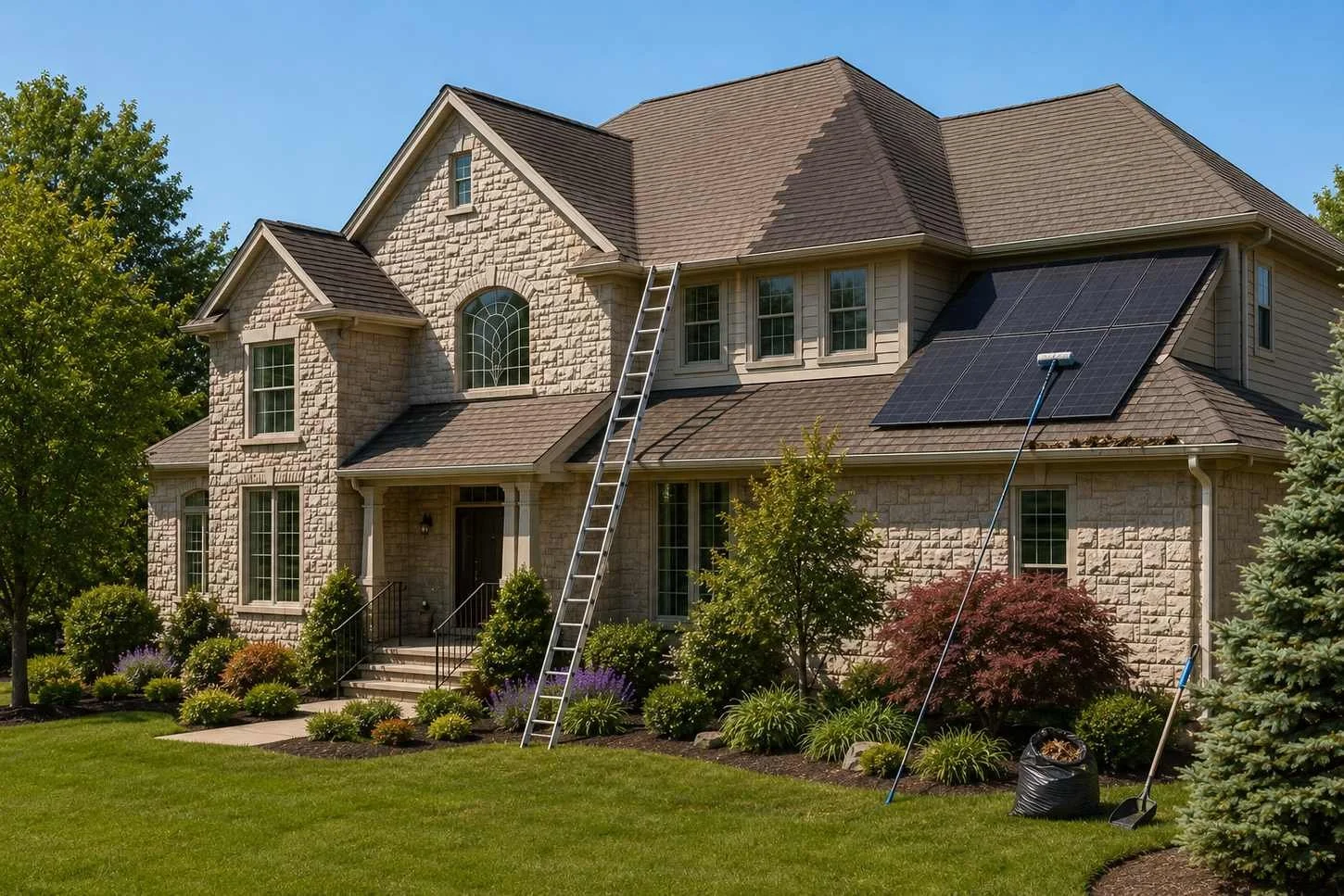
Roofing anchors the high-ticket end of the exterior-services portfolio, and it stacks the way route businesses do — along a territory of properties you have already worked on.
It pairs naturally with window and gutter cleaning, since you are already on the roofline and the gutter customer needs a roofer eventually; with solar panel cleaning, the same roof and a growing attachment; and with exterior painting, the whole-exterior refresh a reroof often prompts. The roofer who also maintains the gutters, cleans the panels and refreshes the exterior becomes the single exterior vendor a property owner never has to replace.
That is the difference between owning a crew and owning a portfolio. You are not building a roofing operation. You are building the exterior-services vendor a few hundred properties depend on, anchored by the highest-ticket service on the property. A portfolio like that, with a documented customer list and insurance relationships behind it, sells to a buyer as one asset — which is how it ends up worth over a million dollars at sale, instead of a truck and a ladder rack.
Frequently asked questions
Is a roofing business profitable? At scale, yes, and the two protections are what make it so. The honest test is whether the business still produces cash after paying the crew and a manager, and a fixed-price retail roofer exposed to material swings can struggle there. Material escalators in the contracts plus an insurance-restoration customer list are what close the math.
How much does it cost to start a roofing business? Roughly $10,000–$40,000 to start with insurance, workers' comp, and a truck. About $208,500 to $277,000 to buy an established crew with insurance relationships, because those adjuster relationships are worth real money. A specialty storm-restoration franchise runs about $200,000 to $248,000 — close to the same money, buying a system instead of a crew.
Do I need a license to start a roofing business? Usually, above a project-value threshold, and permits are typically required for reroofs. Storm-restoration work also carries state-specific insurance-claims rules. Confirm your state and local requirements first. [S5]
What is storm-restoration roofing? Repair and replacement of storm-damaged roofs, paid through the homeowner's insurance claim and coordinated with an adjuster. Rates run better than retail and demand is created by weather rather than by your marketing, which is why it is the specialty this category rewards.
Where to go from here
Download the free guide.50 Boring Businesses That Make Millionaires is the full result of the research: fifty categories run against the four tests, what each one costs to enter by all three paths, what has to line up for it to work, and how they pair into a portfolio. Free at microbusinessmillionaire.com.
Read the book.The Microbusiness Millionaire: How Ordinary People Build Extraordinary Wealth One Microbusiness at a Time follows four people who each reached a portfolio worth more than a million dollars by a different path. One keeps a hospital job and uses CDFI financing to acquire one stable service business, then another, then a third. One saves on a single income for three years, leaves a master plumber's wage, and stacks trade service lines starting with an SBA microloan. One uses an SBA Community Advantage loan to open a franchise, then opens three more. One starts with about $5,000 on the side and keeps a W-2 for years, building the slowest and most patient version of the same result. Four starting points, four amounts of money, four portfolios worth over a million dollars at sale. Available on Amazon.
Join the next cohort — Microbusiness Millionaire: Operating System. The book gives you clear examples of how it's done. The course is the step-by-step system for doing it yourself: screening a real company against the four tests, running the owner-replacement cash-flow math on a seller's actual numbers, knowing when to walk, knowing which lenders fund deals this size, and installing the manager who runs the business without you. Eight weeks, five seats a cohort, waitlist first — at microbusinessmillionaire.com.
About the author
Chris Scott has spent more than twenty-five years in the small-business arena. As the director of a Community Development Financial Institution (CDFI), he reviewed loan applications and made the approve-or-decline decisions. Later, at the U.S. Small Business Administration (SBA), he monitored lending programs. Across those two roles, thousands of business plans and loan applications crossed his desk. He still works at the SBA, now in its venture capital division. His research into which microbusinesses build wealth — and which quietly build a job — became The Microbusiness Millionaire and the free companion guide, 50 Boring Businesses That Make Millionaires.
Sources & references
[S1] IBISWorld, Roofing Contractors in the US (NAICS 23816), 2026 — market size $92.5bn; ~108,600 businesses; 3.4% CAGR 2021–2026; low market-share concentration, largest owner CentiMark; average ~2.1 employees. ibisworld.com
[S2] U.S. Bureau of Labor Statistics, Occupational Outlook Handbook: Roofers (166,700 jobs in 2024; 6% projected growth 2024–34; ~12,700 annual openings). bls.gov/ooh
[S3] U.S. Federal Trade Commission, Franchise Rule / FDD Items 7 and 19. ftc.gov. Franchise range shown reflects published Item 7 estimated initial investment for Storm Guard Roofing and Construction (approximately $200,400–$247,600). Roof-rejuvenation dealerships are a different service and are priced far lower; verify each current FDD before relying on any figure.
[S4] Opportunity Finance Network CDFI Locator (ofn.org); SBA Lender Match (sba.gov).
[S5] U.S. Small Business Administration, Apply for licenses and permits (sba.gov); state contractor licensing, municipal building permits, and state insurance-claims regulations for storm-restoration contractors.
[S6] U.S. Bureau of Labor Statistics, Occupational Employment and Wage Statistics, First-Line Supervisors of Construction Trades and Extraction Workers (SOC 47-1011), used as the published comparison for a roofing crew lead. bls.gov/oes
[Internal]50 Boring Businesses That Make Millionaires — Roofing entry (tag, three-path entry-cost table, portfolio pairings, framework note, "what it takes to make this one work"), drawn from the author's research and filtered through the underwriting criteria he applied as a CDFI lender.
This article is for general information only and is not legal, financial, tax, or investment advice. Category-level figures are reference points, not a specific-deal projection; individual businesses vary. Consult a CPA, attorney, business broker, franchise consultant, or CDFI loan officer before acting.
Last updated: 9/9/2026.