

How to Start a Portable Storage Business
Portable storage rents steel rather than selling hours: containers that hold their value and collect a fee for as long as somebody's belongings are inside them. Here is what a portable storage business costs, what it pays after you replace yourself, and why utilization rather than fleet size is the number that decides it.
Chris Scott — former CDFI director, SBA manager
As the director of a Community Development Financial Institution (CDFI), I reviewed loan applications and made the approve-or-decline decisions. Later, at the U.S. Small Business Administration (SBA), I monitored lending programs and saw which loans were approved and which were denied. Across those two roles, thousands of business plans and loan applications crossed my desk. I still work at the SBA, now in its venture capital division. That work is where I learned what a durable business looks like on paper, and what a business that only looks durable looks like on paper.
It is not, however, where the list of fifty came from. That came from years of research, running category after category through the same four questions: Is it profitable? Does it have recurring revenue? Is it recession resistant? Is it AI resistant? Those four questions are the framework behind the book, The Microbusiness Millionaire, and they are what separated the categories that built real wealth from the ones that quietly built a job with a P&L attached. Fifty survived the screen. Far more never made it through.
Portable storage is one of the fifty, and what you buy is an asset rather than a set of tools, which is exactly what makes it interesting to a lender.
A container costs five to ten thousand dollars, holds its value, and collects a monthly fee for as long as somebody's belongings are inside it. That is a different financial shape entirely, and it comes with one discipline attached.
The industry: door-to-door storage, growing steadily
Mobile storage services in the United States — the door-to-door end of the storage market, distinct from traditional self-storage — total about $6.9 billion in 2025, up 2.5% on the year and growing at roughly a 2.9% compound rate over five years. [S1] Demand sits in three predictable places: residential moves, renovations, and short-term storage between situations.
The labor benchmark for the delivery side is the driver's seat. Heavy and tractor-trailer truck driving shows about 237,600 openings projected annually through 2034. Light truck and delivery driver employment is projected to grow 8% from 2024 to 2034. [S2] What either seat pays is a local question, and the rate a heavy-truck driver commands in your market is the one that lands on your payroll. The price of replacing yourself sits above it, at what a manager would have to be paid to do the work you would otherwise be doing. The Resource Directory in the free tools shows where to look both up. Every profit number later in this article has to survive it, and the real cost runs higher once payroll taxes and insurance go on top.
Which of those applies depends on the truck you run and the licensing behind it. Settle that early, because it sets your largest recurring labor cost.
Why portable storage made the list
Every category in the research had to clear four tests. Clear three and you usually have a self-employed job in disguise.
Does it pay after you replace yourself? It does, for a structural reason: the revenue comes from renting an asset rather than selling hours. Once placed, a container bills monthly with essentially no labor attached until pickup, which leaves genuine room to pay a driver a market wage and still keep cash flow for the owner — provided the fleet stays busy.
Does the revenue recur? Monthly, by contract, for as long as the container is on site. Renovation and transitional storage frequently run for months rather than weeks, and commercial customers — contractors storing materials, retailers holding seasonal inventory — often keep units for far longer than a residential move requires.
Does it survive a recession? It leans the right way for an unusual reason: people store things when their situation changes, and downturns produce changes. Downsizing, moving in with family, and selling a house all create storage demand, which is why the category is less cycle-dependent than the construction activity it partly serves.
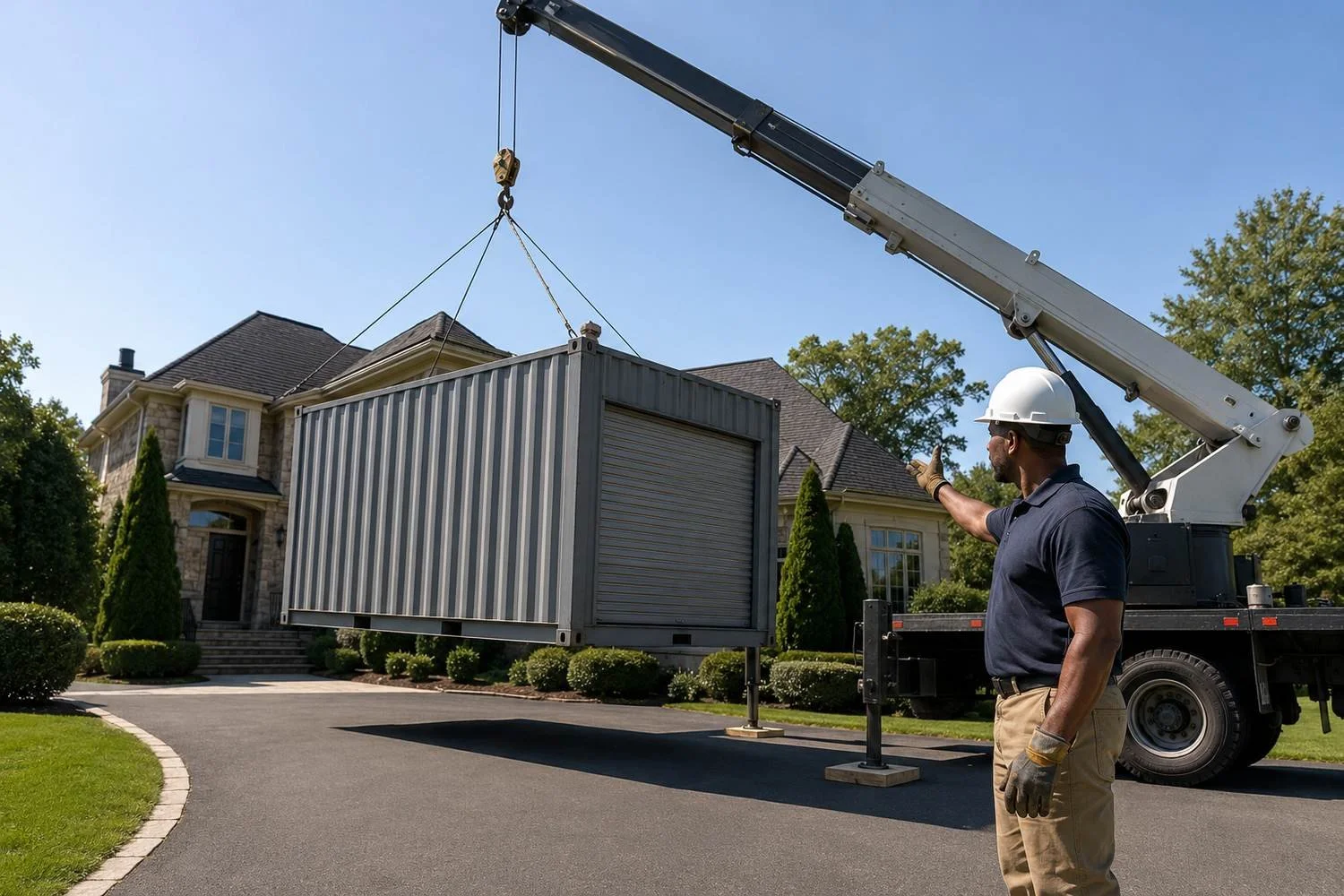
Will it still need humans in ten years? Driving the truck, setting a container level on a sloped driveway and handling the customer are physical, on-site work. Software routes the fleet and takes the booking, which helps you. It cannot set the steel down.
Four for four — with the balance sheet of a rental business rather than a service one.
Portable storage has a feature a lender notices immediately: the collateral is real. Steel holds its value and can be repossessed and re-rented, which is a very different conversation from financing goodwill. The owners who got into difficulty all made the same move, though — they bought the fleet first. Thirty containers financed on the theory that bookings would follow, and two years of paying for boxes sitting empty in a yard. The ones who did it well started with a dozen, shared yard space with a moving company rather than leasing a lot, and added containers only when utilization said they were turning business away. Slower on paper, and they ended up owning far more of the business. From the lending side of the desk the number that separates them is not fleet size. It is what share of that fleet is on rent.
What it takes to make this one work
A note on the tags. Every category in the fifty cleared the same four tests; far more never made it through. The tags do not grade a business — they tell you what has to line up for it to work in your hands. Portable storage carries one: Best paired. That is the instruction manual.
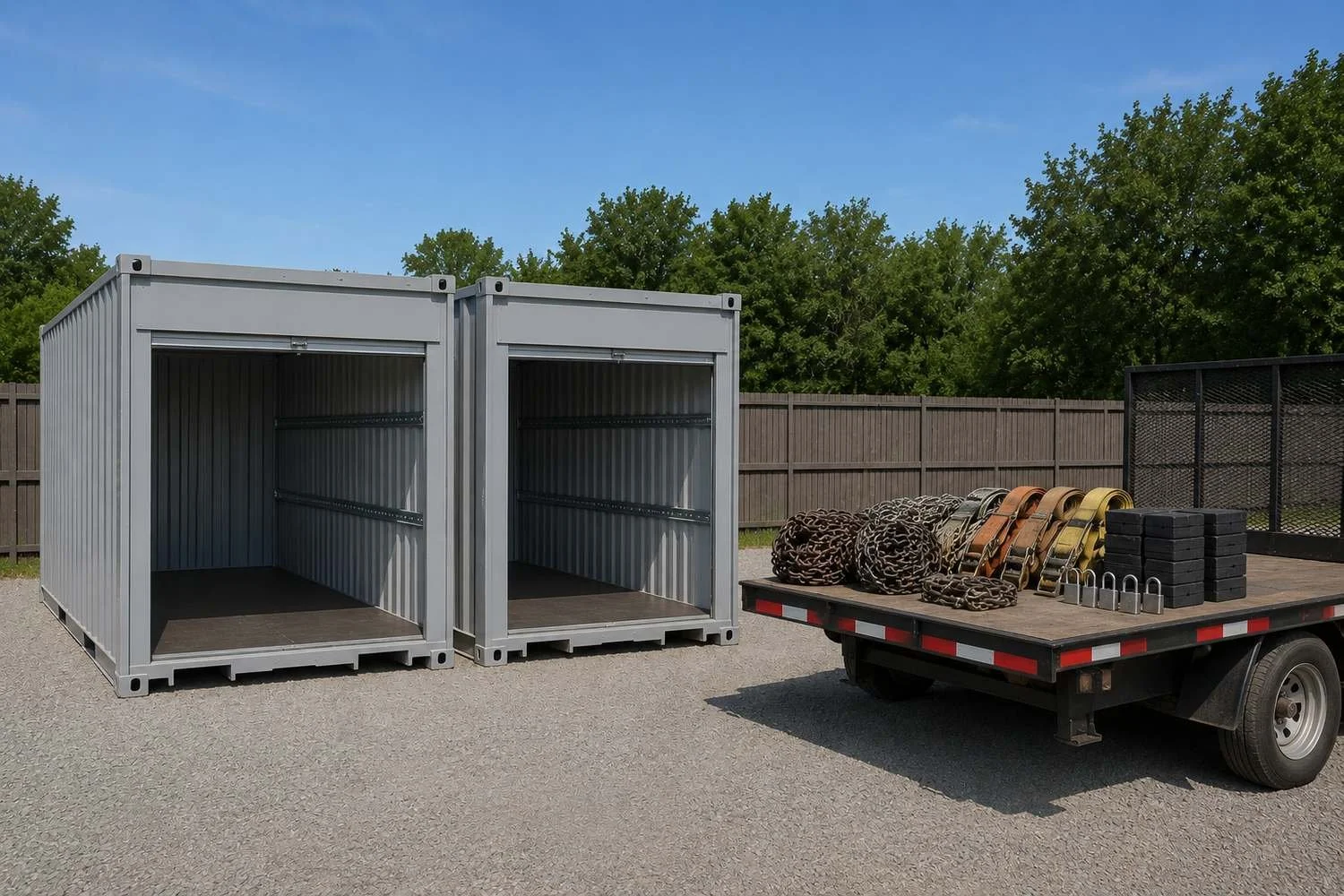
The condition: capital discipline. Containers run $5,000 to $10,000 each, and at volume you need enough of them to keep utilization high — which creates a real temptation to buy ahead of demand and a real cost if you get it wrong.
The move that meets it: let demand pull the fleet. Buy containers as bookings justify them, and treat utilization as your primary operating number — when you are regularly turning customers away, that is the signal to add steel, and not before.
Use a shared yard before leasing your own lot. Yard space is a fixed cost that produces no revenue, and a moving company with spare ground is usually glad to share it.
And because the tag is Best paired, the strongest growth move is attaching this to a business whose customers already need a box. Junk removal, senior moving and moving services each deliver a customer mid-transition, which is precisely when a container gets rented.
The upside: what you are building is an asset that earns rent while it sits. The containers hold their value, the revenue arrives monthly without a sales call once placed, and the whole thing pairs directly into the moving-and-transition businesses whose customers already need a box. This category puts a financeable asset on the balance sheet and rents it out at the same time.
What it costs to get in — the three paths
| Path | Typical cost range | Best for |
|---|---|---|
| Startup | $80,000 – $200,000 | Container investment + truck + storage lot |
| Acquisition | $138,750 – $278,000 | Existing container fleet + customer list |
| Franchise | Limited availability | The best-known national brands no longer franchise — see the note below |
The franchise column needs an explanation rather than a number, because this category is unusual. The two brands most people picture when they hear "portable storage" are not franchise opportunities. One stopped offering franchises after it was bought by an institutional investor around a decade ago; the other no longer franchises either and is not taking applications. The national end of this business consolidated into corporate ownership, which is a normal thing for a capital-intensive category to do and an easy thing for a prospective owner to miss.
What that means in practice is that this is a two-path category, not a three-path one. You start it or you buy it. If you do come across a portable storage franchise being marketed, the first question is not what it costs — it is whether the franchisor is currently granting new franchises at all, and how many it has granted in the last three years. Item 20 of the disclosure document answers that in a table, and it is the fastest way to tell a live opportunity from a dormant one.
Franchise investment figures reflect a franchisor's most recent Franchise Disclosure Document (FDD) and change annually — verify each brand's current FDD (Item 7 for the initial-investment range; Item 19 for any financial-performance representation) before pursuing one. [S3]
These are large entry numbers, and the top end runs past where a single microbusiness normally sits — smaller-scale entry is how most independents begin.
The important distinction is what the money buys. In a service business, startup capital buys tools that depreciate toward nothing. Here, most of it buys containers that hold their value and can be sold or refinanced. That is why a lender reads this category differently, and why a modest fleet with a shared yard keeps the entry number near the bottom of that range.
How people actually fund it

An $80,000–$200,000 startup sits in CDFI direct lending and SBA Community Advantage territory — larger than the microloan range, which makes saved equity matter. Community Advantage carries up to $350,000, so the typical acquisition in this category fits inside the ceiling, and the usual route is to grow into larger fleets later, using retained earnings and the lender relationship you have built.
This is also thekind of deal that rewardss three yearsof saving on a single income before buying anything. In an asset-backed category that patience does double duty: it becomes the down payment, and the containers serve as collateral — a much easier conversation than asking a lender to finance goodwill.
One pattern I watched from the lending chair: a qualified buyer walks into a national bank, gets declined, and concludes they cannot be funded. They never learn that a CDFI across town, or a Community Advantage lender, exists precisely for deals this size. Two free national directories will show you the ones near you — the Opportunity Finance Network CDFI locator and SBA Lender Match. [S4]
Finding the lender is the easy half. A container business also has a specific tell an underwriter looks for: utilization rate and average rental duration — what share of the fleet is on rent at any given time, and how long the average container stays out. High utilization across a modest fleet is far more bankable than a large fleet sitting half-idle in a yard. Start recording both before anyone asks.
The profit reality: owner-replacement cash flow

Here is the calculation that decides more of these deals than anything else in them. A storage business looks profitable because the owner is driving the truck, placing the containers, taking the bookings, and keeping the books — none of it priced. The honest test: after you pay your drivers, and after you pay a manager a market wage to run deliveries, pickups and the yard the way you run them, is there enough left for you to own the thing?
This category has an unusually good answer, with one condition attached.
The good part: rental revenue keeps arriving between deliveries, so a driver's wage is spread across a fleet that bills whether the truck moves or not — very different from a service business where the revenue stops the moment the labor does.
The condition is utilization. Every idle container is a financed asset producing nothing while the note comes due. A fleet at high utilization with long rental durations leaves real room after paying a driver. A fleet bought ahead of demand does not. Same containers, entirely different business.
Put rough numbers on it and the point stops being abstract. Twenty containers at $6,000 each is $120,000 of steel. At eighty percent on rent, sixteen units are billing every month and four are not. At fifty percent, ten are billing and ten are not — the same note, the same yard, the same driver, and a little over half the revenue. The fleet did not change. Nothing about the business changed except the one number, and it is the number that decides whether there is a wage in here for anyone but the driver.
The category-level math is easy — you just did it. Running it on a specific company, where the seller's "profit" hides his own unpriced driving and dispatch hours and the real question is true utilization across the fleet rather than container count, is where people freeze. That is the job of the course, Microbusiness Millionaire: Operating System — the four tests turned into a repeatable screen you run on a real deal.
The benefits of owning a portable storage business
An asset that earns rent while it sits. Containers hold their value and bill monthly once placed.
Revenue without recurring labor. After delivery, the unit collects a fee until pickup, hands-free.
Real collateral. Steel is easier to underwrite than goodwill.
Long commercial rentals. Contractors and retailers hold units far longer than movers.
A customer already in transition. Moving, junk removal, and downsizing deliver renters.
What separates the strong owners from the struggling ones
Demand pulling the fleet. The defining discipline in this category. Buy containers when utilization says you are turning business away, and every unit you add is earning from the week it arrives.
A shared yard before your own lot. Ground you lease produces no revenue. Sharing space with a moving company keeps that cost variable while the fleet is still small.
The pairings worked. Junk removal, senior moving and moving services hand you customers at the exact moment a container becomes useful. Those relationships fill a fleet faster than advertising does.
Utilization tracked, not container count. Fleet size flatters a spreadsheet; utilization pays the note. Measure the number that decides the business.
Licenses, permits, and regulations
Business licensing is straightforward. The trucking and placement rules are where the real requirements live, and there are three of them worth separating.
The truck. A commercial driver's license may be required depending on vehicle weight class, and interstate operation generally means USDOT and FMCSA authority, driver qualification files and hours-of-service compliance. Settle this before you buy the truck, because the weight class you choose decides both your licensing burden and, as the industry section notes, your largest recurring labor cost.
The placement. Many municipalities regulate how long a container may sit on a residential driveway or public street, sometimes requiring a right-of-way or placement permit. This one is easy to overlook and awkward to discover, because you find out after a container is already on a customer's driveway.
The yard. Your storage ground needs zoning for outdoor container storage — worth confirming before you agree to share space with anyone, since a shared yard is only a saving if it is a permitted one.
Insurance also matters a great deal here, because you own the asset rather than rent it: commercial auto, general liability, cargo coverage and physical damage on the fleet. Start with your city or county and the free SBA "Apply for licenses and permits" tool. [S5] (General information, not legal advice — confirm your CDL and DOT obligations, local container placement rules, and yard zoning before you take paid work.)
Build a portfolio, not a job

Portable storage slots into a moving-and-transition cluster with unusual precision, because every business beside it produces customers who need exactly what it rents. It stacks on a referral relationship rather than a route or a building — the businesses that belong with it are the ones serving the same household at the same moment.
Junk removal arrives mid-clear-out, where half of what is left needs to go somewhere temporarily. Senior moving is downsizing by definition: a household going from four bedrooms to one has months of belongings in limbo. General moving services hand off the same customer at the same moment. That is what the Best paired tag is pointing at — a container is easiest to rent to someone already mid-transition.
That is the difference between owning trucks and owning a portfolio. You are not building a container fleet. You are building the transition relationship a stream of households and contractors rely on, anchored by an asset that earns rent while it sits. A portfolio like that, with a well-utilized fleet and recurring monthly rentals, sells to a buyer as one asset — which is how it ends up worth over a million dollars at sale, instead of a truck and a row of empty boxes.
Frequently asked questions
Is a portable storage business profitable? It can be, and the structure helps: rental revenue continues between deliveries, so a driver's wage is spread across a fleet that bills without ongoing labor. The honest test is utilization — a well-used fleet leaves real room after paying a driver; containers bought ahead of demand consume it.
How much does it cost to start a portable storage business? Roughly $80,000–$200,000 for containers, a truck, and a lot — a modest fleet with shared yard space keeps you near the bottom of that range. About $138,750–$278,000 to acquire an existing fleet with an established customer list. Franchising is not a practical third path here — the best-known national brands stopped granting franchises years ago, so this is a start-it-or-buy-it category.
How much does a storage container cost? Typically $5,000 to $10,000 each, which is why fleet growth should follow bookings rather than lead them. The upside is that containers hold their value, making them genuine collateral rather than depreciating equipment.
Do I need a CDL to run a portable storage business? It depends on the vehicle weight class you operate, and interstate work brings USDOT and FMCSA obligations. Local placement rules and yard zoning also apply — confirm all of it before taking paid work. [S5]
Where to go from here
Download the free guide.50 Boring Businesses That Make Millionaires is the full result of the research: fifty categories run against the four tests, what each one costs to enter by all three paths, what has to line up for it to work, and how they pair into a portfolio. Free at microbusinessmillionaire.com.
Read the book.The Microbusiness Millionaire: How Ordinary People Build Extraordinary Wealth One Microbusiness at a Time follows four people who each reached a portfolio worth more than a million dollars by a different path. One keeps a hospital job and uses CDFI financing to acquire one stable service business, then another, then a third. One saves on a single income for three years, leaves a master plumber's wage, and stacks trade service lines starting with an SBA microloan. One uses an SBA Community Advantage loan to open a franchise, then opens three more. One starts with about $5,000 on the side and keeps a W-2 for years, building the slowest and most patient version of the same result. Four starting points, four amounts of money, four portfolios worth over a million dollars at sale. The book is coming soon — join the email list at microbusinessmillionaire.com to hear when it lands.
Join the next cohort — Microbusiness Millionaire: Operating System. The book gives you clear examples of how it's done. The course is the step-by-step system for doing it yourself: screening a real company against the four tests, running the owner-replacement cash-flow math on a seller's actual numbers, knowing when to walk, knowing which lenders fund deals this size, and installing the manager who runs the business without you. Eight weeks online, five seats a cohort, waitlist first — at microbusinessmillionaire.com.
About the author
Chris Scott has spent more than twenty-five years in the small-business arena. As the director of a Community Development Financial Institution (CDFI), he reviewed loan applications and made the approve-or-decline decisions. Later, at the U.S. Small Business Administration (SBA), he monitored lending programs. Across those two roles, thousands of business plans and loan applications crossed his desk. He still works at the SBA, now in its venture capital division. His research into which microbusinesses build wealth — and which quietly build a job — became The Microbusiness Millionaire and the free companion guide, 50 Boring Businesses That Make Millionaires.
Sources & references
[S1] IBISWorld, Mobile Storage Services in the US — market size approximately $6.9bn in 2025, up 2.5% in 2025 and growing at a ~2.9% CAGR 2020–2025; distinct from traditional self-storage in providing door-to-door pickup and delivery. ibisworld.com
[S2] U.S. Bureau of Labor Statistics, Occupational Outlook Handbook / Occupational Employment and Wage Statistics — Heavy and Tractor-Trailer Truck Drivers (SOC 53-3032), approximately 237,600 annual openings projected through 2034; Light Truck Drivers, employment projected to grow 8% from 2024 to 2034. bls.gov/ooh
[S3] U.S. Federal Trade Commission, Franchise Rule / FDD Items 7, 19 and 20. ftc.gov. Item 20 discloses outlet and franchisee counts, including franchises granted and terminated by year, which is how a prospective buyer confirms whether a franchisor is currently granting new franchises.
[S4] Opportunity Finance Network CDFI Locator (ofn.org); SBA Lender Match (sba.gov).
[S5] U.S. Small Business Administration, Apply for licenses and permits (sba.gov); FMCSA/USDOT operating authority and commercial driver licensing requirements by vehicle weight class; local right-of-way and residential container placement rules; municipal zoning for outdoor container storage yards.
[Internal] 50 Boring Businesses That Make Millionaires — Portable Storage entry (tag, three-path entry-cost table, $5,000–$10,000 per-container cost, portfolio pairings, framework note, "what it takes to make this one work"), drawn from the author's research and filtered through the underwriting criteria he applied as a CDFI lender.
This article is for general information only and is not legal, financial, tax, or investment advice. Category-level figures are reference points, not a specific-deal projection; individual businesses vary. Consult a CPA, attorney, business broker, franchise consultant, or CDFI loan officer before acting.
Last updated: 8/24/2026.