

How to Start a Mobile Mechanic Business
Nobody wants to surrender their car for a day, which is why on-site repair is growing faster than the fixed-location shops it competes with — at a fraction of a shop's entry cost. Here is what a mobile mechanic business costs, what it pays after you replace yourself, and which work to specialize in so demand stays durable.
Chris Scott — former CDFI director and SBA management
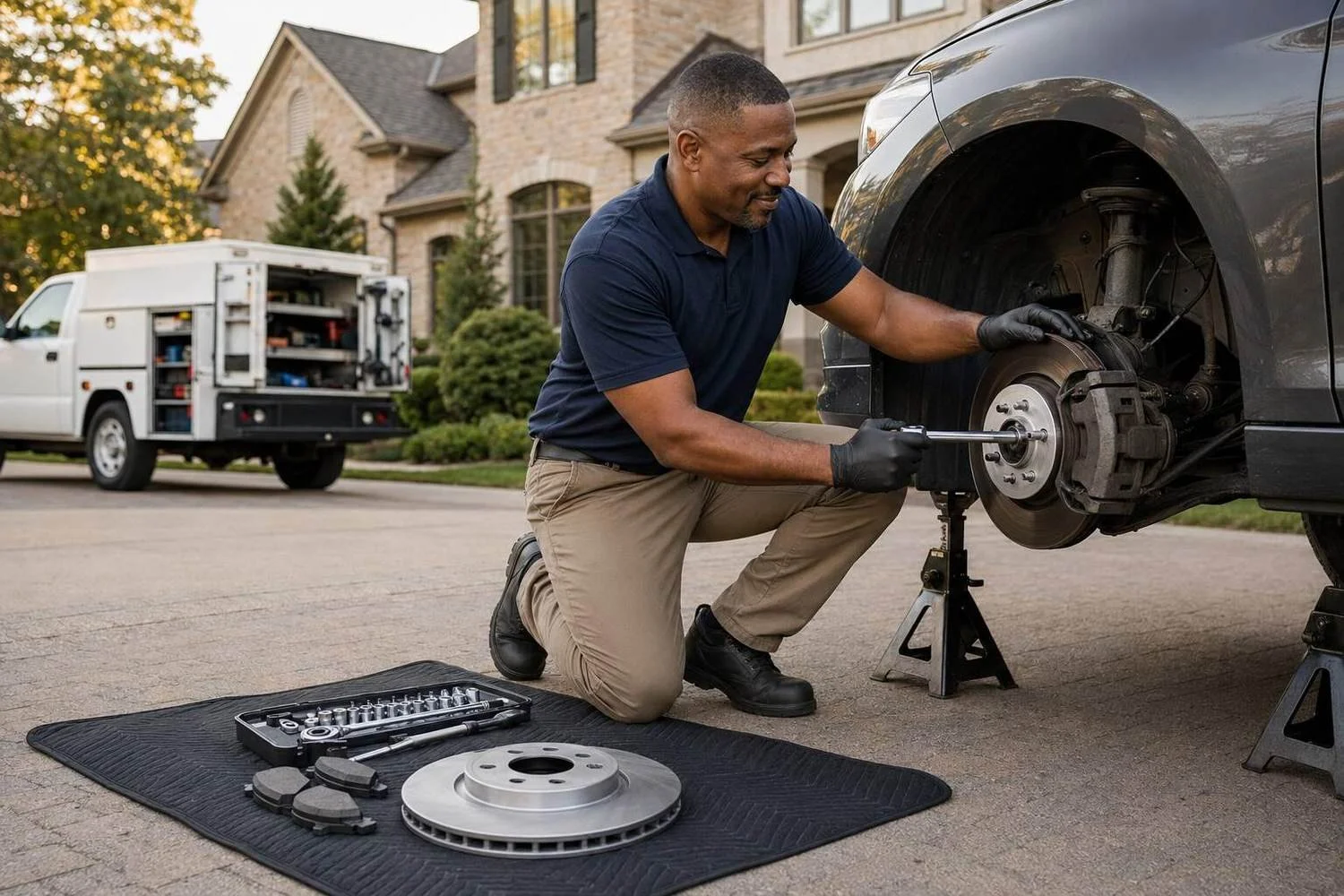
As the director of a Community Development Financial Institution (CDFI), and as management at the U.S. Small Business Administration (SBA), I saw thousands of business plans and loan applications cross my desk. That work is where I learned what a durable business looks like on paper, and what a business that only looks durable looks like on paper.
It is not, however, where the list of fifty came from. That came from years of research, running category after category through the same four questions: Is it profitable? Does it have recurring revenue? Is it recession resistant? Is it AI resistant? Those four questions are the framework behind the book, The Microbusiness Millionaire, and they are what separated the categories that built real wealth from the ones that quietly built a job with a P&L attached. Fifty survived the screen. Far more never made it through.
Mobile mechanic work is one of the fifty, and it solves something every driver dislikes: giving up the car for a day. On-site auto repair — oil changes, brake work, battery replacement, diagnostics, performed at the customer's home or workplace — is growing faster than fixed-location repair for exactly that reason. You come to them.
A word on the difference between this and an auto repair shop, because both are on the list and the trade is the same. A shop is a facility: it stacks in its bays, adding work that runs through equipment you are already paying for — transmission, alignment, tire and inspection work — and its ceiling is how many lifts you have. A mobile mechanic is a route: it stacks along a territory, adding customers you are already driving past, and its ceiling is how tight the map is. A shop is built on bays. A mobile business is built on territory. They refer work to each other happily — the jobs needing a lift go to the shop — but they are two different businesses, and the mistake is running one while planning it like the other.
The whole question with this category is which work you specialize in and how you handle parts.
The industry: a fast-growing slice of a giant market
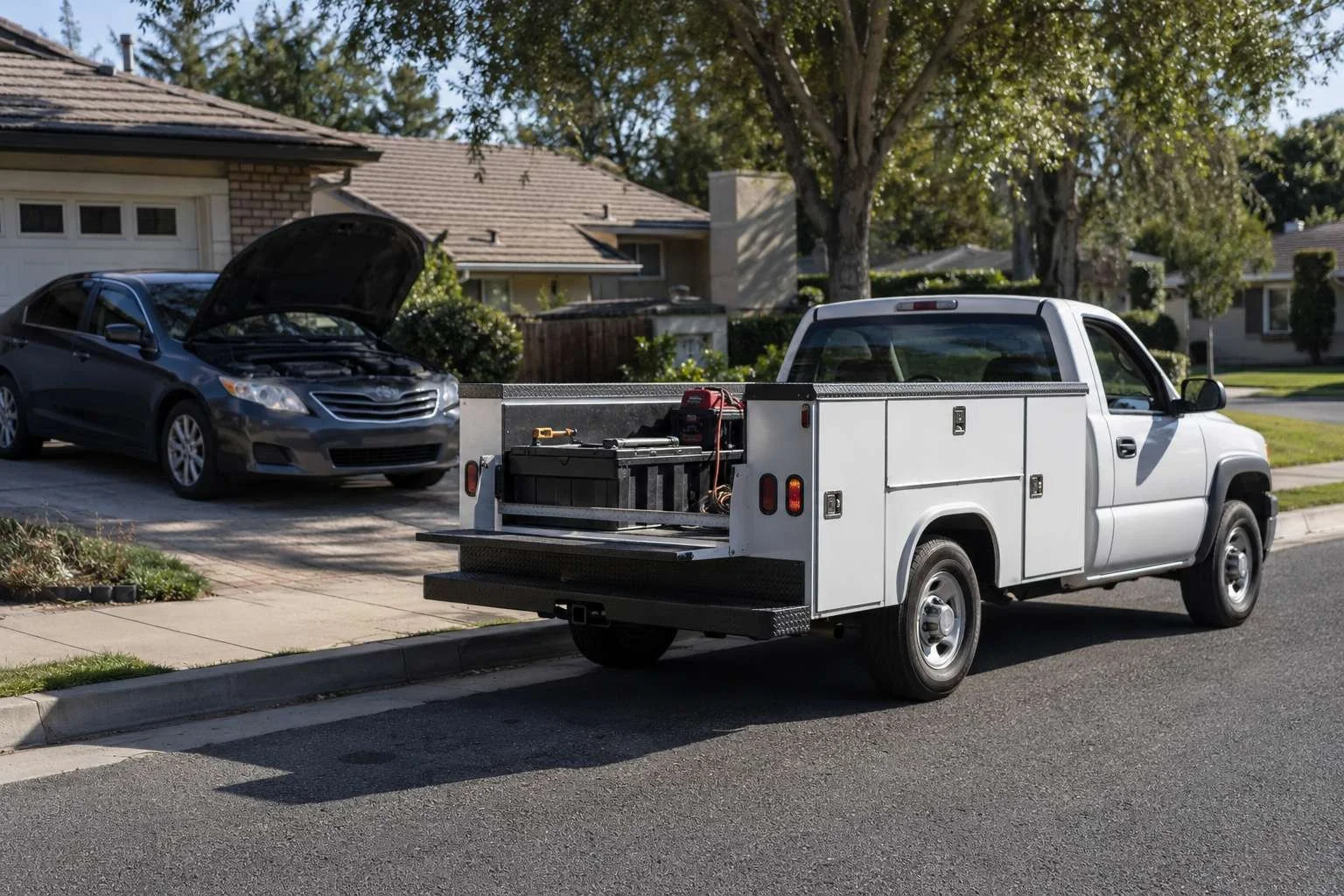
Auto repair overall is enormous — U.S. auto mechanics run about $92.1 billion in 2026 across roughly 93,100 establishments — and the mobile, on-site slice of it is growing faster than the fixed-location shops, because convenience is the whole pitch. [S1] It is a deeply fragmented market of independent operators, the structure that rewards a well-reviewed local business that shows up on time.
The labor benchmark is a working automotive service technician. Employment in that occupation is projected to grow 4% from 2024 to 2034, with about 70,000 openings a year. The people you want are being hired by someone else too. [S2] What one of them is paid is the price of replacing yourself: what a supervisor would have to be paid to do the work you would otherwise be doing. That pay is a local number. Look it up for your own market. Every profit number later in this article has to survive it, and the real cost runs higher once payroll taxes and insurance go on top.
Skilled technicians are hard to find and harder to keep. That is a real thing to manage as you grow — and it is also the barrier that protects operators who already have the skill and the reviews.
Why mobile mechanic work made the list
Every category in the research had to clear four tests. Clear three and you usually have a self-employed job in disguise.
Does it pay after you replace yourself? It does, on billed labor and a mark-up on parts, with none of the fixed cost a shop carries. The lighter overhead means more of each ticket survives to cover a technician's wage and still leave cash flow for the owner.
Does the revenue recur? With near-certainty. Every vehicle needs maintenance and repair on a schedule, and a mobile mechanic who earns a household's trust becomes their standing appointment — plus fleet accounts, where recurring commercial work fills the calendar without marketing.
Does it survive a recession? It leans the right way. When budgets tighten, people keep the car they have running instead of buying new, which pushes maintenance and repair toward the affordable, convenient option — and coming to the customer is exactly that.
Will it still need humans in ten years? Diagnosing and repairing a physical vehicle, hands-on, in a different driveway every time, is skilled work with real consequences. Software can book the job and order the part. It cannot turn the wrench. Very low AI exposure.
Four for four — in the faster-growing corner of one of the largest markets on the list.
The research on this category kept setting the same two versions of the same trade side by side. One operator opens a traditional shop: bays, lifts, a lease, and the capital all of that requires. Another goes mobile — a service truck, tools, ASE certifications, and a specialty in the work that stays steady regardless of what is on the new-car lot: fleet maintenance, older vehicles, brakes, tires, diagnostics. The entry cost is a fraction of the shop's, the overhead is light, and the pitch writes itself, because nobody wants to give up their car for a day and the mobile operator is the one who does not ask them to. The detail that separated the strong mobile operators from the struggling ones was rarely the wrenching. It was the parts routine — building around reliable next-day supply rather than trying to stock a warehouse in a van. From the lending side of the desk that shows up directly in working capital, which is the line that decides whether a light-overhead business is genuinely light.
What it takes to make this one work
A note on the tags. Every category in the fifty cleared the same four tests; far more never made it through. The tags do not grade a business — they tell you what has to line up for it to work in your hands. Mobile mechanic work carries one: Rewards a specialty. That is the instruction manual.
The condition: two practical realities shape this category. Internal-combustion-specific work carries a long-horizon question as the vehicle fleet slowly changes, and stocking parts in a van is genuinely harder than stocking a shop.
The move that meets it: specialize where the transition runs slowest, and solve parts with a routine rather than with inventory.
On the first: fleets, older vehicles, brakes, tires and diagnostics serve an enormous existing base of vehicles that is not going anywhere for a very long time, whatever is on the new-car lot. That is the work to anchor in, and choosing it turns the long-horizon question into a positioning decision you make once.
On the second: build the parts process around reliable next-day supply instead of trying to carry a shop's inventory in a van. Inventory in a vehicle ties up cash and still never has the part you need; a good supplier relationship costs nothing and nearly always does.
The upside: this is growing faster than fixed-location auto repair, for the obvious reason — nobody wants to surrender their car for a day, and you are the one who does not ask them to. Specialize in the durable work, run a tight next-day parts routine, and you own a convenient, recession-leaning, recurring business at a fraction of a shop's entry cost.
What it costs to get in — the three paths
| Path | Typical cost range | Best for |
|---|---|---|
| Startup | $15,000 – $40,000 | Mobile service truck + tools + ASE certifications |
| Acquisition | $30,000 – $100,000 | Customer list + recurring accounts + tools |
| Franchise | $50,000 – $150,000 | Brand + booking platform. Thin ground — see below. |
Franchise brands are named as examples, not endorsements. Franchise investment figures reflect a franchisor's most recent Franchise Disclosure Document (FDD) and change annually — verify each brand's current FDD (Item 7 for the initial-investment range; Item 19 for any financial-performance representation) before pursuing one. [S3]
That franchise row is the thinnest on the whole list, and it is worth saying so plainly rather than leaving the number to imply more than it should. There is no established national mobile mechanic franchise. What exists is a handful of small and emerging brands, some regional and some operating in Canada rather than the United States, and none of them publishes an Item 7 range you can meaningfully compare. [S6]
The recognizable automotive repair franchises — the names you already know — are fixed-location shops, and the automotive franchise category as a whole averages between roughly $473,000 and $1.2 million to open. That is the neighbor described at the top of this article, not this business.
So if a mobile mechanic franchise is offered to you, treat it as an early-stage proposition rather than an established system: ask for a current-year FDD, ask how many units are actually trading rather than sold, and ask to speak to two of them. Most people in this category start with the first row instead, and that is the honest recommendation.
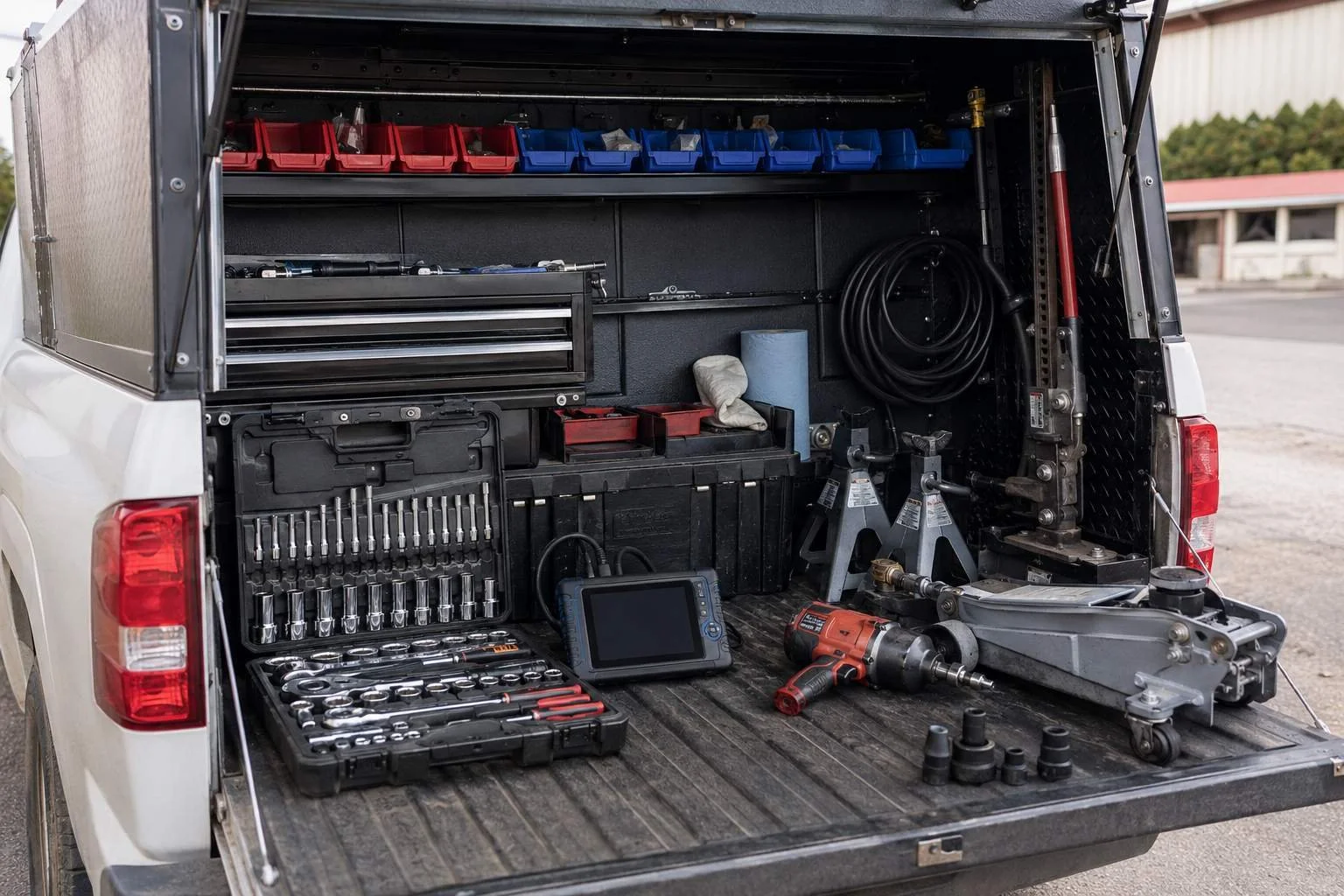
The startup range is a fraction of what a fixed-location shop costs — a service truck, a solid tool set and ASE certifications, with no lease, no lifts and no buildout.
That lighter footprint is the whole advantage: you enter the same enormous repair market for a fraction of the capital. The acquisition path buys an existing customer list and tools, if you would rather step into a running business than build one.
How people actually fund it

A $15,000–$40,000 startup sits right in the SBA Microloan range, and a $30,000–$100,000 acquisition of an established route moves up to CDFI direct lending and SBA Community Advantage. That larger deal is where the book's trades path spends three years saving on a single income before buying anything — patience that turns a deal you cannot fund into one you can.
One pattern I watched from the lending chair, across every industry that came through: a qualified buyer walks into a national bank, gets declined, and concludes he cannot be funded. He never learns that a CDFI across town, or a Community Advantage lender, exists precisely for deals this size. Two free national directories will show you the ones near you — the Opportunity Finance Network CDFI locator and SBA Lender Match. [S4]
Finding the lender is the easy half. A mobile mechanic business also has a specific tell an underwriter looks for: recurring fleet accounts and a defined specialty rather than a scatter of one-off jobs, plus a parts process that keeps working capital tight. A customer list with fleet contracts and a clear specialty is far more bankable than a random call log. Start recording both before anyone asks for them.
The profit reality: owner-replacement cash flow

Here is the calculation that decides more of these deals than anything else in them. A mobile mechanic business looks profitable because the owner is turning the wrenches, driving the route, sourcing the parts, and keeping the books — none of it priced. The honest test: after you pay your technicians, and after you pay a lead tech a market wage to run the jobs the way you run them, is there enough left for you to own the thing?
Real numbers. Technician pay is the line this one turns on, and the skilled ones cost more than the going rate and are harder to keep. Pull the figure for your own area rather than a national average. [S2] Whatever the business reports as profit has to survive paying a lead technician to replace your hours.
Where the mobile model helps is on the cost side. No lease, no lifts, no buildout, so more of each ticket is available to cover that replacement and still leave cash for the owner — provided you have specialized in durable work and kept the parts working capital lean. Light overhead plus a defined specialty is what closes this math.
The category-level math is easy — you just did it. Running it on a specific company, where the seller's "profit" hides his own unpriced wrench and driving hours and the specialty mix is buried in a year of invoices, is where people freeze. That is the job of the course, Microbusiness Millionaire: Operating System — the four tests turned into a repeatable screen you run on a real deal.
The benefits of owning a mobile mechanic business
A fraction of a shop's entry cost. A truck, tools, and certifications — no lease, no lifts, no buildout.
Growing faster than fixed-location repair. Convenience is the pitch, and demand is moving toward it.
A specialty that stays durable. Fleets, older vehicles, brakes, tires and diagnostics serve a huge, aging base for years to come.
Recession-leaning demand. When money's tight, people fix the car they have — conveniently.
Very low AI exposure. Hands-on repair at the customer's location needs a person in the driveway.
What separates the strong operators from the struggling ones
Next-day supply before inventory. Build the parts routine around a reliable supplier rather than stock in the van. Inventory ties up the working capital that makes a light-overhead business light.
A specialty chosen deliberately. Fleets, brakes, tires, diagnostics — a defined focus keeps demand durable and pricing intact, and it is what an underwriter and an eventual buyer both look for.
Fleet accounts pursued. Recurring commercial work fills a calendar without marketing, and it is won by asking operations managers directly rather than by advertising.
Certifications treated as the foundation. ASE credentials build the trust that justifies your pricing, particularly when you are working in someone's driveway rather than behind a shop counter.
Licenses, permits, and regulations
Mobile mechanic requirements vary by state and locality, and they are worth confirming rather than assuming: some states or cities require an auto-repair or business registration, ASE certifications are the practical trust standard even where not legally required, and environmental rules govern the handling and disposal of oil, fluids, and refrigerants — a real watch-item for a mobile operator without a shop's containment setup. Air-conditioning work carries a federal refrigerant certification. Beyond that: a registered entity, general liability, garage-keepers or care-custody-and-control coverage, and commercial auto. Start with your state licensing and environmental agencies and the free SBA "Apply for licenses and permits" tool. [S5] (General information, not legal advice — confirm your local registration, environmental, and refrigerant rules before you take paid work.)
Build a portfolio, not a job
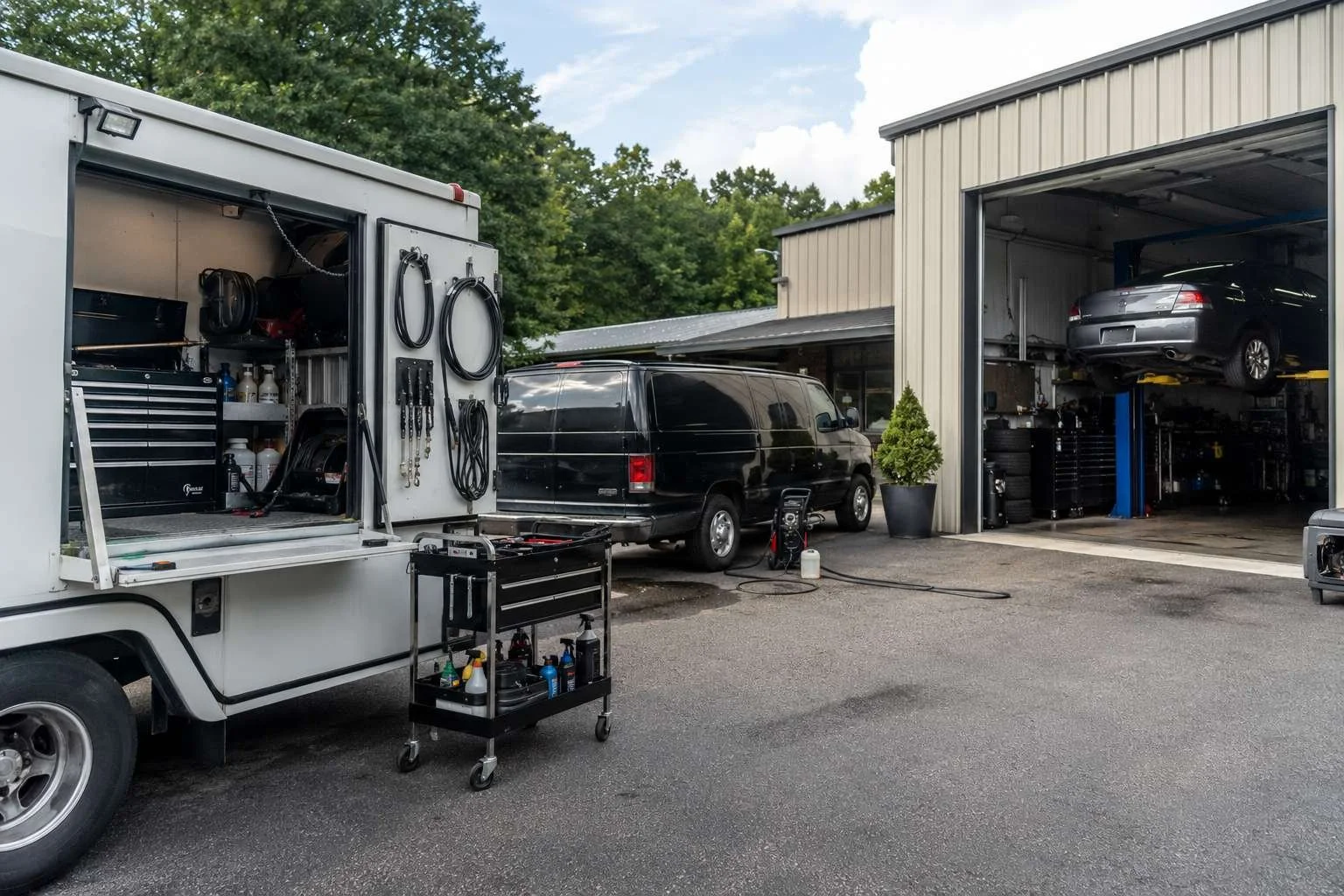
Mobile mechanic work sits at the center of a mobile automotive cluster, and it stacks the way route businesses do — along a territory, on driveways you are already visiting.
It pairs naturally with mobile detailing, the same customers reached the same way off an adjacent truck, and often the cash engine that funds the rest. It pairs with mobile auto glass and with fleet maintenance, where the commercial volume recurs on a schedule. A fixed auto repair shop is a strong business on the same list and a natural referral partner — the jobs that need a lift go there — but as the distinction at the top of this article set out, it is a facility that stacks in its bays rather than along your route. Refer to a shop gladly. Build alongside the trucks.
That is the difference between owning a truck and owning a portfolio. You are not building one service vehicle. You are building the automotive relationship a few hundred households depend on, anchored by convenient, recurring repair work and a durable specialty. A portfolio like that, with fleet contracts and a documented customer list, sells to a buyer as one asset — which is how it ends up worth over a million dollars at sale, instead of a truck and a tool set.
Frequently asked questions
Is a mobile mechanic business profitable? It can be, and at a fraction of a shop's overhead. The lighter footprint means more of each ticket survives after costs. The honest test is whether it still produces cash after paying a lead technician to replace your hours, and a defined specialty with a lean parts routine makes that far more likely.
How much does it cost to start a mobile mechanic business? Roughly $15,000–$40,000 to start with a service truck, tools, and ASE certifications — a fraction of a fixed-location shop. About $30,000 to $100,000 to acquire an existing customer list, or roughly $50,000 to $150,000 for a franchise with a booking platform.
Do I need certification to be a mobile mechanic? ASE certifications are the practical trust standard, and some states or cities require an auto-repair or business registration. Environmental rules for fluids and a federal refrigerant certification for A/C work also apply. Confirm your state and local requirements first. [S5]
Is mobile mechanic work growing? Yes. It is growing faster than fixed-location auto repair, because convenience is the whole pitch. Specializing in durable work — fleets, older vehicles, brakes, tires — keeps demand steady across the long horizon.
Where to go from here
Download the free guide.50 Boring Businesses That Make Millionaires is the full result of the research: fifty categories run against the four tests, what each one costs to enter by all three paths, what has to line up for it to work, and how they pair into a portfolio. Free at microbusinessmillionaire.com.
Read the book.The Microbusiness Millionaire: How Ordinary People Build Extraordinary Wealth One Microbusiness at a Time follows four people who each reached a portfolio worth more than a million dollars by a different path. One keeps a hospital job and uses CDFI financing to acquire one stable service business, then another, then a third. One saves on a single income for three years, leaves a master plumber's wage, and stacks trade service lines starting with an SBA microloan. One uses an SBA Community Advantage loan to open a franchise, then opens three more. One starts with about $5,000 on the side and keeps a W-2 for years, building the slowest and most patient version of the same result. Four starting points, four amounts of money, four portfolios worth over a million dollars at sale. The book is coming soon — join the email list at microbusinessmillionaire.com to hear when it lands.
Join the next cohort — Microbusiness Millionaire: Operating System. The book gives you clear examples of how it's done. The course is the step-by-step system for doing it yourself: screening a real company against the four tests, running the owner-replacement cash-flow math on a seller's actual numbers, knowing when to walk, knowing which lenders fund deals this size, and installing the operator who runs the business without you. Eight weeks online, five seats a cohort, waitlist first — at microbusinessmillionaire.com.
About the author
Chris Scott has spent more than twenty-five years in the small-business arena. As the director of a Community Development Financial Institution (CDFI) and as management at the U.S. Small Business Administration (SBA), he saw thousands of business plans and loan applications cross his desk. His research into which microbusinesses build wealth — and which quietly build a job — became The Microbusiness Millionaire and the free companion guide, 50 Boring Businesses That Make Millionaires.
Sources & references
[S1] IBISWorld, Auto Mechanics in the US (NAICS 81111), 2026 — market size ~$92.1bn; ~93,100 establishments; the mobile, on-site segment is growing faster than fixed-location repair. ibisworld.com
[S2] U.S. Bureau of Labor Statistics, Occupational Outlook Handbook: Automotive Service Technicians and Mechanics (4% projected growth 2024–34; ~70,000 annual openings). bls.gov/ooh
[S3] U.S. Federal Trade Commission, Franchise Rule / FDD Items 7 and 19. ftc.gov
[S4] Opportunity Finance Network CDFI Locator (ofn.org); SBA Lender Match (sba.gov).
[S5] U.S. Small Business Administration, Apply for licenses and permits (sba.gov); state auto-repair registration, ASE certification, environmental/fluid-disposal rules, and U.S. EPA Section 609 motor-vehicle A/C refrigerant certification (epa.gov).
[S6] Mobile mechanic franchise availability, reviewed August 2026: no established national mobile mechanic franchise with published Item 7 data was identified. Brands offering mobile automotive repair franchises are small or emerging (for example The Mobile Mechanic Service, founded 2012) or operate outside the United States (GoWrench Auto, Ontario). By contrast the automotive franchise category as a whole averages approximately $473,000–$1.2m in initial investment, reflecting fixed-location shop formats. Request a current-year FDD and verify operating unit counts before relying on any brand in this category.
[Internal]50 Boring Businesses That Make Millionaires — Mobile Mechanic entry (tag, three-path entry-cost table, portfolio pairings, framework note, "what it takes to make this one work"), drawn from the author's research and filtered through the underwriting criteria he applied as a CDFI lender.
This article is for general information only and is not legal, financial, tax, or investment advice. Category-level figures are reference points, not a specific-deal projection; individual businesses vary. Consult a CPA, attorney, business broker, franchise consultant, or CDFI loan officer before acting.
Last updated: 8/23/2026.