

How to Start a Lawn Care Business
At $300 to $1,360 to start solo, lawn care is the cheapest entry of all fifty categories — about the price of a decent used mower. Here is what it pays after you replace yourself, and the two moves, made years apart, that decide whether you end up owning a route or a job.
Chris Scott — former CDFI director and SBA management
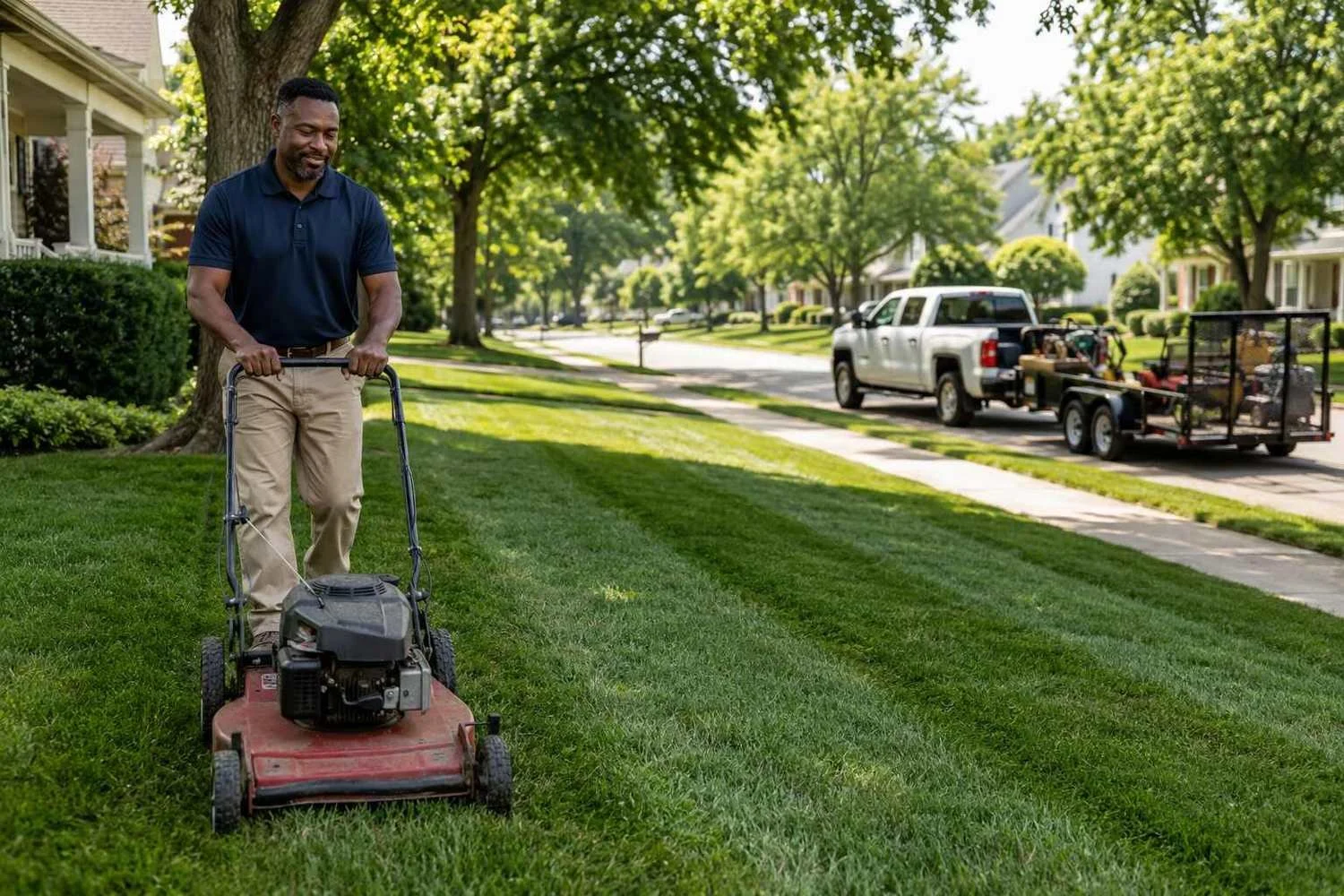
As the director of a Community Development Financial Institution (CDFI), and as management at the U.S. Small Business Administration (SBA), I saw thousands of business plans and loan applications cross my desk. That work is where I learned what a durable business looks like on paper, and what a business that only looks durable looks like on paper.
It is not, however, where the list of fifty came from. That came from years of research, running category after category through the same four questions: Is it profitable? Does it have recurring revenue? Is it recession resistant? Is it AI resistant? Those four questions are the framework behind the book, The Microbusiness Millionaire, and they are what separated the categories that built real wealth from the ones that quietly built a job with a P&L attached. Fifty survived the screen. Far more never made it through.
Lawn care is one of the fifty, and it is the one people misjudge in both directions at once. They underestimate how easy it is to start — the entry number is the lowest of the fifty, and not by a little. And they underestimate how easy it is to stall, because the two decisions that settle this business happen years apart and almost nobody plans for either one.
A word on the neighbor.Tree care is also one of the fifty, and the two sit close enough that adding tree work to a mowing round looks like the obvious next step. It is not the same business. This one is route work you can staff with general labor at around and grow by adding stops. Tree care is hazard work at height that needs a certified climber and carries a workers' compensation load a lawn crew never sees. Lawn care scales by adding stops. Tree care scales by adding credentials. They belong in the same portfolio and the last section explains how — but the confusion runs one way, from this side to that one, and a profitable mowing route that bolts on tree work without pricing the comp rate and the certification has bought itself an unprofitable division.
The industry: vast, and almost entirely small
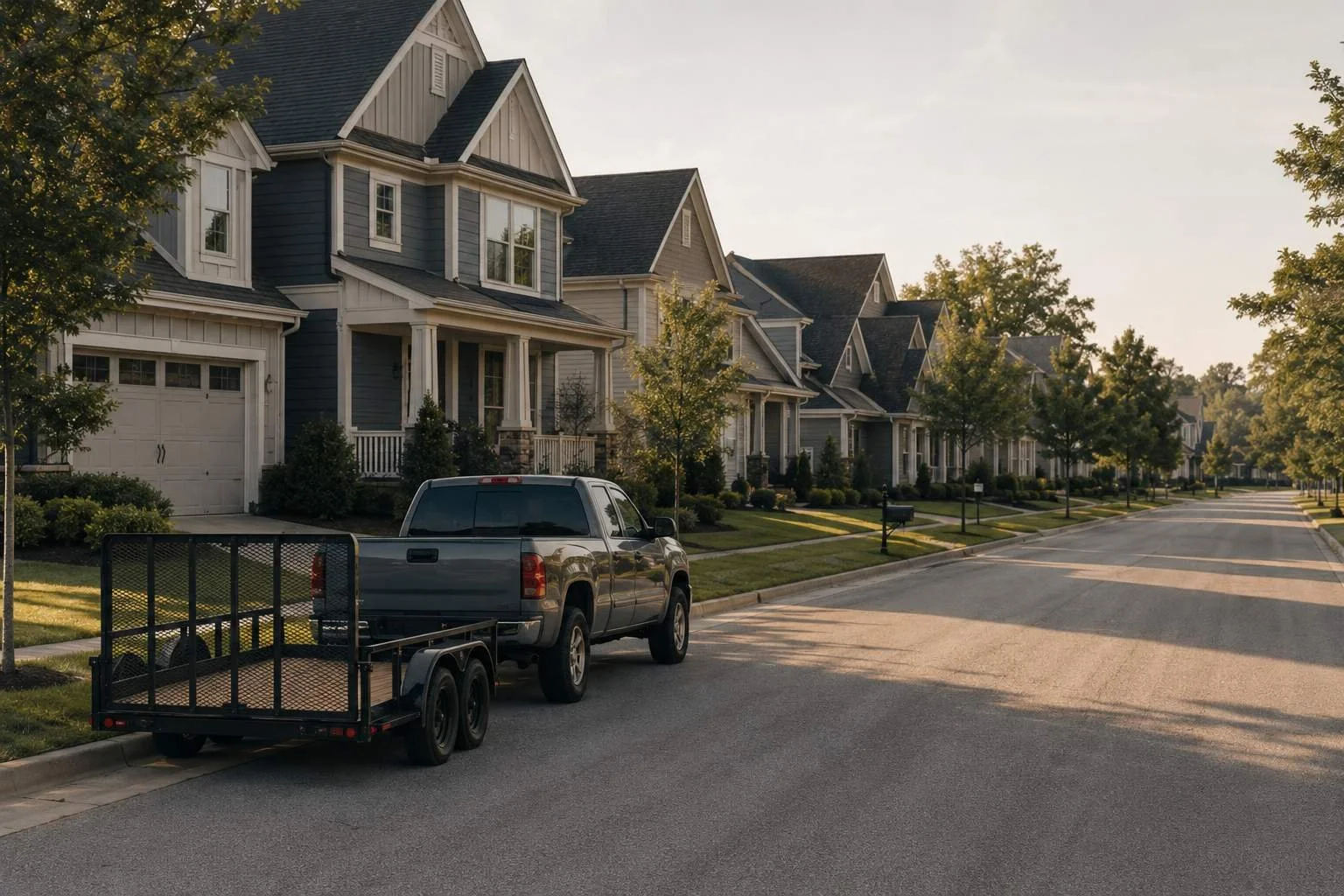
U.S. landscaping services are about $188.8 billion (2025), spread across roughly 556,000 businesses, having grown at about a 6.5% compound rate over the five years to 2025. Market share concentration is low — the largest company in the country is BrightView, and it does not come close to dominating. [S1]
Half a million businesses in a $189 billion market means the average operator is very small. That is not a quirk in the data; it is the shape of the industry. This is a field made of one- and two-truck companies, and the ones that build wealth decide deliberately when to stop being one.
The labor benchmark is the wage you would pay a first-line supervisor to do the work you are doing now — a supervisor’s wage, not a technician’s. That number moves more between one city and the next than it does between categories, so the only figure worth planning on is the one for your own market. The Resource Directory in the free tools shows where to look it up. The work itself is not going anywhere: grounds maintenance covers 1.3 million jobs, projected to grow 4% from 2024 to 2034 with about 171,600 openings a year. [S2] Every profit number later in this article has to survive it, and the real cost runs higher once payroll taxes and insurance go on top.
Why lawn care made the list
Every category in the research had to clear four tests. Clear three and you usually have a self-employed job in disguise.
Does it pay after you replace yourself? It does, with a sequence attached — which is the first of two tags on this category, and the subject of the section below.
Does the revenue recur? This is lawn care's quiet advantage. A mowing customer is not a sale; it is a subscription. They pay every month, they rarely shop, and the good ones stay for a decade. Very few categories among the fifty produce a customer who pays indefinitely for something they will never cancel, because the grass does not stop growing.
Does it survive a recession? Better than people expect. Commercial contracts — HOAs, plazas, property managers — hold through downturns because an unmown property is a liability, not an aesthetic. Residential softens at the top end, but people who've outsourced their lawn tend to keep outsourcing it.
Will it still need humans in ten years? Someone has to be on the property, in the heat, with the equipment. Robotic mowers exist and are getting better at a single residential lawn, but nobody is robot-mowing a twelve-acre commercial campus with hardscape, beds and a trimming line. Low AI exposure, and the commercial side is lower still.
Four for four, on the lowest entry cost among the fifty.
The research on this category kept arriving at the same piece of arithmetic, and it is the one most operators never do before they scale. A solo operator turning over something like $240,000 keeps a striking share of it, because two lines on the profit and loss are zero — there is no crew and no supervisor. He is both, unpaid. Work out what the same person earns running three trucks and six employees and the answer is often close to the same number, because he stops mowing and starts managing, and three crews need a supervisor nobody costed. What that math is really showing is not that scaling fails. It is that the second truck is where you learn, the third is where you break even on the learning, and the fourth is where the owner finally gets paid. From the lending side of the desk, the borrowers who had done that calculation before asking for money were asking for a different, smaller, better loan than the ones who had not.
What it takes to make this one work
A note on the tags. Every category in the fifty cleared the same four tests; far more never made it through. The tags do not grade a business — they tell you what has to line up for it to work in your hands. Lawn care carries two: Solo first and Best paired. Read them against your own situation, because a tagged category in the right hands beats an untagged one in the wrong hands.
Solo first: the money is richest when it's just you
The condition: cash flow runs at its richest when you are the one on the mower, and it settles toward the industry range the moment you are paying crews. That is real and it catches people, because the instinct after one good season is to buy a second truck immediately.
The move that meets it: treat it as a sequence, not a ceiling. Stay solo longer than feels natural, and bank the difference while your cost structure is basically fuel and your own time. Then add crews against density, not ambition — a second truck earns when your route is tight enough to keep it busy inside a small radius, not one day sooner. Buy the route, run it lean while you learn it, then scale into demand you can already see on the schedule.
The upside: almost nowhere else among the fifty can you start with $300 to $1,360 and be cash-positive inside a month. That is not a token number, and it means the sequence costs you nothing to run. You learn this business with your own money, on your own timeline, with no lender in the room.
Best paired: the calendar stops in November
The condition: in the northern two-thirds of the country, the grass stops growing and so does the invoice. April to November is a real business. December to March is not.
The move that meets it: the pairing is already the plan, and it is the first one the guide names. Snow removal through the cold months puts the same crew on the same customers, with a plow bolted to the same truck that towed the mower trailer in August. Add holiday light installation in the November-to-January seam and the calendar closes entirely — same truck, same route, same brand, three revenue seasons and no gaps.
In the Sun Belt this condition simply does not apply. The season runs twelve months and the tag is moot for you.
The upside: what the pairing buys is bigger than revenue smoothing. It buys your crew. The hardest part of this business is that good people find a year-round employer in November and never come back in April. An operator with winter work keeps the crew he spent all summer training, and starts the next spring with a team rather than a hiring season. The pairing is not a patch on a seasonal business. It is what makes the summer business compound.
What it costs to get in — the three paths
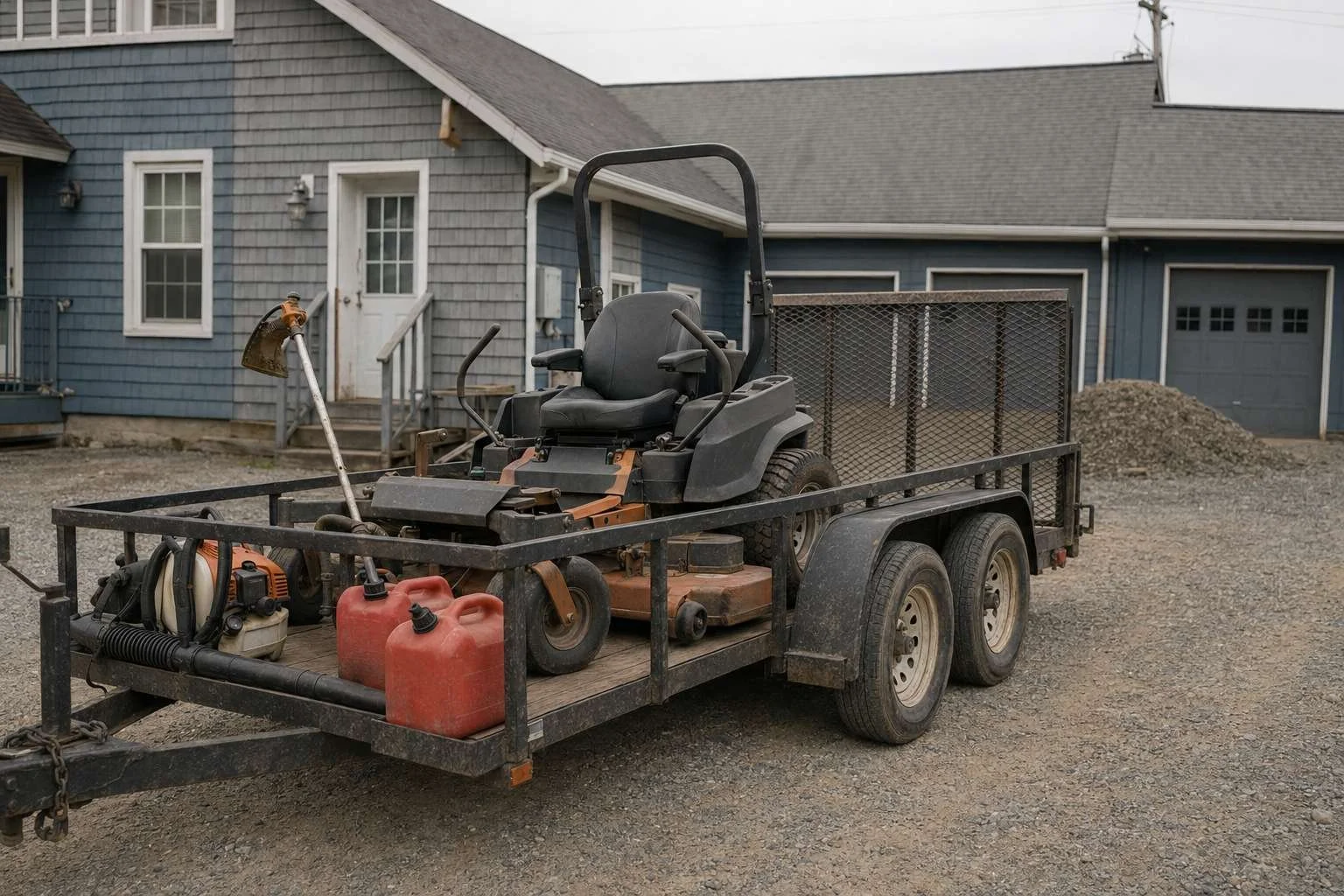
| Path | Typical cost range | Best for |
|---|---|---|
| Startup (solo) | $300 – $1,360 (bootstrap) | The cheapest entry of the fifty; minimal capital |
| Acquisition | around $170,000 | Established route + equipment |
| Franchise | $80,000 – $165,000 | Branded recurring service model + territory. Examples: Weed Man, Spring Green, Lawn Doctor. |
Franchise brands are named as examples, not endorsements, and the range shown is a category estimate rather than any single brand's published figure. Franchise investment figures reflect a franchisor's most recent Franchise Disclosure Document (FDD) and change annually — verify each brand's current FDD (Item 7 for the initial-investment range; Item 19 for any financial-performance representation) before pursuing one. [S4]
The brands in that row cluster more tightly than in most categories. Weed Man's 2026 FDD puts total investment at roughly $81,150 to $109,400 on a fee of $30,000; Spring Green runs nearer $119,000 to $135,000; Lawn Doctor tops the range at roughly $136,000 to $164,000. [S6]
Lawn Doctor is worth a second look, because its headline fee of about $118,000 makes it appear far more expensive than it is. It bundles the proprietary equipment package into the franchise fee rather than itemizing trucks and spray rigs separately, which is why the fee is large and the total is not far off the others. Compare all-in totals rather than fees in this category, or you will misread the cheapest brand as the dearest.
One thing about the acquisition row deserves more attention than it usually gets: the median lawn care deal prices above the lane this framework works in. Median deals draw private equity and strategic buyers, and they price accordingly.
The deals that fit an individual buyer sit in the lower quartile — smaller customer lists, frequently a retiring solo operator with a good route and nobody to hand it to. Those are the ones to hunt, and they are rarely listed. They are found by asking.
How people actually fund it

The startup path barely needs a lender, which is the point of it. That is the first rung in the book, The Microbusiness Millionaire — the tier where the side-hustle path keeps a W-2 in place and builds on Saturdays, funding the thing out of pocket because the entry price allows it.
A route acquisition around $170,000 is a different conversation, and it sits in CDFI direct lending and SBA Community Advantage territory.
One pattern I watched from the lending chair, across every industry that came through: a qualified buyer walks into a national bank, gets declined, and concludes he cannot be funded. He never learns that a CDFI across town, or a Community Advantage lender, exists precisely for deals this size. Two free national directories will show you the ones near you — the Opportunity Finance Network CDFI locator and SBA Lender Match. [S5]
Finding the lender is the easy half. Lawn care also has a specific tell an underwriter looks for: the split between recurring contracts and one-off work. A customer list that is mostly signed monthly maintenance behaves like collateral. One that is mostly landscape installs is a project business wearing a route's clothing. Start recording that split before anyone asks for it.
The profit reality: owner-replacement cash flow

Here is the calculation that decides more of these deals than anything else in them. A lawn care company looks profitable because the owner is mowing, quoting, scheduling, and doing the books — none of it priced. The honest test: after you pay the crew, and after you pay a supervisor a market wage to run the routes the way you run them, is there enough left for you to own the thing?
Real numbers. Two wages decide this one, and both move by market: what a crew costs, and what a first-line supervisor of landscaping and grounds crews costs. Look up both for your own area before you model anything — the Resource Directory in the free tools shows where. [S2] [S3] Whatever the business reports as profit has to survive paying both.
This is exactly where the Solo-first tag stops being a label and becomes arithmetic. A solo operator's profit is high because the supervisor line is zero and the crew line is zero — he is both, unpaid. That is a fine place to start and a poor place to draw conclusions from.
The day you hire, both lines appear at once, and the profit you were counting does not so much shrink as get correctly measured for the first time. Operators who plan for that build companies. Operators surprised by it buy a second truck and spend two years wondering where the money went.
The category-level math is easy — you just did it. Running it on a specific company, where the seller's "profit" is mostly his own labor and the contract-versus-install mix is buried in the job history, is where people freeze. That is the job of the course, Microbusiness Millionaire: Operating System — the four tests turned into a repeatable screen you run on a real deal.
The benefits of owning a lawn care business
The lowest entry cost of all fifty categories. $300 to $1,360 and a weekend.
A customer who pays every month, indefinitely. The grass does not stop growing.
Route density compounds. Two lawns on the same street are worth more than two across town, and the tenth is nearly free.
A large retiring seller pool. Half a million small operators, a great many with nobody to hand the route to.
The anchor of the seasonal portfolio. Snow and lights bolt onto the truck you already own.
What separates the strong operators from the struggling ones
Bid by the route, not the hour. The money is in how many stops fit between eight and five, not in what you charged at any one of them. Price the density and the day pays for itself.
The applicator license earned early. Fertilization and weed control are where per-visit revenue climbs, and subcontracting the chemicals hands that revenue to someone else. The license is what turns a mowing service into a lawn care company.
Customers before equipment. A second mower does not create customers. Customers create the need for a second mower, and that order is what keeps the cash flow intact.
A tight radius before a wide one. Accounts spread across a metro spend the season in windshield time. Say no to the lawn twenty minutes out until the ten around it are yours.
Commercial alongside residential. Residential is easier to sell; commercial is what holds through a downturn and what a buyer pays more for. Build both and the business is worth more than the sum of its routes.
Licenses, permits, and regulations
The gating credential is the pesticide applicator license, and every state requires one for commercial application of fertilizers and weed control — typically through the state department of agriculture, with a written exam, a category-specific certification, continuing education, and periodic renewal. Beyond that: a registered entity, general liability, commercial auto, workers' comp once you hire, trailer and towing compliance, and in some jurisdictions local rules on water use, noise, and blowers. Start with your state department of agriculture and the free SBA "Apply for licenses and permits" tool. [S6] (General information, not legal advice — confirm your local requirements.)
Build a portfolio, not a job
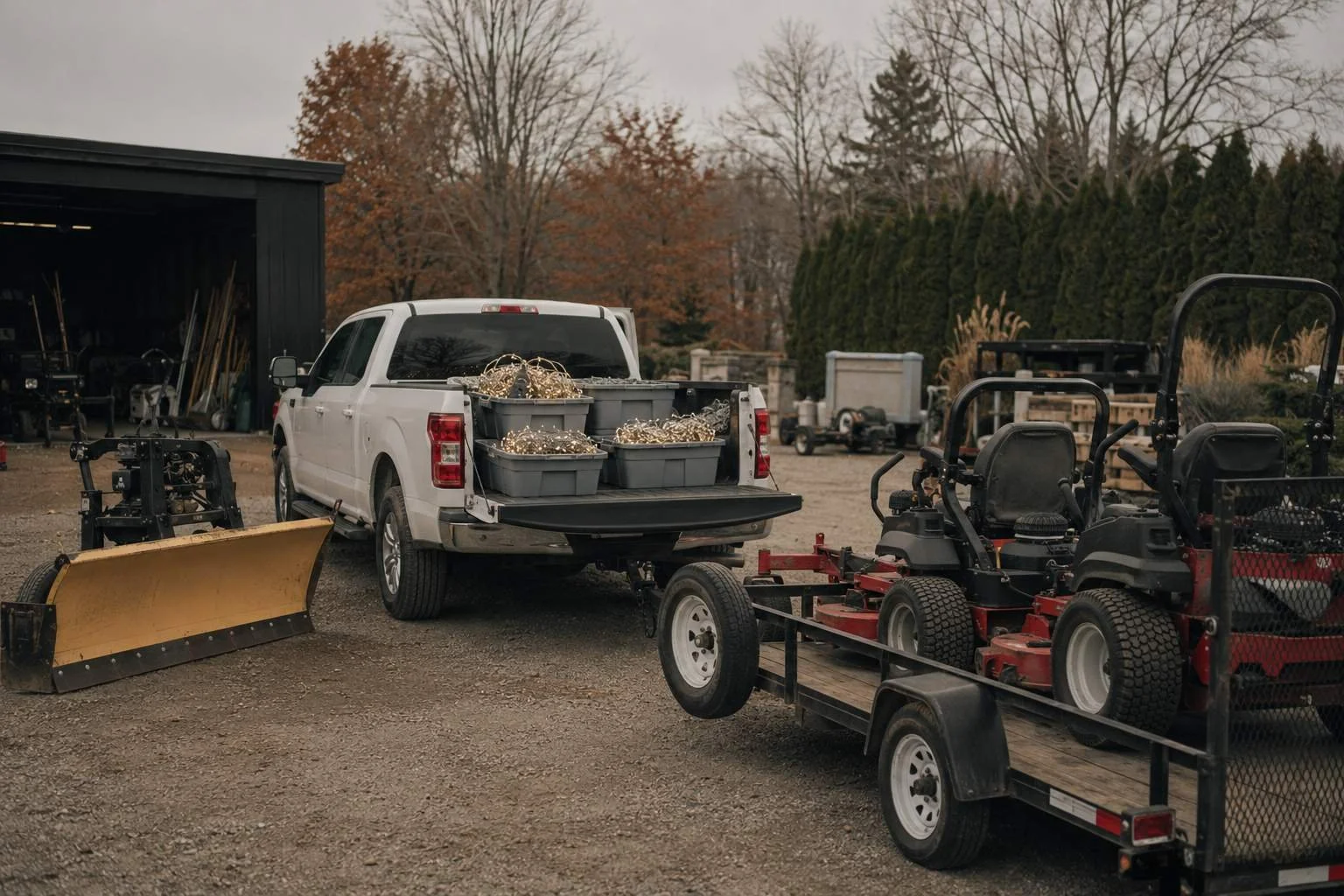
Lawn care is the anchor of the seasonal portfolio, and it may be the clearest illustration among the fifty of what a portfolio actually is. It stacks the way route businesses do — along a territory, on addresses you are already driving to.
Mow April through November. Plow December through March. Hang lights November through January. One truck, one crew, one customer list, one brand, and a calendar with no gaps in it. It also pairs sideways into pest control and leaf removal — same address, same trust, almost nothing spent to sell it.
That is the difference between owning a mowing round and owning a portfolio. You are not building a lawn company. You are building the property-services vendor for a few hundred addresses. A portfolio like that, with a documented customer list across three seasons, sells to a buyer as one asset — which is how it ends up worth over a million dollars at sale, instead of three seasonal jobs you happen to hold at once.
Frequently asked questions
Is a lawn care business profitable? Yes, but the honest answer is not a percentage, and in this category the percentage is actively misleading. A solo operator's profit looks spectacular because he is not paying the crew or the supervisor; he is both. The real test is whether the business still produces cash after paying a crew and a supervisor to replace the owner's labor. Plan the sequence and it clears that test comfortably.
How much does it cost to start a lawn care business? Roughly $300 to $1,360 to bootstrap solo, which is the lowest entry number of all fifty categories. About $170,000 to buy an established route, or roughly $80,000 to $165,000 for a franchise at the low end.
Do I need a license to start a lawn care business? To mow, generally no. To apply fertilizer or weed control commercially, yes — a pesticide applicator license, required in all fifty states and administered by your state department of agriculture. That is the credential that separates a mowing service from a lawn care company. [S6]
What do you do in the winter? You pair it. Snow removal is the standard companion in northern markets — same truck, same crew, same customers — and holiday light installation fills the November-to-January seam. The pairing keeps the crew you spent all summer training, which matters more than the revenue does.
Where to go from here
Download the free guide.50 Boring Businesses That Make Millionaires is the full result of the research: fifty categories run against the four tests, what each one costs to enter by all three paths, what has to line up for it to work, and how they pair into a portfolio. Free at microbusinessmillionaire.com.
Read the book.The Microbusiness Millionaire: How Ordinary People Build Extraordinary Wealth One Microbusiness at a Time follows four people who each reached a portfolio worth more than a million dollars by a different path. One keeps a hospital job and uses CDFI financing to acquire one stable service business, then another, then a third. One saves on a single income for three years, leaves a master plumber's wage, and stacks trade service lines starting with an SBA microloan. One uses an SBA Community Advantage loan to open a franchise, then opens three more. One starts with about $5,000 on the side and keeps a W-2 for years, building the slowest and most patient version of the same result. Four starting points, four amounts of money, four portfolios worth over a million dollars at sale. The book is coming soon — join the email list at microbusinessmillionaire.com to hear when it lands.
Join the next cohort — Microbusiness Millionaire: Operating System. The book gives you clear examples of how it's done. The course is the step-by-step system for doing it yourself: screening a real company against the four tests, running the owner-replacement cash-flow math on a seller's actual numbers, knowing when to walk, knowing which lenders fund deals this size, and installing the operator who runs the business without you. Eight weeks online, five seats a cohort, waitlist first — at microbusinessmillionaire.com.
About the author
Chris Scott has spent more than twenty-five years in the small-business arena. As the director of a Community Development Financial Institution (CDFI) and as management at the U.S. Small Business Administration (SBA), he saw thousands of business plans and loan applications cross his desk. His research into which microbusinesses build wealth — and which quietly build a job — became The Microbusiness Millionaire and the free companion guide, 50 Boring Businesses That Make Millionaires.
Sources & references
[S1] IBISWorld, Landscaping Services in the US (NAICS 56173) — market size $188.8bn (2025); ~556,000 businesses (2026); ~6.5% CAGR 2020–2025; low market share concentration, largest operator BrightView Holdings. ibisworld.com
[S2] U.S. Bureau of Labor Statistics, Occupational Outlook Handbook: Grounds Maintenance Workers. bls.gov/ooh
[S3] U.S. Bureau of Labor Statistics, OEWS, First-Line Supervisors of Landscaping, Lawn Service, and Groundskeeping Workers (SOC 37-1012). bls.gov/oes
[S4] U.S. Federal Trade Commission, Franchise Rule / FDD Items 7 and 19. ftc.gov
[S5] Opportunity Finance Network CDFI Locator (ofn.org); SBA Lender Match (sba.gov).
[S6] U.S. Small Business Administration, Apply for licenses and permits (sba.gov); state departments of agriculture (pesticide applicator licensing).
[S6] Lawn care franchise disclosure data as reported by franchise-filing aggregators and 2026 analyses of current FDDs: Weed Man approximately $81,150–$109,400 on an initial franchise fee of $30,000, with some readings at $69,790–$108,000; Spring Green approximately $118,898–$135,176 on a $45,000 fee; Lawn Doctor approximately $135,820–$163,902 on a $118,000 fee that bundles the proprietary equipment package. Reported figures vary between aggregators and filing years; verify the current FDD directly for any brand.
[Internal]50 Boring Businesses That Make Millionaires — Lawn Care & Landscaping entry (tags, three-path entry-cost table, portfolio pairings, framework note, "what it takes to make this one work"), drawn from the author's research and filtered through the underwriting criteria he applied as a CDFI lender.
This article is for general information only and is not legal, financial, tax, or investment advice. Category-level figures are reference points, not a specific-deal projection; individual businesses vary. Consult a CPA, attorney, business broker, franchise consultant, or CDFI loan officer before acting.
Last updated: 8/21/2026