

How to Start a Junk Removal Business
People move, downsize, renovate and die in every economy, which gives junk removal about the most durable demand among the fifty. Here is what a junk removal business costs, what it pays after you replace yourself, and why one cost line most operators quote blind decides whether a busy truck is a profitable one.
Chris Scott — former CDFI director and SBA management
As the director of a Community Development Financial Institution (CDFI), and as management at the U.S. Small Business Administration (SBA), I saw thousands of business plans and loan applications cross my desk. That work is where I learned what a durable business looks like on paper, and what a business that only looks durable looks like on paper.
It is not, however, where the list of fifty came from. That came from years of research, running category after category through the same four questions: Is it profitable? Does it have recurring revenue? Is it recession resistant? Is it AI resistant? Those four questions are the framework behind the book, The Microbusiness Millionaire, and they are what separated the categories that built real wealth from the ones that quietly built a job with a P&L attached. Fifty survived the screen. Far more never made it through.
Junk removal is one of the fifty, and its demand is among the most durable of any of them — people move, downsize, renovate and die in every economy, and all four produce a truckload of things that have to go somewhere.
It is also the clearest case among the fifty of a business decided by a single line item most owners quote without checking: what it costs them to dump.
A word on the neighbor.Estate sale services is also one of the fifty, and a family facing an empty parent's house often phones one when they needed the other. The work looks similar from the curb and the economics are opposite. Junk removal is paid to make a house empty. Estate sales are paid out of what the house is worth. This one charges by the load and is finished when the truck is full; the other takes a share of the value it finds and is therefore motivated to find more of it. They belong in the same portfolio and hand work to each other constantly — the last section explains how — but the order matters to the customer, because a family that calls the truck first can pay to haul away the thing that would have paid for the whole job.
The industry: durable demand inside a large waste market
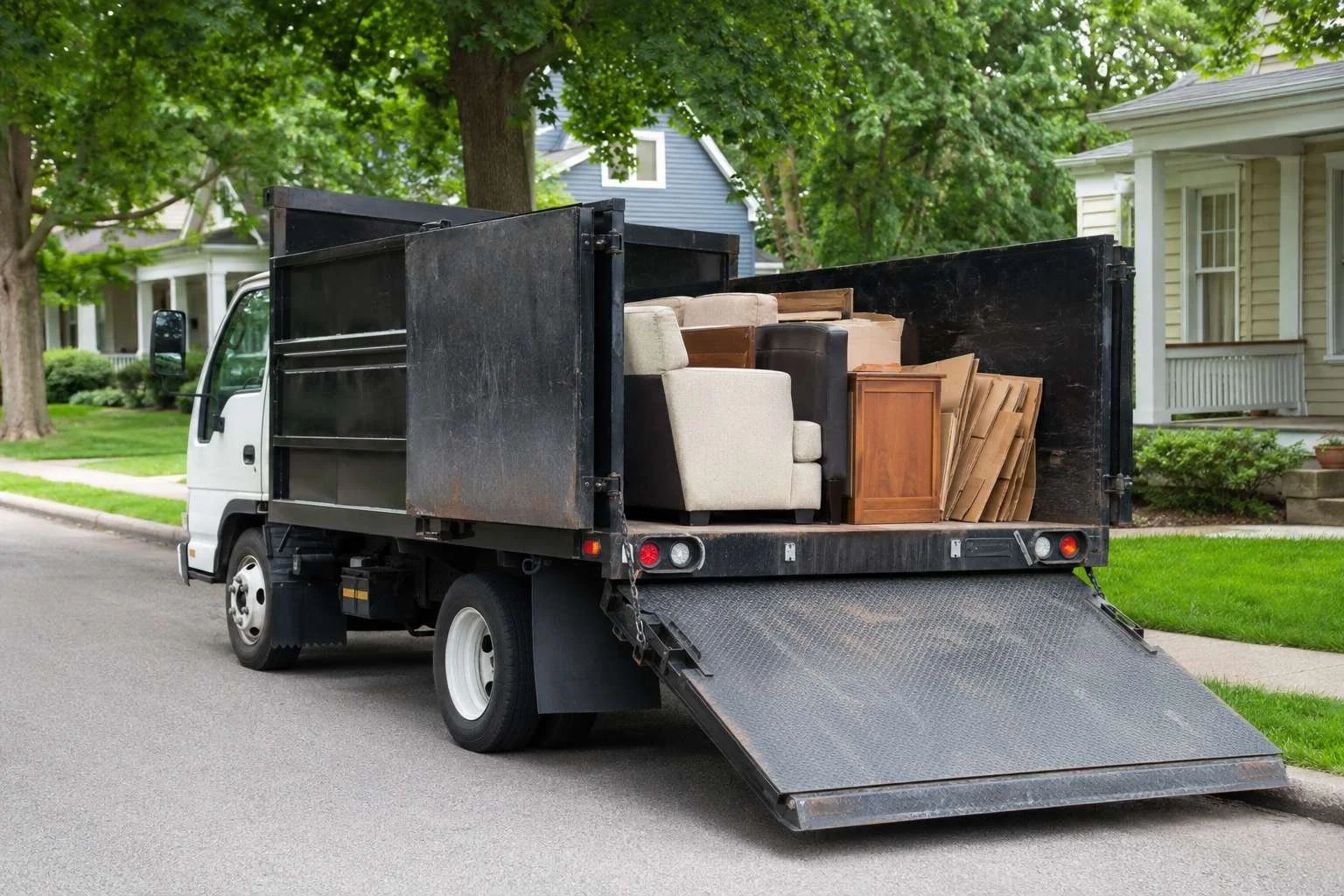
Junk removal services in the United States generated roughly $10.4 billion in revenue and employed about 67,000 people as of 2023 — a real industry, but a small one carved out of a much larger waste market. [S1] That parent market is where the stability lives: waste collection services total about $86.1 billion in 2025, having grown at roughly a 3.7% compound rate over five years. [S2]
The labor benchmark is the crew you will pay. Refuse and recyclable material collectors are an occupation of about 135,430 workers, and their pay is set locally. A hauler in one metro and a hauler in the next are not the same line item. The only wage worth building a model on is the one in your own market. [S3] That wage is the price of replacing yourself — what it costs to put a paid supervisor where you are standing. Every profit number later in this article has to survive it, and the real cost runs higher once payroll taxes and insurance go on top.
Worth knowing going in: this is trainable route and haul labor rather than a licensed trade, which makes replacing your own hours genuinely achievable here — provided the ticket supports it.
Why junk removal made the list
Every category in the research had to clear four tests. Clear three and you usually have a self-employed job in disguise.
Does it pay after you replace yourself? It can, and the deciding variable is ticket size rather than volume. A crew's wage comes out of the spread between what you charge and what disposal costs you, which is why the estate cleanout specialty matters as much as it does — and why an operator guessing at tipping fees can run a busy truck and keep very little of what it bills.
Does the revenue recur? Not from the household — most people call once. It recurs through referral sources and commercial accounts: property managers, realtors, contractors, senior move managers, and estate sale companies produce repeat work continuously. Build those relationships and the calendar fills without advertising.
Does it survive a recession? This is one of the most durable demand profiles among the fifty. People move, downsize, renovate and die in every economy. Estate cleanouts in particular are driven by life events rather than discretionary spending, which is exactly why that specialty is worth leaning into.
Will it still need humans in ten years? Entirely. Carrying a sofa up a basement stairwell, judging what is donatable rather than dumpable, and clearing a house room by room is physical work performed in a different building every time. Software can book the job. It cannot carry the couch. Very low AI exposure.
Four for four — with demand that does not ask permission from the economy.
The research on this category kept coming back to one question that predicts more than any other: what does the operator pay per ton at the transfer station? Those who can answer instantly — and who know how that number differs between the two facilities they use and how it has moved over eighteen months — tend to run profitable trucks. Those who answer "it depends" are quoting jobs blind and absorbing a cost that varies enormously by region. One habit turns up again and again among the first group: the tipping fees written on a card clipped to the visor, and disposal priced into every quote before a number is named out loud. From the lending side of the desk that is a small thing to check and a reliable one, because it separates operators who know what a job costs them from operators who find out at the scale house.
What it takes to make this one work
A note on the tags. Every category in the fifty cleared the same four tests; far more never made it through. The tags do not grade a business — they tell you what has to line up for it to work in your hands. Junk removal carries two: Works anywhere and Best paired. Together they are the instruction manual.
The condition: knowing your tipping fees. Disposal costs vary a great deal by region, and in tight regulatory environments they take a real bite out of a job that looked profitable when you quoted it.
The move that meets it:price the fee into every quote rather than absorbing it. Learn what each facility you use charges per ton, know how those numbers differ across the ones within your radius, and build disposal into the figure you give the customer before you say it out loud. That single habit separates operators who scale from operators who stay busy and tired.
Then lean into estate cleanouts, where the ticket is larger and the cash left on the job better than general hauling. A whole-house clearance is a different economic event from a garage load, and it is the work that makes a crew lead's wage comfortable. And because the second tag is Best paired, attach directly to senior moving services, estate sales and dumpster rental, all of which deliver the same household at the same moment.
The upside: demand is about as durable as it gets, the labor is trainable rather than licensed, and the specialty that pays best — estate cleanouts — is fed by life events that do not pause for the business cycle. Get the disposal math right and this is a genuinely resilient business.
What it costs to get in — the three paths
| Path | Typical cost range | Best for |
|---|---|---|
| Startup | $10,000 – $30,000 | Truck + dumping fees + insurance |
| Acquisition | $60,000 – $200,000 | Truck + customer relationships |
| Franchise | $165,000 – $355,000 | Brand + national booking platform + territory. Examples: 1-800-GOT-JUNK?, College HUNKS. |
Franchise brands are named as examples, not endorsements. Franchise investment figures reflect a franchisor's most recent Franchise Disclosure Document (FDD) and change annually — verify each brand's current FDD (Item 7 for the initial-investment range; Item 19 for any financial-performance representation) before pursuing one. [S4]
Both brands in that row start well above the startup number and one of them nearly reaches four hundred thousand dollars. 1-800-GOT-JUNK? is reported at roughly $165,000 to $250,000 and College HUNKS, which pairs junk hauling with moving, at roughly $203,000 to $355,000. [S6] Neither is a modest step up from a truck and a dump account.
One exception is worth knowing about, and it is a real one. JDog Junk Removal & Hauling franchises only to military veterans and their families, and its entry runs from around $30,000 — by some distance the cheapest franchised way into this category. If you qualify, that changes the arithmetic on this page completely. If you do not, the two brands above are the shape of the decision, and what they are selling is the call center: in a category where the customer searches once and books the first name they trust, the booking platform is the product.
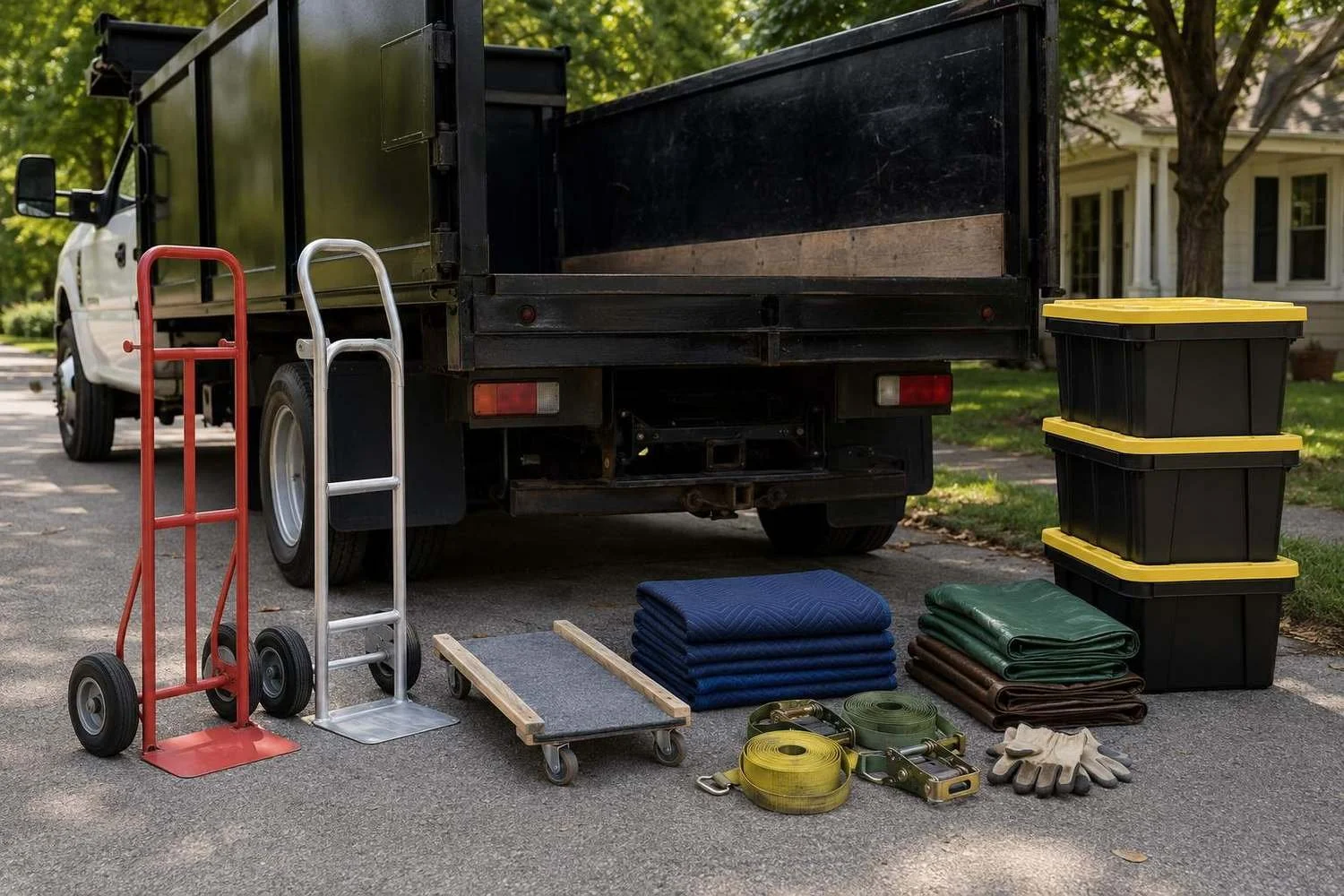
Look at what sits inside that startup range: a truck, insurance, and dumping fees. The guide lists disposal cost as a line item in the cost of entry, which almost no other category among the fifty does, and that is a signal worth taking seriously. Working capital for tipping fees is part of your opening balance rather than an afterthought.
Note too that the acquisition column reads "truck + customer relationships" for roughly the same money a franchise costs. That tells you what an established operation is really selling: the property managers, realtors and senior move managers who call it first.
How people actually fund it

A $10,000–$30,000 startup sits comfortably in the SBA Microloan range, and a $60,000–$200,000 acquisition of a truck plus established customer relationships moves into CDFI direct lending and SBA Community Advantage territory.
That larger deal is where the book's trades path spends three years saving on a single income before buying anything. In a category where the equipment is straightforward and the value sits in relationships, saved equity is what makes the better deal reachable rather than settling for a truck and a phone number.
One pattern I watched from the lending chair, across every industry that came through: a qualified buyer walks into a national bank, gets declined, and concludes he cannot be funded. He never learns that a CDFI across town, or a Community Advantage lender, exists precisely for deals this size. Two free national directories will show you the ones near you — the Opportunity Finance Network CDFI locator and SBA Lender Match. [S5]
Finding the lender is the easy half. A junk removal business also has a specific tell an underwriter looks for: average ticket net of disposal cost, alongside what share of jobs arrive from repeat referral sources rather than paid advertising. Revenue is easy to show. Revenue after tipping fees is the number that says whether the business works. Start recording both before anyone asks for them.
The profit reality: owner-replacement cash flow

Here is the calculation that decides more of these deals than anything else in them. A junk removal business looks profitable because the owner is on the truck, doing the lifting, quoting the jobs, courting the referral sources, and keeping the books — none of it priced. The honest test: after you pay your crew, and after you pay a crew lead a market wage to run jobs the way you run them, is there enough left for you to own the thing?
This category answers through the gap between the quote and the tipping fee, and that gap is where most of the trouble lives. Two operators can bill identical revenue and end the month in completely different places because one prices disposal into every job and the other discovers it at the transfer station. Regional variation makes this sharper than it sounds — the same load can cost meaningfully different amounts depending on where you are and how tightly disposal is regulated.
The second lever is the mix. General hauling produces small tickets against a fixed cost of showing up. Estate cleanouts produce large ones for a proportionally smaller increase in effort, which is precisely why the guide flags them as the sub-specialty that pays best. A customer list weighted toward cleanouts, quoted with disposal priced in, leaves real room after a crew lead's wage. A run of garage loads quoted blind rarely does.
The category-level math is easy — you just did it. Running it on a specific company, where the seller's "profit" hides his own unpriced lifting and quoting hours and the real question is average ticket net of tipping fees, is where people freeze. That is the job of the course, Microbusiness Millionaire: Operating System — the four tests turned into a repeatable screen you run on a real deal.
The benefits of owning a junk removal business
Demand that ignores the cycle. People move, downsize, renovate, and die in every economy.
Trainable labor. Haul work is not a licensed trade, which makes replacing your own hours realistic.
A specialty that pays better. Estate cleanouts carry a larger ticket for proportionally less effort.
Referral-fed work. Property managers, realtors, and senior move managers call repeatedly.
Straightforward entry. A truck, insurance, and disposal working capital.
What separates the strong operators from the struggling ones
Tipping fees known before the quote. The defining habit in this category. Learn what each facility charges per ton, keep the numbers where you can see them, and price disposal into the figure before you say it out loud.
Ticket before volume. A truck running all day on small loads can still end the month with very little. Chase the size of the job rather than the number of them.
The cleanout specialty taken. Whole-house clearances are where the money in this category actually sits, and they are fed by life events rather than by the economy.
Referral sources before paid leads. Senior movers, estate sale companies, realtors and property managers send work continuously and cost nothing. Build those relationships first and the advertising budget stays small.
Licenses, permits, and regulations
Disposal is the regulated part of this business, and it deserves confirming rather than assuming. Expect a general business license and sales-tax registration, plus commercial auto, general liability, and workers' compensation if you employ a crew. The specifics that matter: many jurisdictions require a solid-waste hauler license, permit, or registration to transport waste for hire, and transfer stations and landfills apply their own tipping fee schedules and material restrictions. Certain items commonly carry separate rules — appliances with refrigerants, electronics, tires, mattresses, paint and chemicals, and construction debris often must be separated, taken to designated facilities, or handled under specific requirements, and mishandling them can carry penalties. Vehicle weight class determines whether a commercial driver's license applies, and interstate work would bring USDOT obligations. Estate cleanouts raise practical care-and-custody questions about valuables you encounter, so confirm your coverage and your written scope. Start with your state environmental agency and local solid-waste authority, plus the free SBA "Apply for licenses and permits" tool. [S6] (General information, not legal advice — confirm your local hauler licensing, disposal facility requirements, and restricted-material rules before you take paid work.)
Build a portfolio, not a job
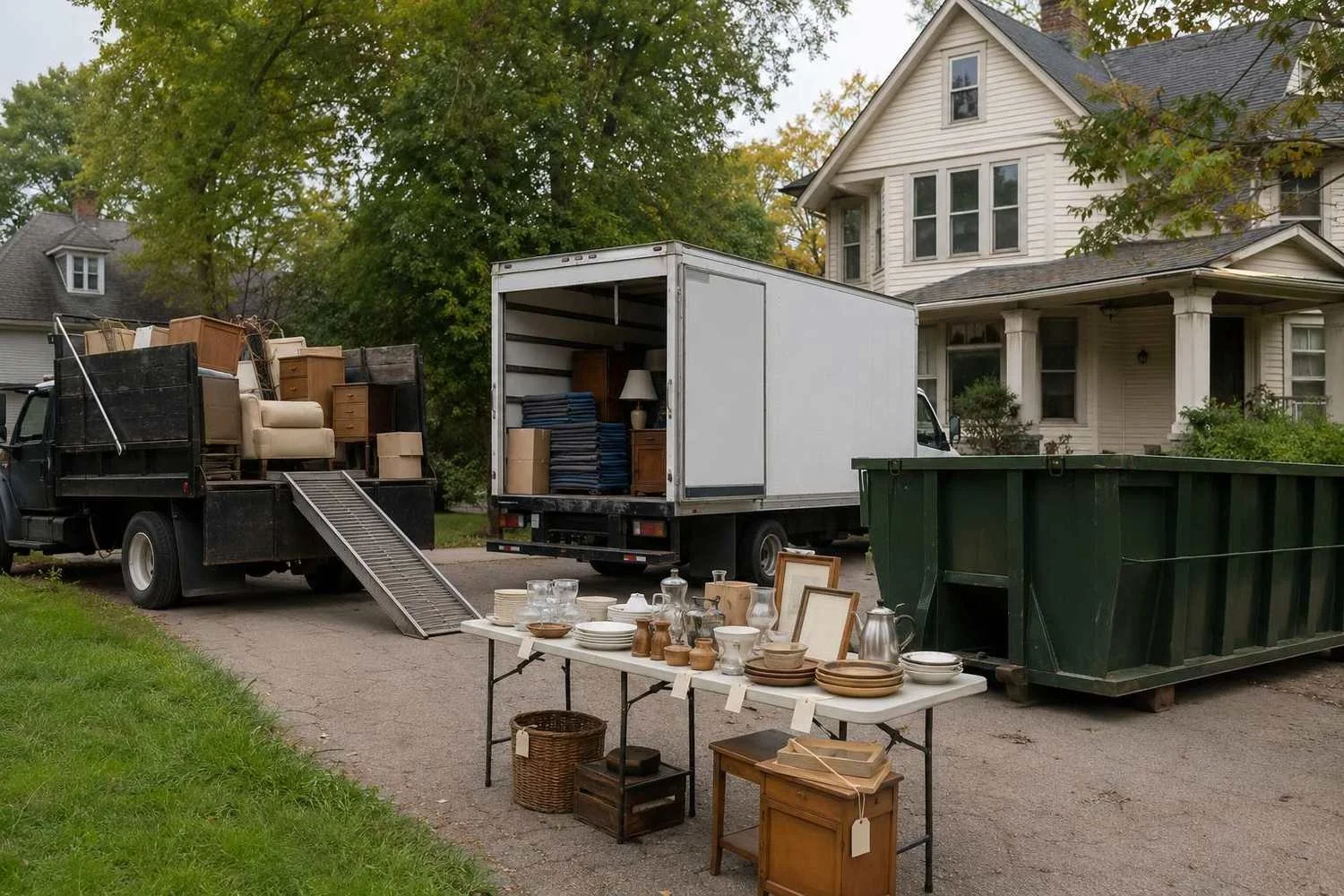
Junk removal sits at the end of a chain of businesses that all serve one household during a single transition, and it stacks on a referral relationship rather than on a route or a building — the businesses that belong with it are the ones the same family needs from the same trusted source, in sequence.
Senior moving services arrive first, when a family is downsizing a parent's home, and everything that will not fit in the new apartment becomes your work. Estate sales handle what has resale value; you clear what does not, and the two are complementary enough that operators frequently run them together. Dumpster rental serves customers who would rather do the loading themselves, which lets you earn from a job you would otherwise turn down. One family relationship, three or four invoices, and every service makes the referral sources more likely to send the next one.
That is the difference between owning a truck and owning a portfolio. You are not building a hauling company. You are building the clearance relationship that families, property managers and senior move specialists rely on at the moment a house has to be emptied, anchored by demand no economy interrupts. A portfolio like that, with named referral sources and documented tickets net of disposal, sells to a buyer as one asset — which is how it ends up worth over a million dollars at sale, instead of a truck and a dump run.
Frequently asked questions
Is a junk removal business profitable? It can be, and the deciding number is your average ticket net of disposal cost. The honest test is whether that spread covers a crew lead's market wage with real cash flow left for the owner — which pricing tipping fees into every quote and leaning into estate cleanouts both make substantially more likely.
How much does it cost to start a junk removal business? Roughly $10,000–$30,000 for a truck, insurance, and dumping fees — note that disposal working capital is part of the entry cost, not an afterthought. About $60,000–$200,000 to acquire a truck plus established customer relationships, or the same range for a franchise with a brand and booking platform.
What are tipping fees and why do they matter so much? They're what a transfer station or landfill charges you to dispose of a load, usually by weight. They vary a great deal by region and are higher in tightly regulated markets — which means an operator who does not price them into each quote can run a busy truck and keep very little of the revenue.
What is the most profitable type of junk removal work? Estate cleanouts. A whole-house clearance produces a much larger ticket for a proportionally smaller increase in effort than a garage load, and the work is driven by life events rather than discretionary spending — which is also why it pairs so directly with senior moving and estate sales.
Where to go from here
Download the free guide.50 Boring Businesses That Make Millionaires is the full result of the research: fifty categories run against the four tests, what each one costs to enter by all three paths, what has to line up for it to work, and how they pair into a portfolio. Free at microbusinessmillionaire.com.
Read the book.The Microbusiness Millionaire: How Ordinary People Build Extraordinary Wealth One Microbusiness at a Time follows four people who each reached a portfolio worth more than a million dollars by a different path. One keeps a hospital job and uses CDFI financing to acquire one stable service business, then another, then a third. One saves on a single income for three years, leaves a master plumber's wage, and stacks trade service lines starting with an SBA microloan. One uses an SBA Community Advantage loan to open a franchise, then opens three more. One starts with about $5,000 on the side and keeps a W-2 for years, building the slowest and most patient version of the same result. Four starting points, four amounts of money, four portfolios worth over a million dollars at sale. The book is coming soon — join the email list at microbusinessmillionaire.com to hear when it lands.
Join the next cohort — Microbusiness Millionaire: Operating System. The book gives you clear examples of how it's done. The course is the step-by-step system for doing it yourself: screening a real company against the four tests, running the owner-replacement cash-flow math on a seller's actual numbers, knowing when to walk, knowing which lenders fund deals this size, and installing the operator who runs the business without you. Eight weeks online, five seats a cohort, waitlist first — at microbusinessmillionaire.com.
About the author
Chris Scott has spent more than twenty-five years in the small-business arena. As the director of a Community Development Financial Institution (CDFI) and as management at the U.S. Small Business Administration (SBA), he saw thousands of business plans and loan applications cross his desk. His research into which microbusinesses build wealth — and which quietly build a job — became The Microbusiness Millionaire and the free companion guide, 50 Boring Businesses That Make Millionaires.
Sources & references
[S1] IBISWorld, Junk Removal Services in the US — industry revenue of approximately $10.4bn with roughly 67,000 people employed as of 2023, as reported in industry summaries of IBISWorld data. ibisworld.com
[S2] IBISWorld, Waste Collection Services in the US (NAICS 1506) — market size approximately $86.1bn in 2025, growing at a ~3.7% CAGR between 2020 and 2025. ibisworld.com
[S3] U.S. Bureau of Labor Statistics, Occupational Employment and Wage Statistics, Refuse and Recyclable Material Collectors (SOC 53-7081) — approximately 135,430 employed (May 2023). bls.gov/oes
[S4] U.S. Federal Trade Commission, Franchise Rule / FDD Items 7 and 19. ftc.gov
[S5] Opportunity Finance Network CDFI Locator (ofn.org); SBA Lender Match (sba.gov).
[S6] U.S. Small Business Administration, Apply for licenses and permits (sba.gov); state and local solid-waste hauler licensing and registration; transfer station and landfill tipping fee schedules and material restrictions; regulated-item handling requirements for refrigerant-containing appliances, electronics, tires, mattresses, and chemicals; commercial driver licensing by vehicle weight class.
[S6] Junk removal franchise disclosure data as reported by franchise-filing aggregators and 2026 industry analyses of current FDDs: 1-800-GOT-JUNK? approximately $164,800–$249,650; College HUNKS Hauling Junk & Moving approximately $203,100–$355,500; JDog Junk Removal & Hauling approximately $30,000–$157,000, franchised only to military veterans and their families; Junk King reported from approximately $93,000. Reported figures vary between aggregators and filing years; verify the current FDD directly for any brand.
[Internal]50 Boring Businesses That Make Millionaires — Junk Removal entry (tags, three-path entry-cost table, portfolio pairings, framework note, "what it takes to make this one work"), drawn from the author's research and filtered through the underwriting criteria he applied as a CDFI lender.
This article is for general information only and is not legal, financial, tax, or investment advice. Category-level figures are reference points, not a specific-deal projection; individual businesses vary. Consult a CPA, attorney, business broker, franchise consultant, or CDFI loan officer before acting.
Last updated: 8/21/2026