

How to Start a Sign Business
A homeowner calls you once; a commercial customer opens a second location, refreshes a storefront, rebrands and wraps a delivery van — then does it again three years later. Here is what a sign business costs, what it pays after you replace yourself, and why the account list rather than the sign is the asset.
Chris Scott — former CDFI director, SBA manager

As the director of a Community Development Financial Institution (CDFI), I reviewed loan applications and made the approve-or-decline decisions. Later, at the U.S. Small Business Administration (SBA), I monitored lending programs and saw which loans were approved and which were denied. Across those two roles, thousands of business plans and loan applications crossed my desk. I still work at the SBA, now in its venture capital division. That work is where I learned what a durable business looks like on paper, and what a business that only looks durable looks like on paper.
It is not, however, where the list of fifty came from. That came from years of research, running category after category through the same four questions: Is it profitable? Does it have recurring revenue? Is it recession resistant? Is it AI resistant? Those four questions are the framework behind the book, The Microbusiness Millionaire, and they are what separated the categories that built real wealth from the ones that quietly built a job with a P&L attached. Fifty survived the screen. Far more never made it through.
Sign businesses are among the fifty, and they belong to a small group that sells to other businesses rather than to households — which changes the revenue entirely.
The whole craft of this category is understanding that you are not selling a sign. You are selling a place on somebody's vendor list.
The industry: commercial, cyclical, and shifting toward the physical
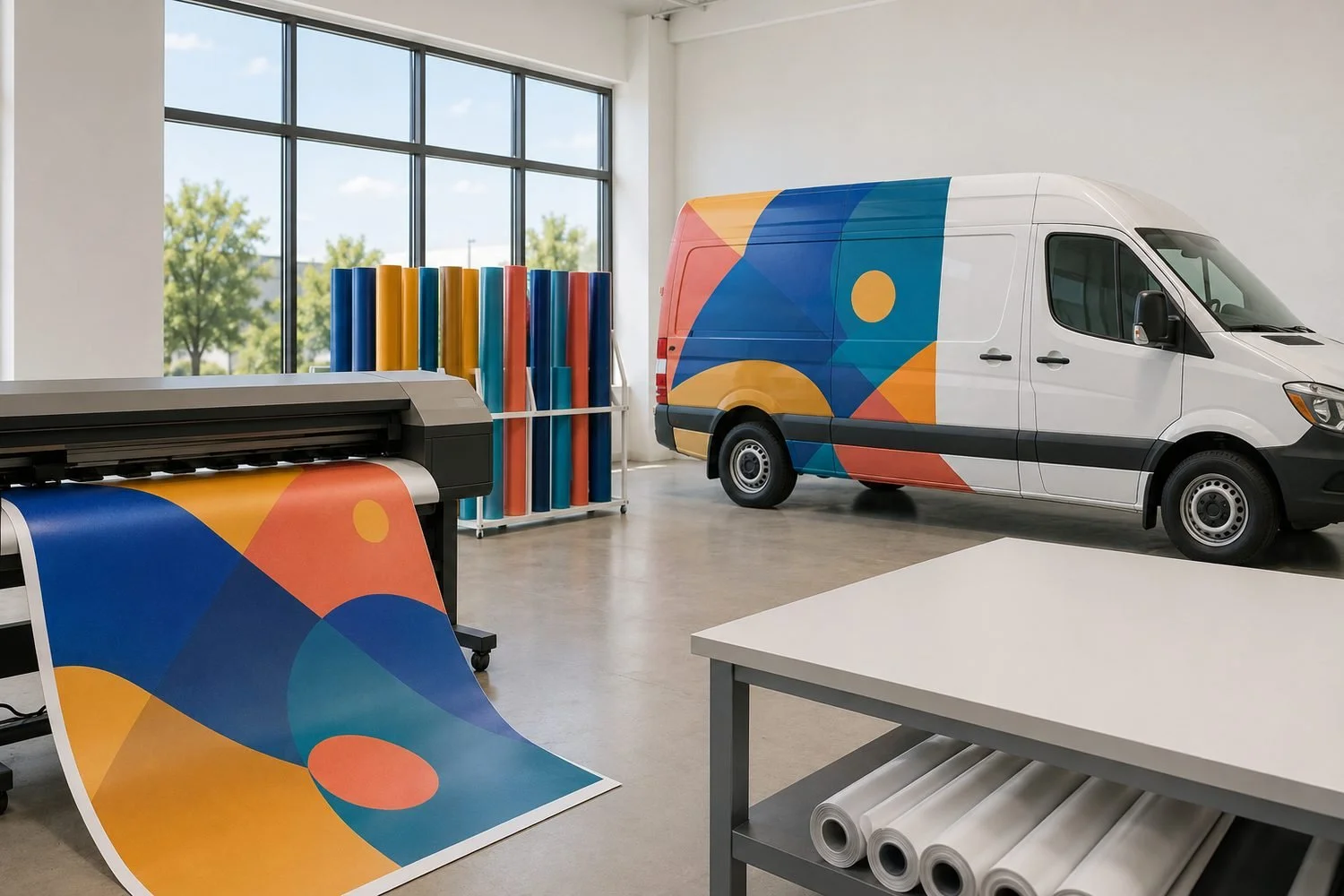
Billboard and sign manufacturing in the United States is roughly a $14.5 billion industry as of 2024, spread across tens of thousands of establishments and dominated by small local and regional shops. [S1] It is tied to commercial construction and business formation, which makes it cyclical — but IBISWorld's most recent look points to renewed out-of-home advertising interest and a shift toward dynamic, interactive displays, both favoring shops that fabricate and install rather than just design.
The labor benchmark tells you exactly where to stand. What a graphic designer earns is on the record, but the more useful number is the outlook. The Bureau of Labor Statistics projects employment growth of just 2% from 2024 to 2034. It explicitly notes that automated design tools, including artificial intelligence, may reduce the need to contract freelance design work. [S2] The wage itself is a local figure, and a national average will not tell you what a designer costs where you are.
That is a federal statistics agency confirming the approach this category requires. The design chair is under pressure. The fabrication bay and the installation ladder are not.
Why sign businesses made the list
Every category in the research had to clear four tests. Clear three and you usually have a self-employed job in disguise.
Does it pay after you replace yourself? It does, on billed fabrication labor and a mark-up on materials, with a specialty premium on wraps. Work is priced per project with real markup, and a shop with a steady commercial account list covers a lead fabricator's wage and still leaves real cash flow for the owner.
Does the revenue recur? Through the relationship rather than the product. A sign lasts years — but a commercial customer refreshes signage, opens locations, rebrands, and adds vehicles on a rolling cycle. Manage an account list and the work recurs; chase one-off jobs and it never does. That distinction is the whole business.
Does it survive a recession? This is a genuinely cyclical category and it is worth saying plainly: signage tracks commercial construction and business formation. What steadies it is the maintenance and refresh side — existing signage needs repair, relighting and updating regardless of the cycle — and vehicle wraps, which businesses use as rolling advertising precisely when they are trying to grow inexpensively.
Will it still need humans in ten years? The design half is being automated, and the federal outlook says so directly. The other half — fabricating a channel letter, hanging a storefront sign from a ladder, wrapping the compound curves of a delivery van without a bubble in it — is physical work performed on site, on a different surface every time.
Four for four, provided you know which half of the trade you are selling.
The research on this category produced a contrast that stays with you. One shop sells signs. Every job is a fresh bid to a stranger, marketing spend is constant, and revenue swings with whoever happens to be opening a restaurant that quarter. Another sells the relationship: a property management company, two auto dealers, a regional franchisee, and a plumbing outfit with fourteen trucks. When the franchisee opens a location, that shop gets the call. When the plumber buys a truck, that shop wraps it. It is not bidding — it is on a list. From the lending side of the desk the second one is far easier to read, because revenue arriving from named accounts on a refresh cycle behaves predictably, while revenue arriving from strangers has to be won again every quarter. Same equipment in both bays, entirely different asset.
What it takes to make this one work
A note on the tags. Every category in the fifty cleared the same four tests; far more never made it through. The tags do not grade a business — they tell you what has to line up for it to work in your hands. Sign businesses carry one: Rewards a specialty. That is the instruction manual.
The condition: signs get replaced infrequently, so no single customer generates continuous work on the product alone — and design-only services are the part of this trade that software is steadily absorbing.
The move that meets it: sell the relationship rather than the sign, and specialize in vehicle wraps.
On the first: commercial customers refresh signage, open locations and rebrand on a cycle, so the recurring revenue lives in the account rather than the invoice. Build a list of commercial accounts and service it the way a route business services a territory.
On the second: anchor the shop in wraps, where the value sits in fabrication and installation — measuring compound curves, laying large-format vinyl without bubbles, finishing edges on a vehicle that is never quite the same as the last one. That is physical work nobody has automated, and it is the growth segment of the category.
The upside: positioned that way you own a commercial account list, which is a far steadier customer than a homeowner — businesses budget for signage, pay on terms, and come back on a predictable cycle. Add wraps and you gain a fleet relationship that renews every time a customer buys a vehicle. A one-person shop here can put named commercial accounts on its books fast.
What it costs to get in — the three paths
| Path | Typical cost range | Best for |
|---|---|---|
| Startup | $30,000 – $80,000 | Vinyl plotter + design software + workspace |
| Acquisition | $121,000 – $195,000 | Equipment + customer relationships |
| Franchise | $207,000 – $502,000 | Brand + supplier network (examples: FastSigns, Image360) |
Franchise brands are named as examples, not endorsements. Franchise investment figures reflect a franchisor's most recent Franchise Disclosure Document (FDD) and change annually — verify each brand's current FDD (Item 7 for the initial-investment range; Item 19 for any financial-performance representation) before pursuing one. [S3]
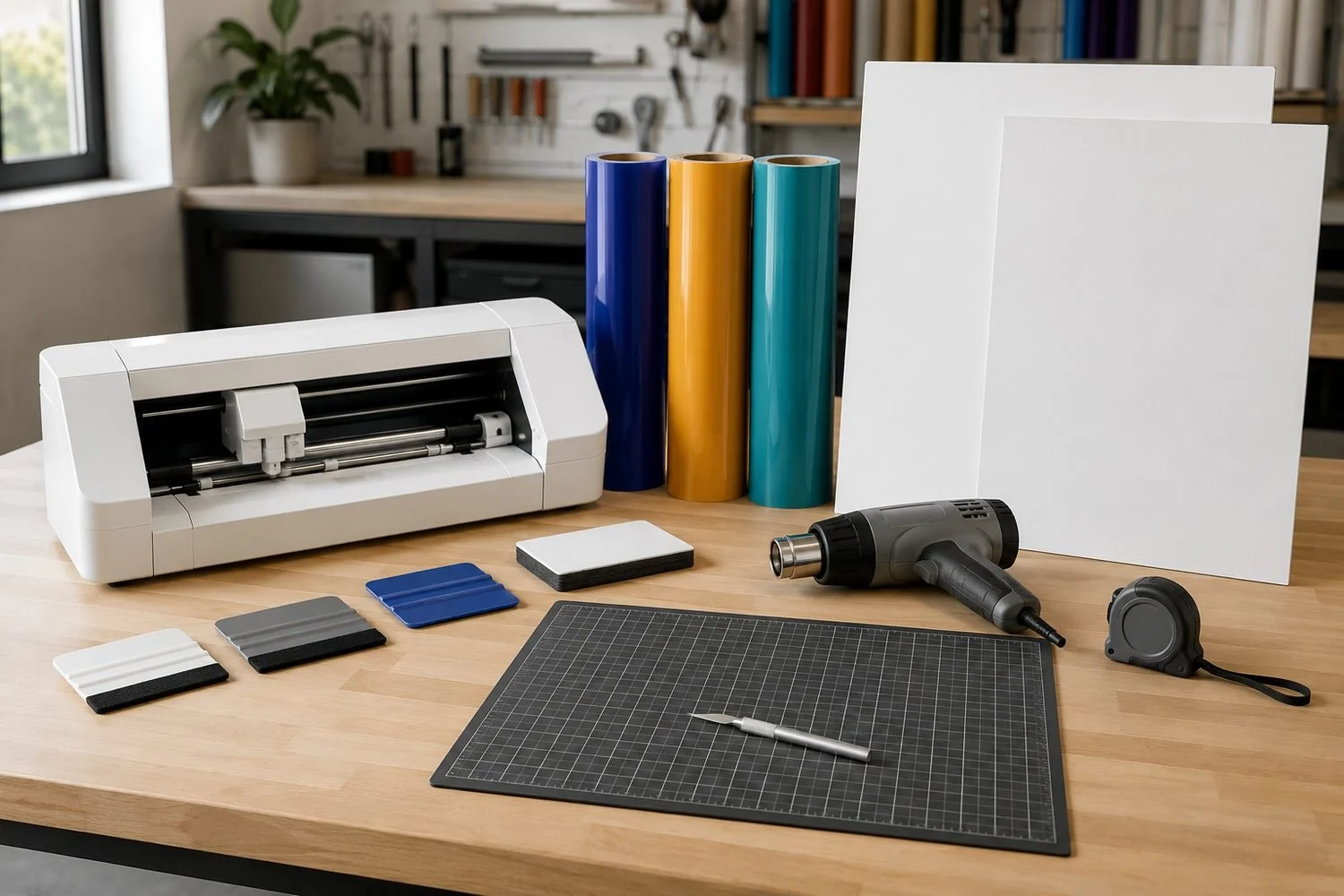
The startup range buys a plotter, design software and a workspace with a door big enough for a van — enough to fabricate and wrap.
The acquisition figure looks steep against that, and the gap is the point: what an established shop sells is the customer relationships, not the plotter. Fifteen commercial accounts on a refresh cycle are worth multiples of the same equipment sitting in an empty bay, which is why the relationship is the thing to buy — or to build deliberately.
Now look at the franchise row, because it is the one that will surprise you. A national sign franchise is a full retail production center: a leased commercial unit, a fit-out, a full equipment package and working capital, which is why the published ranges start above two hundred thousand dollars and run past half a million at the top. That is a different scale of project from the shop this article describes, and at the top of that range it sits outside what a community lender will write.
Compare the three rows honestly and the shape of the category becomes clear. The startup buys tools and no customers. The acquisition buys customers at roughly half the franchise price. The franchise buys a brand, a supplier network and a retail footprint — and you still have to go and find the accounts yourself.
How people actually fund it

A $30,000–$80,000 startup sits at the top of the SBA Microloan range and into CDFI direct lending, and a $121,000–$195,000 acquisition of an established shop with an account list moves up into CDFI direct lending and SBA Community Advantage territory.
That larger deal is thekind that rewardss three yearsof saving on a single income before buying anything. Buying a shop with accounts already on the books is exactly the kind of purchase that patience makes possible.
One pattern I watched from the lending chair: a qualified buyer walks into a national bank, gets declined, and concludes they cannot be funded. They never learn that a CDFI across town, or a Community Advantage lender, exists precisely for deals this size. Two free national directories will show you the ones near you — the Opportunity Finance Network CDFI locator and SBA Lender Match. [S4]
Finding the lender is the easy half. A sign shop also has a specific tell an underwriter looks for: repeat-customer concentration — what share of last year's revenue came from accounts that also bought the year before, and how much of it is wrap and fabrication work rather than design-only billing. A shop whose revenue repeats through named commercial accounts is far more bankable than one with a long list of strangers, because one of those transfers with a sale and the other has to be rebuilt. Start recording it before anyone asks.
The profit reality: owner-replacement cash flow

Here is the calculation that decides more of these deals than anything else in them. A sign shop looks profitable because the owner is designing the job, running the plotter, doing the install, calling on accounts, and keeping the books — none of it priced. The honest test: after you pay your fabricators, and after you pay a manager a market wage to run the shop and the installs the way you do, is there enough left for you to own the thing?
Notice which wage you have been given so far, because it matters. The only labor figure named here is the graphic designer wage — the benchmark for the half of the trade this article has just told you not to build on. It is the wrong number for this test.
The right one is what a lead who fabricates and installs costs. There is no dedicated federal occupation for a sign fabricator. Installation here is construction-adjacent work — elevated hanging, electrical permits, sometimes a contractor's license — so first-line supervisors of construction trades are the closest benchmark. Look that wage up for your own market and load payroll taxes and insurance on top. [S6] That is a skilled-trade wage, not a design wage, and it is roughly seventy percent more than the figure the industry section gave you.
Which is exactly why this category answers the profit question through mix. Fabrication and installation carry enough on each job to survive paying someone else to do the work; design-only billing largely does not, because the market rate for design is falling toward what software charges.
Wrap work sits at the strong end of that range — skilled, priced accordingly, and something the customer cannot do themselves. A shop weighted toward wraps and fabrication for repeat commercial accounts leaves genuine room after a lead fabricator's wage. A shop weighted toward one-off design work rarely does. Same equipment, very different ability to replace the owner.
The category-level math is easy — you just did it. Running it on a specific company, where the seller's "profit" hides his own unpriced design and install hours and the real question is how much revenue actually repeats through named accounts, is where people freeze. That is the job of the course, Microbusiness Millionaire: Operating System — the four tests turned into a repeatable screen you run on a real deal.
The benefits of owning a sign business
A commercial account list. Business customers budget for signage, pay on terms and return on a cycle.
A specialty with a moat. Wraps are physical, skilled, on-site work — the growth segment of the trade.
Real markup on materials and labor. Fabrication and installation carry enough to survive paying a crew.
Fleet relationships. One wrapped truck usually means the rest of the fleet follows.
A fragmented market. Small local shops, not national chains — room for a good owner.
What separates the strong owners from the struggling ones
Accounts sold, not signs. The defining decision in this category. A named commercial account buys again on a cycle; a one-off bid has to be won from scratch every time, and the marketing spend never stops.
Anchored in fabrication and installation. That is the half of the trade software cannot reach, and it is where the work still commands a proper rate.
The wrap specialty taken. Wraps are where ticket size, skill premium and fleet relationships all sit together, and one wrapped truck usually brings the rest of the fleet with it.
Installation priced as a trade. Hanging and finishing is labor the customer genuinely cannot do. Charging for it accordingly is what makes the crew affordable.
Licenses, permits, and regulations
Sign work is lightly licensed at the business level but heavily regulated at the job level, and that distinction is the whole thing to understand here. Getting a sign business licensed is easy. Getting a particular sign approved is not.
At the business level, expect a general business license and sales-tax registration. That is close to the whole of it.
At the job level, the real compliance lives in local sign codes and zoning ordinances. Municipalities regulate size, height, illumination and placement, and most exterior signs require a sign permit before installation. This is the part that catches new owners, because the rules are municipal rather than state — so the shop that works across three towns is working under three codes, and a design a customer has already approved can still be refused.
Then the trade requirements. Electrical signage brings UL listing and electrical permit obligations and often a licensed electrician, and elevated installation or excavation for pylon footings may require a contractor's license — which is worth checking early, since installation is the half of this trade the article recommends anchoring in. Carry general liability, commercial auto and workers' compensation if you employ installers.
Start with your city or county planning department and the free SBA "Apply for licenses and permits" tool. [S5] (General information, not legal advice — confirm your local sign code, permit process, and any contractor-licensing requirements before you take paid work.)
Build a portfolio, not a job

A sign business anchors a commercial-branding cluster aimed at the same customer and the same budget line. It stacks on a referral relationship of a particular kind — an account list, where every addition is sold to a customer who already has you on the vendor list.
Its most natural neighbor is vehicle wraps, the growth specialty, which functions as a second business running off the same plotter and the same installation skill. From there it extends into specialty commercial print — banners, window graphics, trade-show displays — and broader marketing materials for accounts you already hold.
That is the difference between owning a shop and owning a portfolio. You are not building a sign business. You are building the branding relationship a few dozen commercial accounts rely on, anchored by fabrication and wrap work nobody has automated. A portfolio like that, with named accounts on a refresh cycle and a documented customer list, sells to a buyer as one asset — which is how it ends up worth over a million dollars at sale, instead of a plotter and a roll of vinyl.
Frequently asked questions
Is a sign business profitable? It can be, particularly when the mix leans toward fabrication, installation and wraps rather than design-only billing. The honest test is whether it still produces cash after paying a lead fabricator to replace your hands, and repeat commercial accounts with wrap work make that far more likely.
How much does it cost to start a sign business? Roughly $30,000–$80,000 for a plotter, design software, and a workspace. About $121,000–$195,000 to acquire an established shop with equipment and customer relationships. A national franchise is a different scale of project — a full retail production center, with published ranges running from roughly $207,000 to over $500,000.
Do I need a license to install signs? Business licensing is usually light, but job-level rules matter: most exterior signs require a local permit, illuminated signs bring electrical and UL requirements, and some states require a contractor's license for installation. Confirm your local sign code first. [S5]
What is the most profitable type of sign work? Wraps and fabricated, installed signage leave the most on each job, because the value sits in skilled physical work the customer cannot perform. Design-only services face the most software pressure, which is why the specialty matters here.
Where to go from here
Download the free guide.50 Boring Businesses That Make Millionaires is the full result of the research: fifty categories run against the four tests, what each one costs to enter by all three paths, what has to line up for it to work, and how they pair into a portfolio. Free at microbusinessmillionaire.com.
Read the book.The Microbusiness Millionaire: How Ordinary People Build Extraordinary Wealth One Microbusiness at a Time follows four people who each reached a portfolio worth more than a million dollars by a different path. One keeps a hospital job and uses CDFI financing to acquire one stable service business, then another, then a third. One saves on a single income for three years, leaves a master plumber's wage, and stacks trade service lines starting with an SBA microloan. One uses an SBA Community Advantage loan to open a franchise, then opens three more. One starts with about $5,000 on the side and keeps a W-2 for years, building the slowest and most patient version of the same result. Four starting points, four amounts of money, four portfolios worth over a million dollars at sale. Available on Amazon.
Join the next cohort — Microbusiness Millionaire: Operating System. The book gives you clear examples of how it's done. The course is the step-by-step system for doing it yourself: screening a real company against the four tests, running the owner-replacement cash-flow math on a seller's actual numbers, knowing when to walk, knowing which lenders fund deals this size, and installing the manager who runs the business without you. Eight weeks, five seats a cohort, waitlist first — at microbusinessmillionaire.com.
About the author
Chris Scott has spent more than twenty-five years in the small-business arena. As the director of a Community Development Financial Institution (CDFI), he reviewed loan applications and made the approve-or-decline decisions. Later, at the U.S. Small Business Administration (SBA), he monitored lending programs. Across those two roles, thousands of business plans and loan applications crossed his desk. He still works at the SBA, now in its venture capital division. His research into which microbusinesses build wealth — and which quietly build a job — became The Microbusiness Millionaire and the free companion guide, 50 Boring Businesses That Make Millionaires.
Sources & references
[S1] IBISWorld, Billboard & Sign Manufacturing in the US (NAICS 33995) — market size approximately $14.5bn (2024); fragmented field of local and regional shops; most recent publication February 2026 notes renewed out-of-home advertising demand and a shift toward dynamic and interactive displays. ibisworld.com
[S2] U.S. Bureau of Labor Statistics, Occupational Outlook Handbook / Occupational Employment and Wage Statistics, Graphic Designers (SOC 27-1024) — employment projected to grow 2% from 2024 to 2034; BLS notes automated design tools including AI may reduce demand for contracted freelance design work. bls.gov/ooh
[S3] U.S. Federal Trade Commission, Franchise Rule / FDD Items 7 and 19. ftc.gov. Franchise range shown reflects published Item 7 estimated initial investment for FASTSIGNS full-service centers (approximately $215,194–$377,334 per the 2025 FDD) and Image360 (approximately $206,765–$502,239). Verify each current FDD before relying on either.
[S4] Opportunity Finance Network CDFI Locator (ofn.org); SBA Lender Match (sba.gov).
[S5] U.S. Small Business Administration, Apply for licenses and permits (sba.gov); local sign codes, zoning ordinances and sign permits; UL listing and electrical permit requirements for illuminated signage; state contractor-licensing requirements for installation.
[S6] U.S. Bureau of Labor Statistics, Occupational Employment and Wage Statistics, First-Line Supervisors of Construction Trades and Extraction Workers (SOC 47-1011). Used as a proxy: BLS publishes no dedicated occupation for sign fabrication and installation, and the installation side of this trade is construction-adjacent work. The loaded figure adds payroll taxes and insurance. bls.gov/oes
[Internal]50 Boring Businesses That Make Millionaires — Sign Businesses entry (tag, three-path entry-cost table, portfolio pairings, framework note, "what it takes to make this one work"), drawn from the author's research and filtered through the underwriting criteria he applied as a CDFI lender.
This article is for general information only and is not legal, financial, tax, or investment advice. Category-level figures are reference points, not a specific-deal projection; individual businesses vary. Consult a CPA, attorney, business broker, franchise consultant, or CDFI loan officer before acting.
Last updated: 9/9/2026