

How to Start a Painting Business
A single repaint is worth thousands, and then the customer disappears for five years — which is the one thing this category asks you to solve. Here is what a painting business costs, what it pays after you replace yourself, and how the operators who build something keep the address instead of throwing the relationship away.
Chris Scott — former CDFI director and SBA management

As the director of a Community Development Financial Institution (CDFI), and as management at the U.S. Small Business Administration (SBA), I saw thousands of business plans and loan applications cross my desk. That work is where I learned what a durable business looks like on paper, and what a business that only looks durable looks like on paper.
It is not, however, where the list of fifty came from. That came from years of research, running category after category through the same four questions: Is it profitable? Does it have recurring revenue? Is it recession resistant? Is it AI resistant? Those four questions are the framework behind the book, The Microbusiness Millionaire, and they are what separated the categories that built real wealth from the ones that quietly built a job with a P&L attached. Fifty survived the screen. Far more never made it through.
Painting is one of the fifty, and it is a category of big single tickets and long silences. The job is worth real money. Then the customer disappears for five years. The whole craft of building a painting business is closing that gap, and there is a clean way to do it.
The industry: large, fragmented, and housing-driven
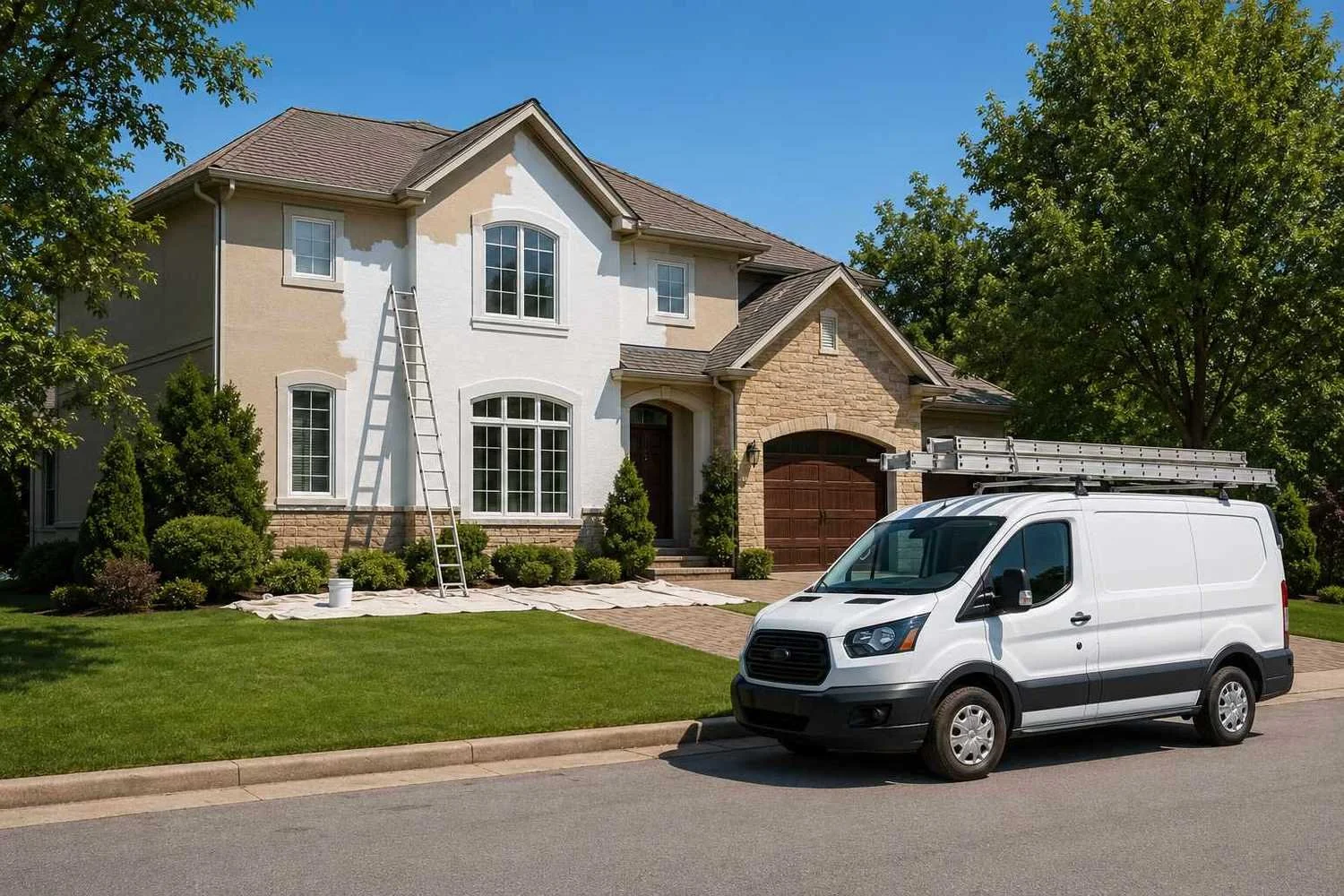
U.S. house painting and decorating contractors are about $28.2 billion in 2026, spread across roughly 223,000 businesses. [S1] It is a large, deeply fragmented market — no giant, mostly small local crews — and its fortunes track the housing market: it grew at a healthy clip through the low-rate years and cooled somewhat as rates rose and some households turned cautious. [S1] What does not change is the underlying need: paint fails, tastes shift, and houses turn over, and every one of those events is a job.
The labor benchmark is what a construction and maintenance painter earns, across 342,200 jobs. Employment is projected to grow 4% from 2024 to 2034, with about 28,100 openings a year. [S2] The wage itself is local — it moves more between two metros than it does between trades — so plan on the one for your own market. That wage is the price of replacing yourself — the wage attached to the job you are doing without a paycheck. Every profit number later in this article has to survive it, and the real cost runs higher once payroll taxes and insurance go on top.
No formal credential is required to enter. That is why the entry cost is so low, and it is also why the competitive dynamics of this category work the way they do — a point worth holding onto for the profit section.
Why painting made the list
Every category in the research had to clear four tests. Clear three and you usually have a self-employed job in disguise.
Does it pay after you replace yourself? It does, with one thing to plan for: the cash left on each job settles as crews grow, because labor is nearly the whole cost and painting has no license protecting your pricing. It clears the test, and crew-based scaling rewards careful labor management.
Does the revenue recur? This is the category's one condition, and it is what the tag is about: an interior repaints every five to seven years, so a customer you win today does not call again next month. Painting is project work rather than a route, which is exactly what you design around — the section below is how.
Does it survive a recession? The maintenance side holds better than the discretionary side. A rental turnover, a house going up for sale, peeling exterior wood that will rot if left — those get painted in any economy. Aesthetic "I'm tired of this color" repaints soften when money is tight.
Will it still need humans in ten years? Someone has to prep the surface, cut the edges and lay the finish, in a different room every time. Software can schedule the job and order the paint. It cannot cut a straight line against a ceiling. Low AI exposure.
Four for four, on a $500 entry.
The research on this category kept arriving at the same expensive habit, and it has nothing to do with brushwork. A painter doing genuinely good work struggles to grow, and the reason traces to one number: what it costs to win each new customer, because every job is a first job. The house gets painted beautifully, and then those people are never seen again. Ask what happened to the addresses and the answer is usually that nobody kept them. That is the whole thing in a sentence — paying to win a customer, delivering an excellent result, and then discarding the relationship. From the lending side of the desk it shows up as a marketing line that grows in step with revenue instead of falling behind it, which is the opposite of what a scalable business looks like. The painters who build something do not merely paint the house. They keep the address, and they find a reason to come back before five years pass.
What it takes to make this one work
A note on the tags. Every category in the fifty cleared the same four tests; far more never made it through. The tags do not grade a business — they tell you what has to line up for it to work in your hands. Painting carries one: Best paired. That is the instruction manual.
The condition: painting is project work rather than a route. An interior repaints every five to seven years; an exterior somewhat more often. The customer you win today does not produce revenue next month the way a mowing or cleaning customer does, so left alone every job is a fresh start and what you spent to win each one never gets spread across repeat visits.
The move that meets it: build the customer list and work it. Photograph every job, before and after, and keep every address.
Then give that list reasons to see you on a shorter cycle than five years. Pair painting with power washing, handyman work, or drywall repair, so the household that hired you to paint the living room this year hires you to wash the siding next spring and fix the fence rail the year after. One five-year customer becomes a relationship with three or four touchpoints, and what you spent to win them is spread across all of it.
The upside: once the re-engagement gap is closed, the project size works powerfully in your favor. A single repaint is worth thousands rather than the price of a routine service visit. A painter with a worked customer list and a paired service or two is not running a low-ticket route; they are running a high-ticket business with repeat demand built into it — and it starts with a ladder, a sprayer and $500.
What it costs to get in — the three paths
| Path | Typical cost range | Best for |
|---|---|---|
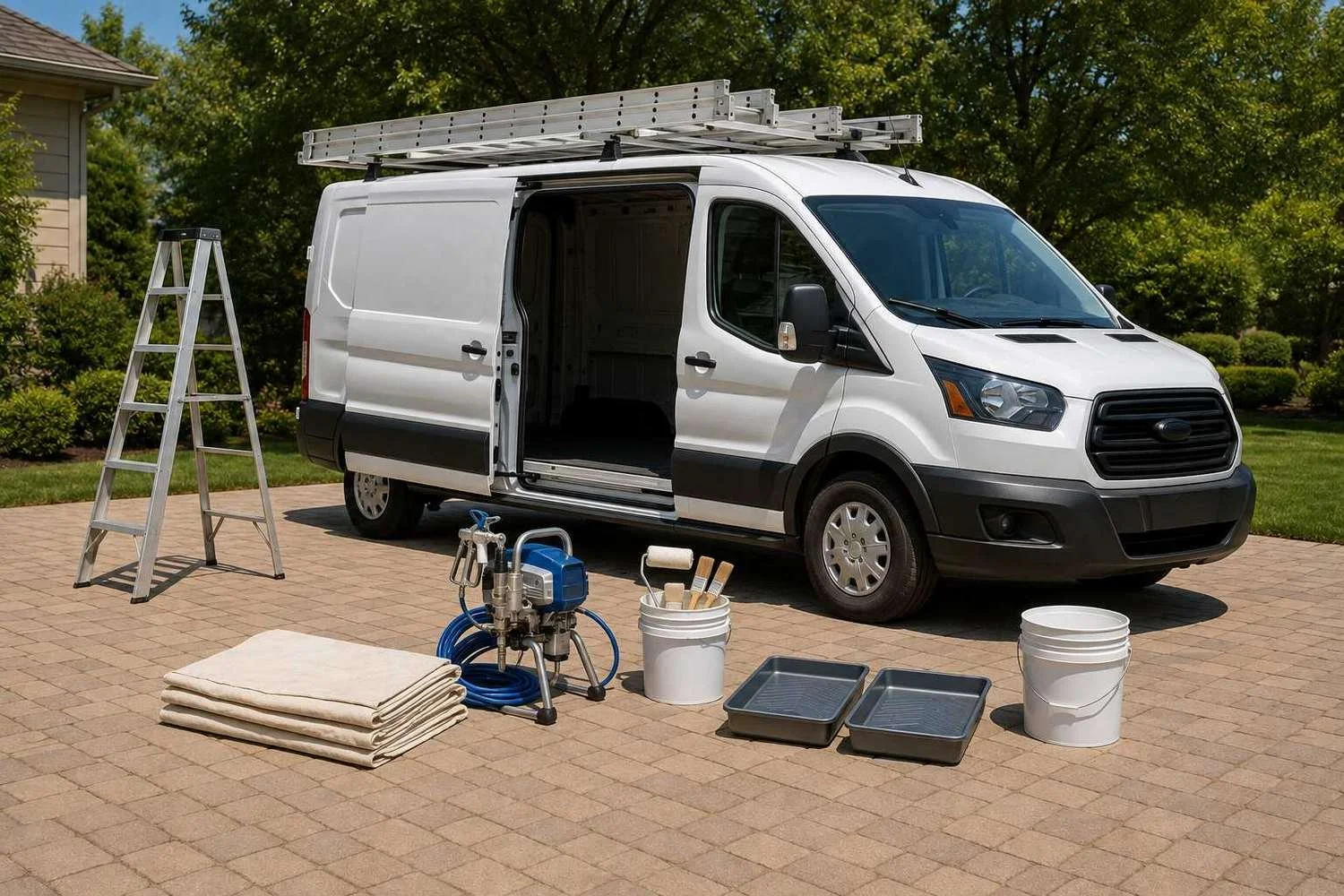
| Startup (solo) | $500 – $2,000 | Brush, ladder, insurance, vehicle |
| Acquisition | $150,000 – $280,000 | Crew + customer list + repeat accounts |
| Franchise | $55,000 – $305,000 | Brand + estimating systems + territory. Examples: Fresh Coat, Five Star Painting, CertaPro. |
Franchise brands are named as examples, not endorsements, and the range shown is a category estimate rather than any single brand's published figure. Franchise examples: CertaPro, Five Star Painting. Franchise investment figures reflect a franchisor's most recent Franchise Disclosure Document (FDD) and change annually — verify each brand's current FDD (Item 7 for the initial-investment range; Item 19 for any financial-performance representation) before pursuing one. [S3]
The franchise column here is worth more attention than most, because it is genuinely crowded and the spread inside it is enormous. Fresh Coat starts near $54,000, Five Star Painting runs roughly $75,000 to $195,000, ProTect Painters around $80,000 to $150,000, and CertaPro — the largest system in North America — reaches $133,000 to $302,500. [S6]
That is a difference of nearly a quarter of a million dollars between brands selling what looks like the same business, and the reason is not that one is five times better. It is that franchisors make different allowances in Item 7. One includes a truck, tools and six months of advertising; another assumes you already have the vehicle and budgets the marketing separately. So the useful comparison is not the headline range but what each FDD actually puts inside it. Line the Item 7 tables up side by side and read the rows, not the totals.
Then set the whole column against the first row, because the honest position is that in this category the franchise is buying you estimating and lead flow rather than the ability to paint. You can learn to paint. Pricing a job so it still makes money after the crew is paid is the part that takes years, and it is what the brand is selling.
That $500 solo startup is among the lowest entries in the fifty, and it tells you the barrier here is not capital. It is estimating and re-engagement.
Note what the franchise row is really selling: "estimating systems." Bidding a paint job accurately is the skill that separates painters who make money from painters who stay busy and tired, and it is what the franchisors package. You can learn it yourself — just know that it, rather than the brushwork, is the actual competency.
How people actually fund it

At the solo level this barely needs a lender — $500 to $2,000 comes out of pocket. That is the entry tier the book's side-hustle path starts in, keeping a W-2 in place and building on weekends, because the entry price allows it.
Where a lender enters is the $150,000–$280,000 acquisition of a crewed operation with a customer list, which sits in CDFI direct lending and SBA Community Advantage territory.
One pattern I watched from the lending chair, across every industry that came through: a qualified buyer walks into a national bank, gets declined, and concludes they cannot be funded. They never learn that a CDFI across town, or a Community Advantage lender, exists precisely for deals this size. Two free national directories will show you the ones near you — the Opportunity Finance Network CDFI locator and SBA Lender Match. [S4]
Finding the lender is the easy half. A painting business also has a specific tell an underwriter looks for: the split between one-off retail jobs and repeatable commercial or property-management contracts. A customer list anchored by apartment-turn work or a commercial repaint schedule is far more bankable than a string of one-time residential jobs, because one of those renews and the other has to be found again. Start recording that mix before anyone asks for it.
The profit reality: owner-replacement cash flow

Here is the calculation that decides more of these deals than anything else in them. A painting business looks profitable because the owner is on the ladder, estimating the jobs, scheduling the crew, and doing the books — none of it priced. The honest test: after you pay the crew, and after you pay someone a market wage to run the jobs the way you run them, is there enough left for you to own the thing?
Real numbers. One wage decides this one: what a painter costs in your market. Look it up before you model anything. [S2] Whatever the business reports as profit has to survive paying that.
Here the category's own arithmetic matters. What is left on each job settles as the crew grows, because labor is nearly the entire cost and no license lets you raise prices to cover a bigger payroll. A solo painter's numbers look excellent because he is the crew, unpaid. Add painters and the cash left per job comes down; you make it back on volume only if the estimating is tight and a worked customer list keeps the trucks full without constant spending on new customers. That is the discipline of scaling this one.
The category-level math is easy — you just did it. Running it on a specific business, where the seller's "profit" is mostly his own brush time and the repeat-versus-retail mix is buried in the job history, is where people freeze. That is the job of the course, Microbusiness Millionaire: Operating System — the four tests turned into a repeatable screen you run on a real deal.
The benefits of owning a painting business
One of the lowest entries in the fifty. A ladder, a sprayer and $500.
High-ticket jobs. A single repaint is worth a substantial multiple of a routine service visit.
A worked customer list compounds. Kept addresses plus paired services turn one job into years of work.
Recession-resilient maintenance demand. Rental turns, home sales, and failing exterior wood get painted regardless.
Low AI exposure. Prep, cut and finish are hands-and-judgment work that needs a person in the room.
What separates the strong operators from the struggling ones
The address kept, every time. The defining habit in this category. Every address you keep is a customer you do not have to win twice, and it is what turns a five-year cycle into a relationship.
Estimating learned before scaling. Painting profit lives on the bid. Get the estimating right first and every crew you add is adding money rather than volume.
Repeat demand built before the crew. More painters need more jobs. Build the re-engagement first and the crew arrives to a full schedule rather than an empty one.
Coverage and prep in place from the first job. This is work over people's floors and furniture. General liability and proper masking are what keep one incident from erasing a month.
Competing on reliability rather than price. With no license protecting rates, price is always the easiest thing to cut. Cleanliness, punctuality and the relationship are what a kept customer is actually paying for.
Licenses, permits, and regulations
Painting licensing varies by state and project size: many states require no license for residential painting below a dollar threshold, some require a painting or home-improvement contractor registration, and larger commercial or new-construction work may need a contractor's license. Two federal rules apply broadly and matter — EPA Lead Renovation, Repair and Painting (RRP) certification is required for work disturbing paint in pre-1978 housing, and OSHA rules govern ladder and fall safety. Beyond that: a registered entity, general liability, commercial auto, and workers' comp once you hire. Start with your state and municipal offices and the free SBA "Apply for licenses and permits" tool. [S5] (General information, not legal advice — confirm your local requirements, including RRP, before you take paid work.)
Build a portfolio, not a job
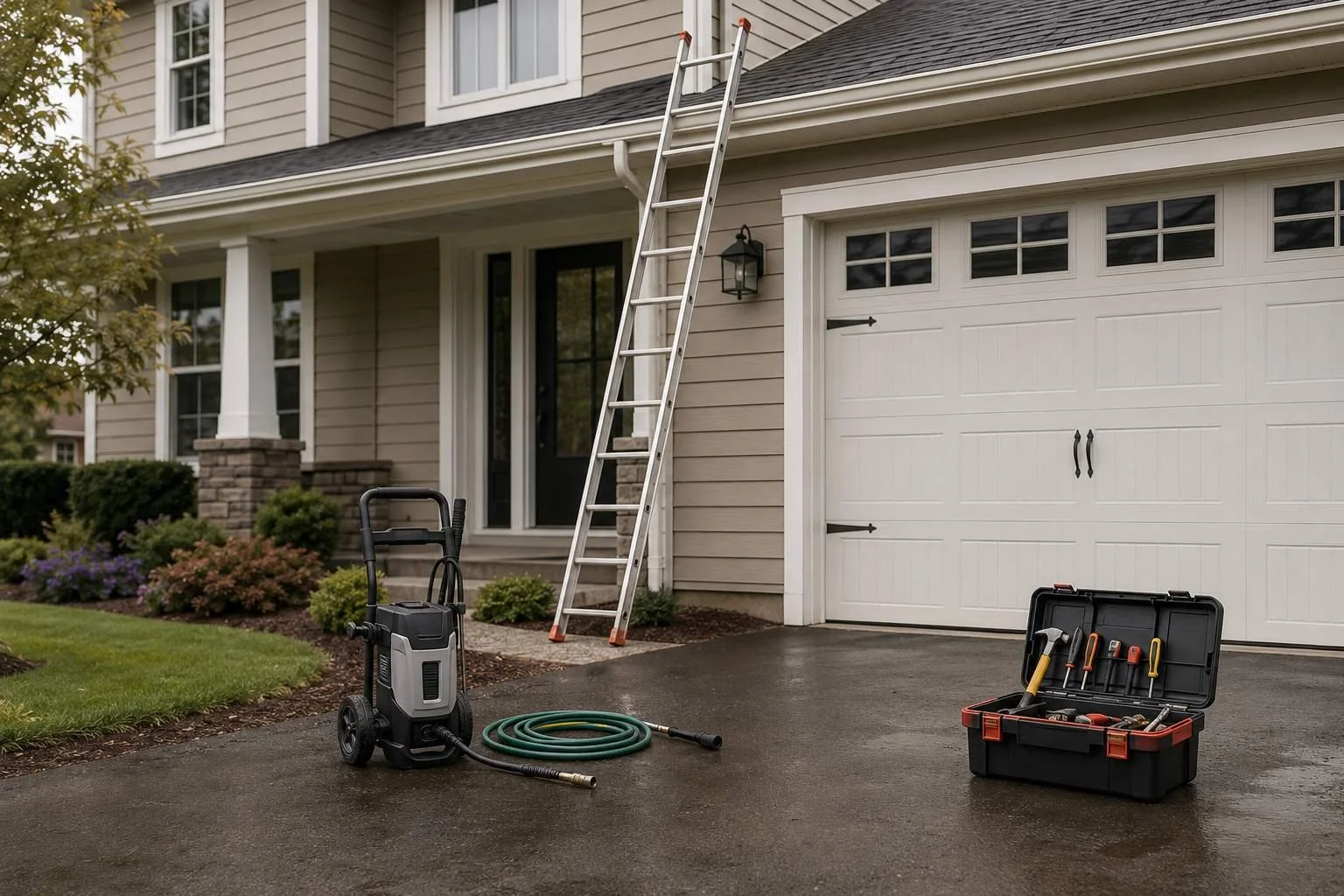
Painting fits the home-services portfolio, and here pairing is not an optional refinement — it is the fix for the five-year gap. It stacks the way route businesses do once the pairings are in place: along a territory of households you have already worked for.
It pairs naturally with power washing, which washes the siding before you paint it and again between repaints; with handyman work, the trim and the fence and the door that sticks; and with drywall repair specifically. Every pairing gives your kept customer list a reason to see you long before the next repaint is due, which is the entire point.
That is the difference between owning a series of jobs and owning a portfolio. You are not building a painting crew. You are building a home-services relationship with a few hundred households, of which painting is the high-ticket anchor. A portfolio like that, with a kept customer list and a documented repeat mix, sells to a buyer as one asset — which is how it ends up worth over a million dollars at sale, instead of a truck full of ladders.
Frequently asked questions
Is a painting business profitable? Yes, though what is left on each job settles as you add crew, because labor is almost the entire cost and nothing protects your pricing. The real test is whether the business still produces cash after paying the crew and someone to run the jobs. Tight estimating plus a worked customer list — so you are not winning every job from scratch — is what clears it.
How much does it cost to start a painting business? Roughly $500 to $2,000 to start solo with a ladder, sprayer, brushes, insurance and a vehicle — among the lowest entries in the fifty. About $150,000 to $280,000 to buy a crewed operation with a customer list, or $110,000 to $200,000 for a franchise.
How do you get repeat business from painting? Keep every address and pair painting with shorter-cycle services — power washing, handyman work, drywall repair — so the customer sees you every year or two instead of every five to seven. Solving that re-engagement gap is the most important thing you can do here.
Where to go from here
Download the free guide.50 Boring Businesses That Make Millionaires is the full result of the research: fifty categories run against the four tests, what each one costs to enter by all three paths, what has to line up for it to work, and how they pair into a portfolio. Free at microbusinessmillionaire.com.
Read the book.The Microbusiness Millionaire: How Ordinary People Build Extraordinary Wealth One Microbusiness at a Time follows four people who each reached a portfolio worth more than a million dollars by a different path. One keeps a hospital job and uses CDFI financing to acquire one stable service business, then another, then a third. One saves on a single income for three years, leaves a master plumber's wage, and stacks trade service lines starting with an SBA microloan. One uses an SBA Community Advantage loan to open a franchise, then opens three more. One starts with about $5,000 on the side and keeps a W-2 for years, building the slowest and most patient version of the same result. Four starting points, four amounts of money, four portfolios worth over a million dollars at sale. The book is coming soon — join the email list at microbusinessmillionaire.com to hear when it lands.
Join the next cohort — Microbusiness Millionaire: Operating System. The book gives you clear examples of how it's done. The course is the step-by-step system for doing it yourself: screening a real company against the four tests, running the owner-replacement cash-flow math on a seller's actual numbers, knowing when to walk, knowing which lenders fund deals this size, and installing the operator who runs the business without you. Eight weeks online, five seats a cohort, waitlist first — at microbusinessmillionaire.com.
About the author
Chris Scott has spent more than twenty-five years in the small-business arena. As the director of a Community Development Financial Institution (CDFI) and as management at the U.S. Small Business Administration (SBA), he saw thousands of business plans and loan applications cross his desk. His research into which microbusinesses build wealth — and which quietly build a job — became The Microbusiness Millionaire and the free companion guide, 50 Boring Businesses That Make Millionaires.
Sources & references
[S1] IBISWorld, House Painting & Decorating Contractors in the US (NAICS OD5738), 2026 — market size $28.2bn; ~223,000 businesses; large, fragmented, housing-market-driven. ibisworld.com
[S2] U.S. Bureau of Labor Statistics, Occupational Outlook Handbook: Painters, Construction and Maintenance (342,200 jobs in 2024; 4% projected growth 2024–34; ~28,100 annual openings). bls.gov/ooh
[S3] U.S. Federal Trade Commission, Franchise Rule / FDD Items 7 and 19. ftc.gov
[S4] Opportunity Finance Network CDFI Locator (ofn.org); SBA Lender Match (sba.gov).
[S5] U.S. Small Business Administration, Apply for licenses and permits (sba.gov); state contractor/home-improvement licensing; U.S. EPA Lead Renovation, Repair and Painting (RRP) Rule (epa.gov).
[S6] Painting franchise disclosure data as reported by franchise-filing aggregators and industry analyses of 2025–2026 FDDs: Fresh Coat approximately $53,945–$96,300 on a franchise fee near $44,900; Five Star Painting approximately $74,730–$195,000 on a $45,000 fee, around 260 units; ProTect Painters approximately $80,000–$150,000; CertaPro Painters approximately $133,250–$302,500 on a $65,000 fee, around 375 units. Industry commentary notes that the spread reflects differing Item 7 allowances for vehicles, tools and advertising rather than differing business models. Reported figures vary between aggregators and filing years; verify the current FDD directly for any brand.
[Internal]50 Boring Businesses That Make Millionaires — Painting Businesses entry (tag, three-path entry-cost table, portfolio pairings, framework note, "what it takes to make this one work"), drawn from the author's research and filtered through the underwriting criteria he applied as a CDFI lender.
This article is for general information only and is not legal, financial, tax, or investment advice. Category-level figures are reference points, not a specific-deal projection; individual businesses vary. Consult a CPA, attorney, business broker, franchise consultant, or CDFI loan officer before acting.
Last updated:8/23/2026.