
How to Start a Music, Art & Special-Needs Tutoring Business
A child learning violin and a child with learning differences both need a person in the room, and everybody involved knows it — which is why this corner of tutoring grew while the screen-deliverable end shrank. Here is what a specialty tutoring business costs, what it pays after you replace yourself, and why the credential that makes hiring slow is the same thing protecting your rates.
Chris Scott — former CDFI director and SBA management
As the director of a Community Development Financial Institution (CDFI), and as management at the U.S. Small Business Administration (SBA), I saw thousands of business plans and loan applications cross my desk. That work is where I learned what a durable business looks like on paper, and what a business that only looks durable looks like on paper.
It is not, however, where the list of fifty came from. That came from years of research, running category after category through the same four questions: Is it profitable? Does it have recurring revenue? Is it recession resistant? Is it AI resistant? Those four questions are the framework behind the book, The Microbusiness Millionaire, and they are what separated the categories that built real wealth from the ones that quietly built a job with a P&L attached. Fifty survived the screen. Far more never made it through.
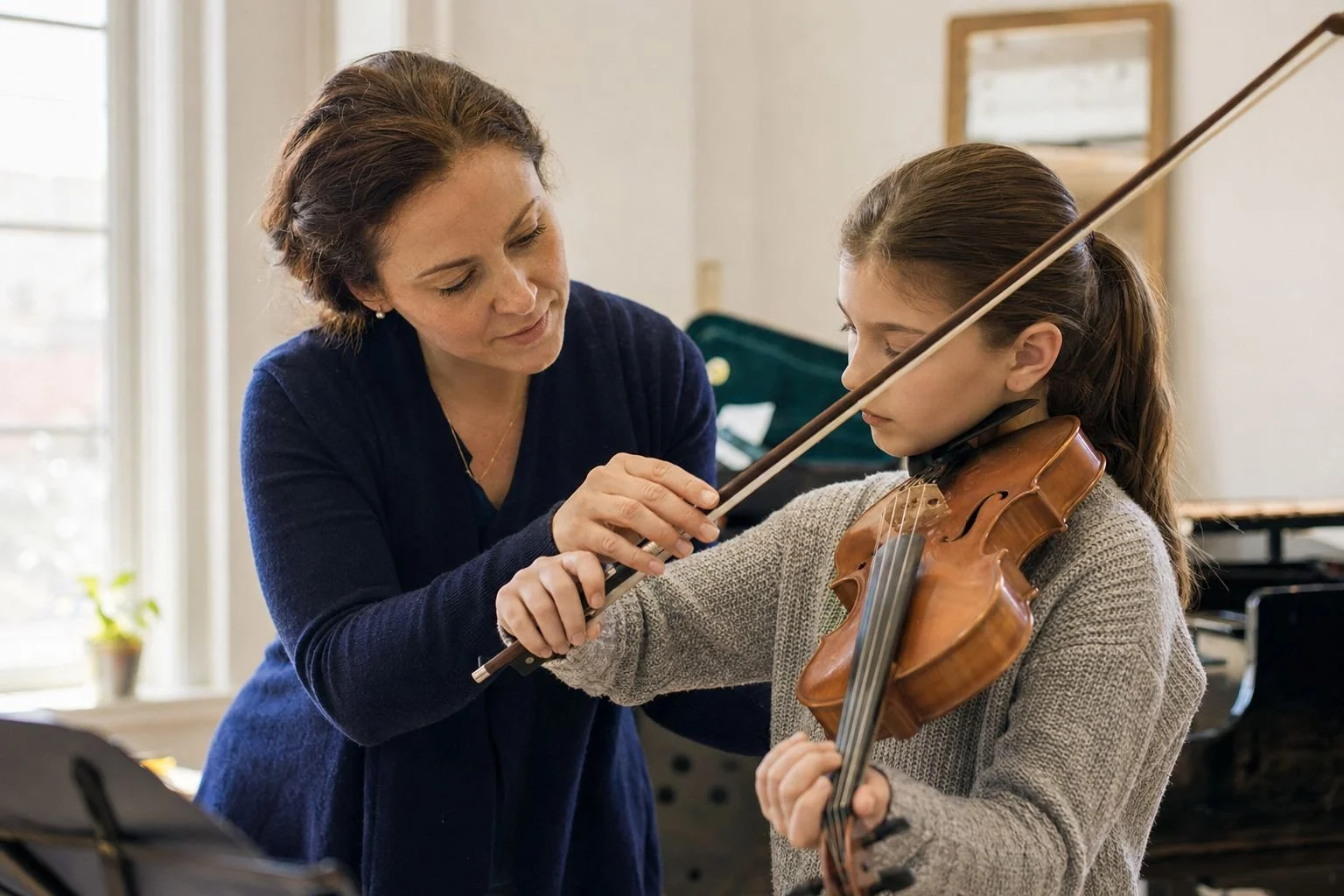
Specialty instruction — music, art, and services for students with learning differences — is one of the fifty, for a reason that becomes more valuable every year. General tutoring is the part of education software is steadily absorbing. A child learning violin and a child with learning differences both need a person in the room, and everybody involved knows it. That is the entire argument for this category.
A word on how this differs from tutoring and test prep, since both are on the list and both teach children. Test prep sells a result — a score, by a deadline, after which the customer is finished and gone. Specialty instruction sells a relationship: a weekly lesson with no end date, where a student who starts violin at eight may still be enrolled at fourteen. Test prep is bought for an outcome. Specialty instruction is bought for a practice. That difference decides everything downstream — how you price, how long a family stays, and what an eventual buyer is really purchasing. They pair well, because the same household needs both a few years apart, but they are two different businesses.
The industry: a specialty corner of a much larger field

Fine arts schools in the United States — the field covering music, art, dance, and drama instruction — generate about $7.8 billion in 2025, having grown at roughly a 4.3% compound rate over the previous five years. [S1] It is a field of small local operators: independent studios, single-discipline schools, and instructors in homes and rented rooms.
Set that against the segment next door. IBISWorld puts online tutoring at about $1.8 billion in 2025 after revenue slid at a 3.2% compound rate from its lockdown-era peak — the screen-deliverable end contracting while in-person specialty instruction grows. [S1]
The labor picture explains why the specialty is worth holding. Two wages sit behind this category. One is what a self-enrichment teacher earns — the Bureau of Labor Statistics category covering music and art instructors. The other is what a special education teacher with formal certification earns. The second is materially higher, and that premium is the whole reason the specialty holds its price. Both move by market, so plan on the figures for your own area; the Resource Directory in the free tools shows where to look them up. [S2] Whichever one applies to you is the price of replacing yourself — the salary that appears the moment you stop teaching the sessions yourself. Every profit number later in this article has to survive it, and the real cost runs higher once payroll taxes and insurance go on top.
Those wages describe employees rather than owners — but they tell you precisely where the pricing power in this category sits.
Why specialty tutoring made the list
Every category in the research had to clear four tests. Clear three and you usually have a self-employed job in disguise.
Does it pay after you replace yourself? It can, and the arithmetic is specific: instructor pay is the main cost, so what you are managing is the spread between what a credentialed instructor earns and what a specialty lesson bills. Studios holding a real specialty command rates that pay instructors properly and still leave cash for the owner. Studios competing on general tutoring rates rarely do.
Does the revenue recur? As reliably as almost anything among the fifty. Instruction is a weekly standing appointment that runs for terms and often years — a student who starts violin at eight may still be enrolled at fourteen. Recurring revenue is the natural shape of the business, not something you engineer.
Does it survive a recession? Better than most enrichment spending, and the special-needs side better still. Families protect their children's education late into a budget squeeze, and services for students with learning differences are often a genuine need rather than an extra — sometimes with district or funding-program support behind them.
Will it still need humans in ten years? This is the category's whole argument. Reading a child's frustration, adjusting a bow hold by hand, holding a distractible student's attention for forty-five minutes — software can schedule the lesson, but it cannot do any of that. The federal outlook shows the automatable end of instruction under pressure while credentialed specialty roles hold their value. Very low AI exposure.
Four for four — in the corner of education least exposed to what's coming.
The research on this category sorted itself almost immediately, and the sorting question was never enrollment. It was what the instructors could do that nobody else in town could. One version is the general homework-help center: pleasant families, decent enrollment, instructors interchangeable with a dozen other centers, and rates flat for years because a parent can always find cheaper. The other is a small studio built around two certified special-needs instructors and a Suzuki-trained violin teacher — a waiting list, annual rate increases that lose nobody, and families who stay for years because there is nowhere else to go. From the lending side of the desk the second one reads better in every respect, and for a reason worth stating plainly: the credentials belong on the balance sheet even though no accountant will ever list them there. They are what the pricing power is made of.
What it takes to make this one work
A note on the tags. Every category in the fifty cleared the same four tests; far more never made it through. The tags do not grade a business — they tell you what has to line up for it to work in your hands. Specialty tutoring carries one: Rewards a specialty. That is the instruction manual.
The condition: music education, art education and special-needs certification are genuine qualifications, which means you cannot staff this business out of a general teaching pool the way a homework-help center can.
The move that meets it: build around a specialty you or a founding instructor already hold, then expand into adjacent ones deliberately rather than all at once. Start where the credential already exists in the room — your own training, or a founding instructor's — and let that discipline define the studio. Add the next specialty only when you have found the person who can carry it, the same way a good studio adds a second instrument only when it has the right teacher for it.
The upside: that constraint is the protection. The credential that makes hiring slow is the same credential that keeps competitors from opening across the street, lets you raise rates without losing families, and keeps the work firmly in human hands. This is the AI-proof corner of tutoring — and it holds the pricing power to match, as the thirty-thousand-dollar wage premium on certification suggests.
What it costs to get in — the three paths
| Path | Typical cost range | Best for |
|---|---|---|
| Startup (solo) | $1,000 – $5,000 | Specialty credentials + space/in-home |
| Acquisition | $30,000 – $100,000 | Enrolled students + reputation + recital calendar |
| Franchise | $255,000 – $705,000 | A music school with premises — a different business. See below. Examples: Bach to Rock, School of Rock. |
Franchise brands are named as examples, not endorsements. Franchise investment figures reflect a franchisor's most recent Franchise Disclosure Document (FDD) and change annually — verify each brand's current FDD (Item 7 for the initial-investment range; Item 19 for any financial-performance representation) before pursuing one. [S3]
That third row needs the same warning as the massage category, and for the same reason. The recognizable franchises in music education are schools with premises, not the in-home or single-room specialty practice this article describes. Bach to Rock discloses roughly $259,000 to $574,000 and School of Rock roughly $425,000 to $705,000, and in both cases the money goes into build-out, soundproofing and instruments. [S6]
That is a lease, a payroll of instructors and a facility to fill — a genuinely different business, sitting well beyond the $350,000 SBA Community Advantage ceiling and outside what a community lender writes. It is a legitimate thing to want. It is not a bigger version of what the first row buys.
Which leaves the startup and acquisition rows as the real paths here, and in a category that begins at a thousand dollars, that is not much of a constraint.
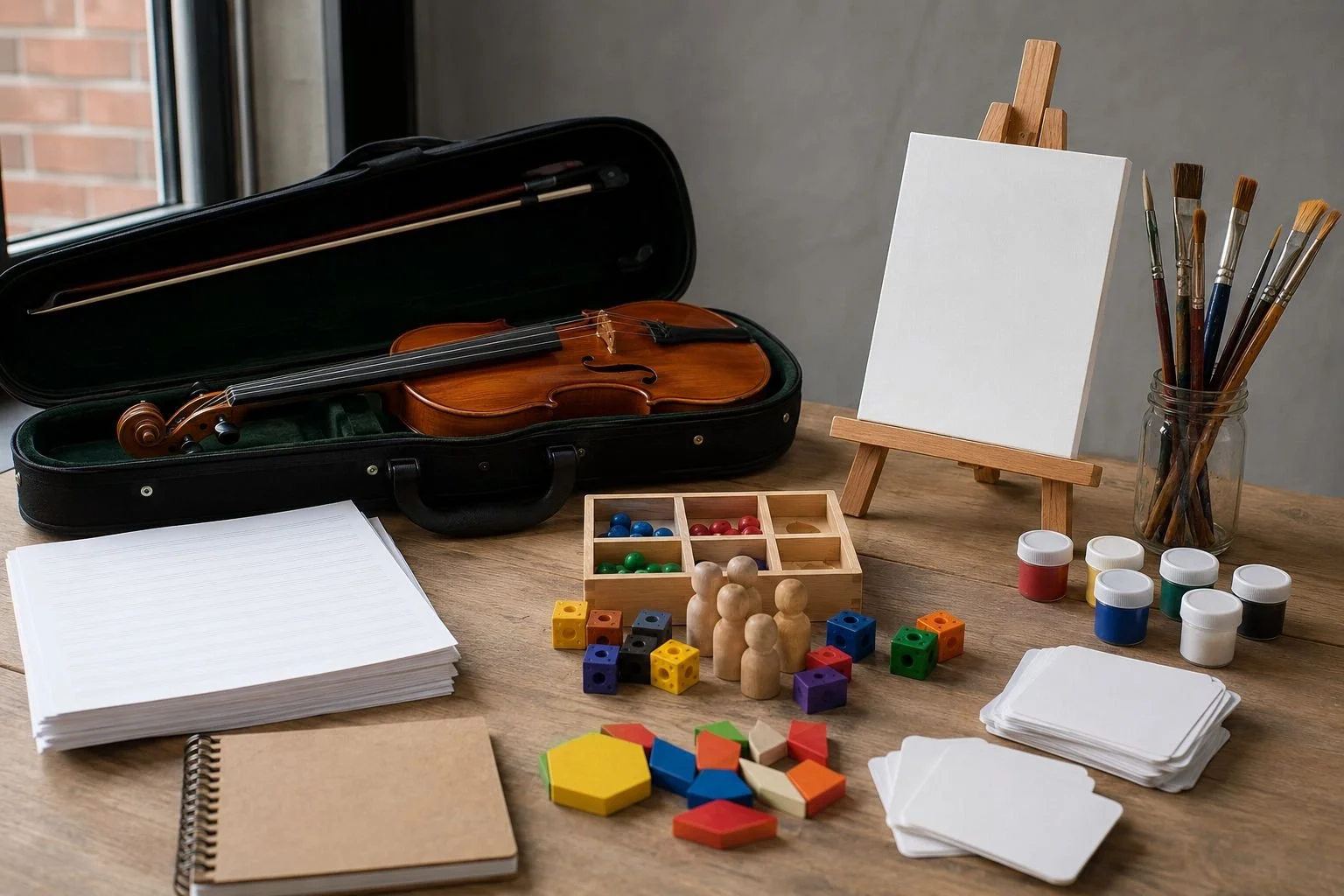
This is one of the least capital-hungry entries among the fifty — a solo start runs a few thousand dollars for materials and a space, rented or in-home. The real entry cost is the credential, paid in training years rather than dollars, which is exactly why the category holds up.
The acquisition path deserves a close look. An existing studio means buying an enrolled student list and a local reputation, and where families choose an instructor and stay for years, that enrollment is very nearly the whole value.
How people actually fund it

A $1,000–$5,000 solo start is small enough to self-fund, and a $30,000–$100,000 acquisition of an established studio with an enrolled student list sits in the SBA Microloan through SBA Community Advantage range.
That upper rung is where the book's franchise path runs, and Community Advantage exists for exactly this kind of borrower: a credentialed operator buying a small, service-based business that a large bank considers too small to underwrite.
One pattern I watched from the lending chair, across every industry that came through: a qualified buyer walks into a national bank, gets declined, and concludes they cannot be funded. They never learn that a CDFI across town, or a Community Advantage lender, exists precisely for deals this size. Two free national directories will show you the ones near you — the Opportunity Finance Network CDFI locator and SBA Lender Match. [S4]
Finding the lender is the easy half. A studio also has a specific tell an underwriter looks for: enrollment retention and instructor credentials — how long the average student stays enrolled, what share re-enroll each term, and which certifications the teaching staff actually hold. A student list of multi-year enrollments taught by credentialed instructors is far more bankable than a headcount that turns over every term. Start recording both before anyone asks for them.
The profit reality: owner-replacement cash flow

Here is the calculation that decides more of these deals than anything else in them. A tutoring studio looks profitable because the owner is teaching most of the lessons, scheduling the calendar, billing the families, and keeping the books — none of it priced. The honest test: after you pay your instructors, and after you pay a lead instructor a market wage to teach the way you teach, is there enough left for you to own the thing?
The specialty is what makes that arithmetic work, and it is worth being precise about why. Instructor wages are the dominant cost, and credentialed instructors cost more — the federal spread between general enrichment teaching and certified special education is a wide one.
A studio billing specialty rates absorbs that comfortably, because families paying for certified instruction expect to pay for certification. A studio billing general tutoring rates while trying to pay credentialed wages has no room at all. The specialty raises the cost of your staff and raises what you can charge by more. That is the whole model.
The category-level math is easy — you just did it. Running it on a specific studio, where the seller's "profit" hides her own unpriced teaching and scheduling hours and the real question is how much enrollment survives her departure, is where people freeze. That is the job of the course, Microbusiness Millionaire: Operating System — the four tests turned into a repeatable screen you run on a real deal.
The benefits of owning a specialty tutoring business
Weekly recurring enrollment. Lessons are standing appointments running for terms and often years.
A credential moat. Certification keeps the field thin and supports annual rate increases.
Very low entry cost. A solo start runs a few thousand dollars, and the real investment is training rather than capital.
Families that stay. Students who bond with an instructor stay enrolled for years.
The AI-proof corner of education. Specialty instruction needs a person in the room, and always will.
What separates the strong operators from the struggling ones
Specialty rates, charged as such. The credential is the pricing power. Billing like a homework-help center gives away the one advantage the category hands you.
The instructor found before the discipline is added. Add a specialty when the right teacher exists, rather than when the calendar has a gap. A studio grows at the speed of the people it can hire.
Credentialed staff paid properly. Certified instructors have options, and retention costs less than recruiting. Paying to keep them is the cheapest growth in this business.
A bench built early. If most lessons run through the owner, the studio is a job. Getting other instructors in front of families is what turns it into something sellable.
Licenses, permits, and regulations
Requirements vary by state and by what you teach, and they are worth confirming rather than assuming. Expect a general business license and sales-tax registration, plus zoning approval if you teach from home or a rented studio — many municipalities regulate home-based instruction and parking. Because you work with children, the meaningful requirements are protective: background checks for every instructor, and mandated reporter obligations that apply to those working with minors in most states. If you serve students with learning differences under a district contract or state funding program, expect additional credential verification and provider requirements, and student-privacy rules may apply to any education records you handle. Carry general liability and, if you employ instructors, workers' compensation. Start with your city or county and the free SBA "Apply for licenses and permits" tool. [S5] (General information, not legal advice — confirm your state's background-check, mandated-reporter, and any special-education provider requirements before you teach for a fee.)
Build a portfolio, not a job
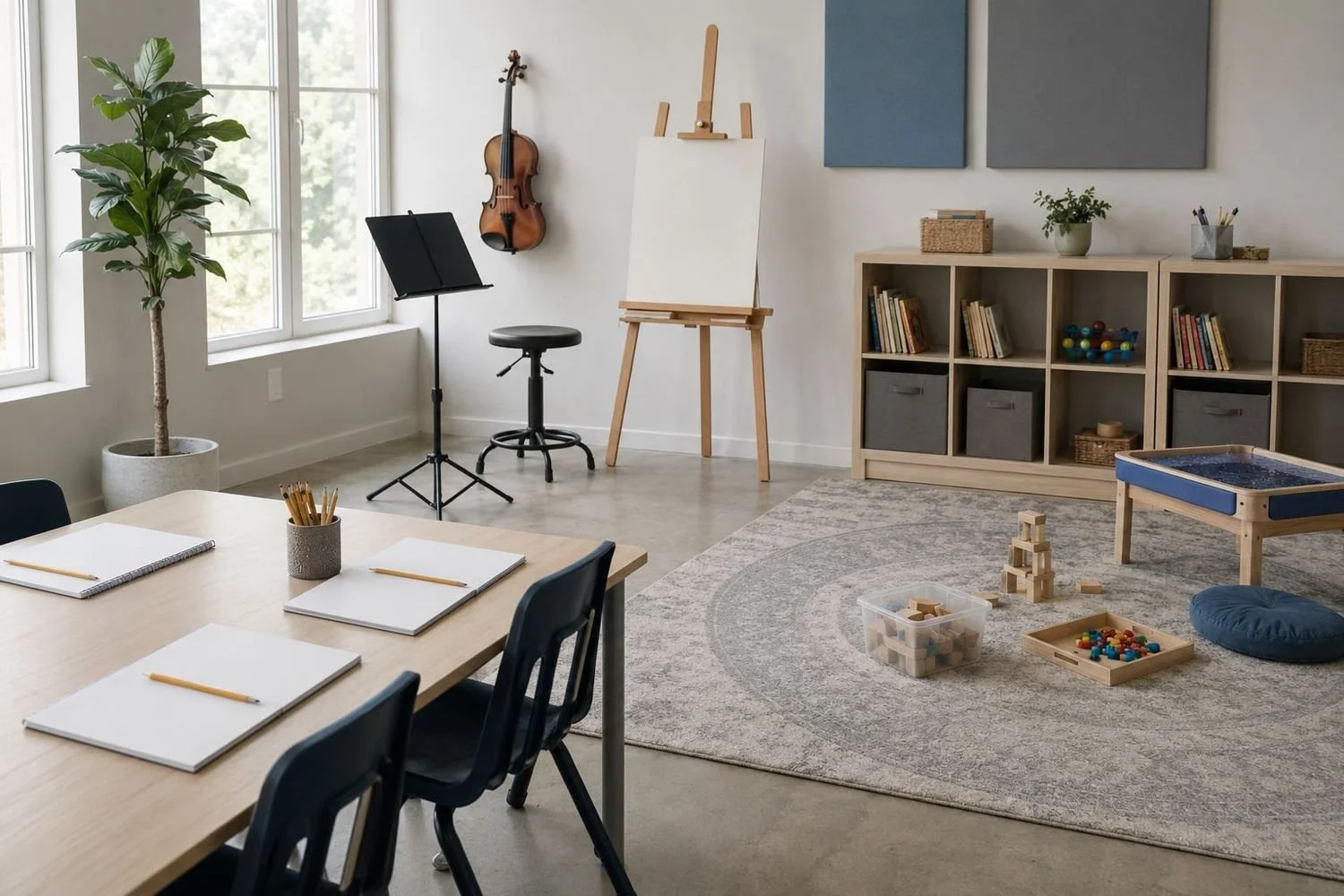
Specialty instruction is a facility business in the way it stacks: it grows by adding services that run inside the same room, to families already walking through the door.
It pairs naturally with test prep, which reaches the same households a few years later and fills the calendar in a different season, and with after-school programs, which use the same room during the hours a lesson studio sits empty. Every addition is sold to a parent who already trusts you with their child — the hardest permission in any consumer business to earn, and you have it already.
That is the difference between owning a studio and owning a portfolio. You are not building a lesson schedule. You are building the education relationship a few hundred families rely on across a decade of their children's lives, anchored by credentialed instruction nobody can automate. A portfolio like that, with multi-year enrollment and certified staff, sells to a buyer as one asset — which is how it ends up worth over a million dollars at sale, instead of a violin and a room.
Frequently asked questions
Is a music or art tutoring business profitable? It can be, particularly when the studio holds a real specialty and bills accordingly. The honest test is whether it still produces cash after paying a lead instructor a market wage to teach in your place, and specialty rates make that possible where general rates usually do not.
How much does it cost to start a specialty tutoring business? Roughly $1,000–$5,000 for a solo start with materials and a space, rented or in-home. About $30,000 to $100,000 to acquire an established studio with students already enrolled. Franchising is a different proposition entirely — roughly $255,000 to $705,000 for a music school with premises, brand and curriculum.
Do I need a certification to tutor music, art, or special-needs students? Business licensing is usually light, but credentials are the practical requirement — music and art training, and special-needs certification, are what families and any district contracts expect. Background checks and mandated-reporter rules apply to work with minors in most states. [S5]
Why is specialty tutoring more protected than general tutoring? Because it requires a person in the room. The general, screen-deliverable end of tutoring is the segment under software pressure and has been contracting, while instruction that depends on hands-on coaching and human attention has kept growing. [S1]
Where to go from here
Download the free guide.50 Boring Businesses That Make Millionaires is the full result of the research: fifty categories run against the four tests, what each one costs to enter by all three paths, what has to line up for it to work, and how they pair into a portfolio. Free at microbusinessmillionaire.com.
Read the book.The Microbusiness Millionaire: How Ordinary People Build Extraordinary Wealth One Microbusiness at a Time follows four people who each reached a portfolio worth more than a million dollars by a different path. One keeps a hospital job and uses CDFI financing to acquire one stable service business, then another, then a third. One saves on a single income for three years, leaves a master plumber's wage, and stacks trade service lines starting with an SBA microloan. One uses an SBA Community Advantage loan to open a franchise, then opens three more. One starts with about $5,000 on the side and keeps a W-2 for years, building the slowest and most patient version of the same result. Four starting points, four amounts of money, four portfolios worth over a million dollars at sale. The book is coming soon — join the email list at microbusinessmillionaire.com to hear when it lands.
Join the next cohort — Microbusiness Millionaire: Operating System. The book gives you clear examples of how it's done. The course is the step-by-step system for doing it yourself: screening a real company against the four tests, running the owner-replacement cash-flow math on a seller's actual numbers, knowing when to walk, knowing which lenders fund deals this size, and installing the operator who runs the business without you. Eight weeks online, five seats a cohort, waitlist first — at microbusinessmillionaire.com.
About the author
Chris Scott has spent more than twenty-five years in the small-business arena. As the director of a Community Development Financial Institution (CDFI) and as management at the U.S. Small Business Administration (SBA), he saw thousands of business plans and loan applications cross his desk. His research into which microbusinesses build wealth — and which quietly build a job — became The Microbusiness Millionaire and the free companion guide, 50 Boring Businesses That Make Millionaires.
Sources & references
[S1] IBISWorld, Fine Arts Schools in the US (NAICS 61161) — market size approximately $7.8bn in 2025, ~4.3% CAGR 2020–2025; and Online Tutoring Services in the US — approximately $1.8bn in 2025 after declining at a ~3.2% CAGR from its lockdown-era peak. ibisworld.com
[S2] U.S. Bureau of Labor Statistics, Occupational Employment and Wage Statistics — Self-Enrichment Teachers (SOC 25-3021); Special Education Teachers (kindergarten and elementary, and secondary). bls.gov/oes
[S3] U.S. Federal Trade Commission, Franchise Rule / FDD Items 7 and 19. ftc.gov
[S4] Opportunity Finance Network CDFI Locator (ofn.org); SBA Lender Match (sba.gov).
[S5] U.S. Small Business Administration, Apply for licenses and permits (sba.gov); state background-check and mandated-reporter requirements for those working with minors; local zoning rules for home-based and studio instruction; state special-education provider and student-privacy requirements where applicable.
[S6] Music education franchise disclosure data as reported by the franchisors and franchise-filing analyses of 2025–2026 FDDs: Bach to Rock total investment approximately $259,100–$574,000 on an initial franchise fee of $45,000–$50,000, 59 units; School of Rock approximately $425,250–$704,800 on an initial franchise fee of $59,900, over 400 locations. Both formats require premises with build-out, soundproofing and instruments. Reported figures vary between aggregators and filing years; verify the current FDD directly.
[Internal] 50 Boring Businesses That Make Millionaires — Music, Art & Special Needs Tutoring entry (tag, three-path entry-cost table, portfolio pairings, framework note, "what it takes to make this one work"), drawn from the author's research and filtered through the underwriting criteria he applied as a CDFI lender.
This article is for general information only and is not legal, financial, tax, or investment advice. Category-level figures are reference points, not a specific-deal projection; individual businesses vary. Consult a CPA, attorney, business broker, franchise consultant, or CDFI loan officer before acting.
Last updated: 8/23/2026.